About This Episode
Author / Host: Daniel Stih is an aerospace engineer, senior iOS software engineer, first-ascent mountaineer, and author of 12 books. For more than 20 years, he has investigated complex problems spanning environmental health, engineering, technology, and human decision-making. Learn more about his approach: Why I Think This Way.
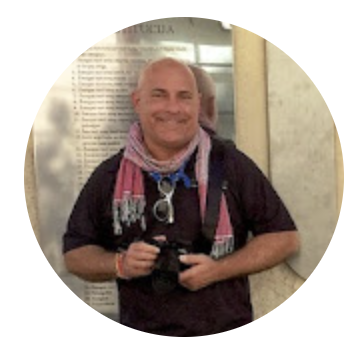
Guest: Ralph Velasco is a professional travel photographer, international tour organizer, author, and founder of The Continental DRIFTER®. After careers in restaurants, real estate, financial services, and corporate marketing, he built a business leading photography and cultural tours around the world, with more than 120 international tours to destinations including France, India, Antarctica, Cuba, Georgia, and Vietnam.
Central Question: How do you turn a lifelong passion into meaningful work while experiencing the world more intentionally?
Many people dream about traveling the world, becoming a professional photographer, or building a career around something they genuinely enjoy. Few actually make that transition.
In this conversation, Ralph shares the path that took him from restaurants, real estate, and financial advising to becoming a full-time travel photographer and international tour leader. Along the way, we discuss entrepreneurship, photography, storytelling, travel, business, and why slowing down often leads to richer experiences than simply checking destinations off a list.



Questions Explored in This Conversation
- How do you turn a passion into a successful career?
- What makes a memorable travel photograph?
- Why is storytelling more important than camera equipment?
- What is "slow travel"?
- How do you organize successful international tours?
- How much photography equipment do you actually need?
- What makes a destination enjoyable instead of simply impressive?
- How do you balance planning with unexpected experiences while traveling?
Editorial Summary
Building a Career Around Passion
Ralph's story illustrates that finding meaningful work is rarely a straight path. Before becoming a professional travel photographer, he owned restaurants, worked in real estate, served as a Fortune 500 marketing director, and became a financial advisor. Following the 2008 financial crisis, he finally committed to building the travel business he had imagined for years.
“It only took me 45 years to figure out what I wanted to do.”
Great Travel Photography Is Really About Storytelling
One of the strongest ideas in the conversation is that memorable photographs don't simply document places—they tell stories. Ralph explains why photographers should think beyond landscapes and landmarks by capturing people, environments, and moments that provide context. Rather than focusing solely on camera settings, he teaches travelers how to see scenes that communicate the experience of being there.
“As photographers, we're storytellers.”
The Value of Slow Travel
Another recurring theme is the difference between collecting destinations and truly experiencing them. Ralph describes his philosophy of "slow travel," encouraging travelers to spend more time in fewer places, engage with local culture, and occasionally put the camera—or even the phone—away to experience a destination with all five senses.
“Put the camera down.”
Building Better Travel Experiences
The conversation also explores what goes into organizing successful international tours. Ralph discusses scouting destinations a year in advance, learning from early mistakes, balancing structured itineraries with free time, choosing accommodations that become part of the experience, and designing trips that appeal to both photographers and non-photographers.
“Preparation... you can't make a mistake.”
Less Gear, More Experience
Although Ralph is a professional photographer, he argues that expensive equipment is often less important than curiosity and observation. Many travelers on his tours now use smartphones, and he prefers carrying minimal camera gear so he can remain engaged with the people and places around him instead of managing equipment
Show Notes
Website: https://continentaldrifter.co
Continental DRIFTER® YouTube: https://www.youtube.com/continentaldrifter
Books from the series The Mindful & Intentional Traveler:
https://www.amazon.com/gp/product/B0D3MKB1TP
* How to Be a Mindful Traveler
* 60 AFFIRMATIONS for Travel
* Travel Activity Book: GRATITUDES Edition
Facebook: https://facebook.com/thecontinentaldrifter
Instagram: https://instagram.com/ralphvelasco
Gear Kits: https://kit.co/ContinentalDRIFTER
Twitter: https://twitter.com/ralphvelasco
Pinterest: https://pinterest.com/continentaldrifter
LinkedIn: https://linkedin.com/company/continental-drifter
Transcript
My guest today is Ralph Velasco.
Ralph is an example of someone who's turned their creative passion into a career, and built a successful business around their passion.
It's never too late.
Ralph was owned two restaurants, sold real estate, and was a marketing director for a Fortune 500 company, a financial advisor, and done even more things.
He's happy to say it only took him 45 years to figure out what he really wanted to do with his life.
While struggling as a financial advisor after the 2008 market crash, he decided to become a full-time professional travel photographer and small group tour organizer.
Since then, he's led over 120 multi-week international tours.
He has a podcast, blog, and YouTube channel, The Continental Drifter, in which he shares his expertise about various locations around the world.
He's the author of three books, How to Be a Mindful Traveler, 60 Affirmations for Travel, and the travel activity book, Gratitudes Edition.
I was blown away looking at some of the pictures of the places around the world he takes people to.
Looks super fun and exciting.
Welcome to my show, Ralph.
Thanks very much.
I appreciate it.
You're having me on, Daniel.
And you're speaking to me.
I'm in the United States, in Utah, near Zion National Park, because of a rock climb.
You're in France, is that correct?
That's right.
I'm in the Dordogne region of France, southwestern France.
And you're in a castle, you're saying.
Staying in a castle, live in the dream.
Yeah.
Staying in 11th century castle is pretty amazing.
Tell me your story.
How did you find a way to do what you were wanting to do, to which now you're in a castle in France instead of hustling real estate someplace in Manhattan?
Yeah.
As you mentioned, I've done a lot of things and I always joke, it only took me 45 years to figure out what I wanted to do with my life, but most people never do.
And so I've considered myself very lucky to be where I'm at and doing what I'm doing.
And so for the past 16 years, I've been a full-time travel photographer, international tour organizer, author, and public speaker.
I've had podcasts and got the YouTube channel.
So all very creative things.
And stuff that I really enjoyed doing.
And I get to share the world with people.
So I've always been a traveler since I was 15, and I studied in Spain for summer.
The next year, I was a volunteer in Peru.
And the following year, I was a volunteer in Venezuela for two months.
And the following year, summer, I was a student of Spanish in Mexico City for two months.
So from a pretty young age, I've been traveling and always wanted to figure out how to make a living from it.
But to me, it was about as likely as Mike becoming a rock star, which you can appreciate.
And so I just kind of did a lot of other things.
I studied at Indiana University School of Business, ended up getting my Masters in International Business, MIBA, in Mexico City.
On another occasion, I lived down there.
That was in addition to when I spent the summer there.
And so, but I did a lot of other things before, because this is well before the Internet and cell phones and all these other kinds of tech things and social media.
And then the last thing was your financial advisor, and then there's the market crash.
I take it you're struggling for work.
How did it go?
Was there a moment you just decided black and white, this is what I'm going to do?
Yeah, it was the day after the financial crisis.
Yeah, back in 2008, so I moved back to California, and I lived there a couple of times before, but moved back to California in 2005, and I was looking for some way to make money while I was building a tour business.
I had in the back of my mind that at that time, 2005, which was a few years after what I consider the dawn of digital photography, so around the early 2000s.
And so people were starting to buy these new digital devices, these digital cameras.
I remember my first one-megapixel Kodak EasyShare Point-and-Shoot camera.
And so I saw an opportunity.
So I had had my second restaurant between 2001 and 2004.
And it was a matter of was I going to sign for another five-year lease on my restaurant or was I going to do something else, sell it, and do something else.
So that's a big one.
That's a big crossroads.
Yeah, absolutely.
Yeah, one of the biggest.
And so I said, I'm going to sell the restaurant and I'm going to try to start.
I had a site called photowalkingtours.com.
I still own the URL, but it's not active.
And so I wanted to take people around and show them how to use their new digital devices.
Not only technically, but also visually and composition.
There were other people starting to teach the camera.
And what I wanted to do is be different.
And I wanted to teach people how to see and put the camera to good use.
Put themselves in front of good photo opportunities.
Yeah.
And so in 2010, I actually created a very early iPhone app that was about creating a shot list for travel photography.
And it had 52 categories.
And this is where telling the story came in, because as photographers, we're storytellers.
We want to go to these beautiful places, get our photographs, video, and bring them home and share them on social media and everything else and be able to tell the story.
And so these 52 categories such as the landscapes, portraits, interiors, night scenes were-
These are tips you're giving people in your app?
And the tips-
The app was actually like a checklist of these 52 categories, and it had tips in it, how to capture each of the categories.
And then if you could get five good shots in 30 of the categories, you've got 150 really nice shots to tell the story of that place, instead of just pictures of plates of food or selfies.
This is like a checklist of you're going to make a movie.
These are all the clips that are going to go into your story or movie.
Yeah.
And it actually is something from the movie industry.
Every time that they shoot a movie, there's a shot list, these types of shots that they have to get to tell the story.
So yeah, so it worked out pretty well.
It's no longer available in the app store because it just kind of just evolved out of it with not being able to do it anymore.
Yeah, exactly.
It's not supported anymore.
Yeah, people don't know how difficult it is actually to write an app.
People say anyone can write an app.
It's not that with the...
Absolutely.
Especially back to that.
You got better things to do anyhow.
Because now you actually teach it live or you have a new course on your website.
You have courses on your website now about photography and tips and blogs and stuff.
So the technology is your information is still there.
You just moved it to a different platform, right?
Yeah, I turned the app into an e-book actually, called Essence of a Place.
You know how to work from a shop list.
So I wanted that because it's very good information, so I wanted to put it into a different format.
But I didn't want to pay five, $10,000 to have a developer create an updated app.
So how did you move then, I'm with you in your story to where you got this great app.
It's losing compatibility with you moving on.
How did you, what was the next step?
Like we're going towards where you are now, where your travel, you've got the whole package, the photography plus the travel, if people just want to go someplace.
Yeah.
So I moved to California in 2005, and then to support myself, I was a financial advisor.
And we all know what happened in 2008, when we had the financial crisis, end of September 2008.
And here I am, a newbie financial advisor, barely surviving as it is, and then the market crashes.
And I was just done, you know, because even my boss who'd been in the business for 25 years, lost 90% of his business, at least for a while.
So I said, you know what, this is a sign because I'd been teaching at the local city of Newport Beach, University of California Irvine Extension Program, Saddleback College.
So adult education programs where I didn't need to have a teaching license to teach those kinds of classes.
And so that's a kind of classes.
Were you teaching the photography or the finance?
Yeah, photography, photography.
Yeah.
So, you know, like while the other guys were teaching the actual camera and f-stops and, you know, shutter speed and all that stuff, I said, I don't want to compete with that.
I'm going to teach people how to see how to use those cameras and make, you know, tell a story.
You know, you say it took you 45 years, but it seems to me you were plugging along the whole time with part of your passion, the photography.
Yeah, no, I've always enjoyed photography and travel from, you know, pretty much day one.
So it just took you 45 years to do it full time and really nail it in the whole business plan that would work.
And that's right.
Yeah.
Yeah.
So you're teaching classes in.
Gary, go on.
Yeah.
So the day after the financial crisis, I said, this is a sign.
I'm going to stop being a financial advisor and I'm going to go full time into this business that I was kind of had started for about three years already.
So starting to build a little bit of a following, learning how to teach, how to speak in public, bettering my own photography, teaching people one-on-one or in small groups, walking them around Southern California or different places.
I ended up my first overnight trip was to Joshua Tree National Park, which wasn't too far away.
So I'm thinking about this for myself.
So I wanted to ask you how challenging that was logistically.
I imagine for your small groups, walking around town, you're putting up flyers, you're getting five or ten or two or three people.
But then when you do the Joshua Tree, it seems now, do you have insurance?
Do you have to pay for the lodging?
Or you just said, hey, here's a hotel, book your own lodging and I'll meet you there.
So how did you work that out?
Yeah, I was kind of touch and go at the beginning because I was going to mention that my next overnight trip was to Death Valley.
And it's a quick, funny story, but we were at one of the ranger stations.
I'm with my group at the ranger station and we're just checking out maps and getting information and stuff.
And the ranger is talking to one of the people just making conversation.
And he says, so what are you guys doing in the park?
He says, oh, we're here on a photo tour with, we're here on a photo tour.
And so the ranger says, oh, really, really?
Yeah.
Yeah.
Oh, welcome to America.
Yeah.
Who's the leader?
Oh, that guy over there.
And so turns out you need a permit to bring a group into a national park like that, which I had no clue.
And so I got my way out of that.
Oh, you did?
I did.
How did you do that?
What's what's Ralph's number one tip for talking your way if you're in business at a situation like this?
Well, maybe tell a little white lie.
And I said, OK, you know, we're a camera club.
We're just a group of people.
That's that's a common interest.
You know, I wasn't making any money on the trip, which was probably true.
But I did charge for it.
So I could have gotten into some trouble, but I kind of got myself out of it.
Thank goodness.
And I learned a lesson and I never, you know, brought a group to a national park like that again without doing it right.
But I do have insurance for my business.
Of course, especially now that we're I'm doing nothing but international tours.
Once in a while, I do some domestic tours in the US.
I'm originally from Chicago.
That was my next foray into overnight tours was to bring some groups from Southern California back to Chicago because I wanted to get a free trip home and visit my family.
And are these mostly repeat clients that kind of following along because they like you now?
Or how are you advertising it?
Yeah, nowadays I get over 50% repeats on my trip.
I've done over 120 international tours alone, probably 200 in the US.
And so it's a lot of repeat, a lot of referrals.
I've got all five star reviews for all my trips.
So it just feeds on itself, thank goodness.
And that's where social media comes in.
So I had to learn how to work with social media.
I'm here now and sort of teasing out the fact that I'm staying in this 11th century castle and had a group here about a week or two ago.
Now, I've kind of backed off the photography part of it.
The photo tours and photo workshops, which is what I initially wanted to do and thought I would do and enjoy doing, realized how really difficult that can be.
Because you're talking-
Yeah, go ahead, what's difficult?
Yeah, what's difficult about it was, you're talking every sunrise, sunsets, image reviews, one-on-ones.
There's a lot of responsibility because you've got people that want to get great photographs understandably.
It's like climbing Mount Everest.
If I don't get to the top, then why did I pay you if I don't get a great photograph?
Because we didn't get up at 4 a.m.
to get there at 5:30 a.m.
when the sun came up because somebody else in the tour was taking their time getting out of their hotel room.
Yeah.
Blame you.
Yeah.
Yeah.
No, it can all come down to me.
So I realized that that wasn't exactly where I wanted to be.
I wanted some hybrid.
Plus, I wanted to appeal to the spouses or friends that were non-photographers.
I wanted it to be a good mix of people that were interested in photography and very amateur, not the real hardcore workshop type people.
Those people typically will do one trip a year, and they can do that, sunrise, sunset every day, and it takes a lot out of you.
But you're doing 10 trips a year, and you're supposed to do that.
That really starts to take a toll.
So I learned that early on, and then I...
You shift into more of just travel tours with, hey, you can have this on, and like one day out of the trip, if you're a serious photographer, you can take this extra kind of a bonus.
Yeah, that's pretty much it.
So I wanted to do a hybrid, make it...
I call them cultural tours with a focus on photography.
And so the cultural tour part of it was more important because, you know, I'm talking about the food and wine tasting and cultural activities, having walking tours and seeing the place.
Yeah, you won in France, I think.
That's why I saw the wine tour.
I saw the vineyards, and it was just a beautiful green day out in France.
Wow, that's cool.
So tell me about how you transitioned from taking a tour to Joshua Tree or Death Valley in Chicago to France.
That's got to be a big step doing the international bounce, right?
Yeah, it was.
And my first international tour was to the Central European Christmas markets here in Europe.
And I was actually asked by a company found me on the Internet, saw that I do photo tours and asked if I wanted to bring a group onto one of their trips.
So we did this Central European Christmas markets, but we were just a part of a bigger group.
It was a big bus tour.
It was a way for me to test out the idea.
And I got six people on that first trip, which is typically my minimum.
But for my first trip, I was super happy.
And it was it like, so they want some money, and you need some money or at least need to break even.
How did it work logistically when they ask you to join, how much money did they want and how did you end up make money then?
Yeah.
So they gave me a group discount because I was bringing six people plus myself.
So I don't remember the exact numbers, but say they were charging $2,500 to me.
It's like a wholesale retail thing.
You like a resale.
Exactly.
Okay, I get it.
Yeah.
So they charged me, say, $2,500, and I might charge $3,500 or $3,000 over my expenses, my time, some profit.
I think I made $99 a person profit on that trip because I thought, oh my God, someone's going to pay me $100 bucks to travel with them to Europe.
I'm in.
You know, this is something, you've owned restaurants and you've got a knack for this business.
This is something people who are just starting this kind of idea don't understand.
You try not to make a loss if you can.
But if you need the experience and to need to work out the bugs in your business, breaking even is great.
You just, that's what you need to do.
Well, you're not going to make half million dollars or $20,000 or whatever you're hearing about people making on the Internet.
That's not realistic, right, Ralph?
You're absolutely right.
And so I was happy.
And I teach a course called Tour Organizer Training.
I created an online course.
And that's one thing I said, when you're starting out, perhaps even run a trip at somewhat of a loss because you're getting that experience, you're getting the photographs of your people enjoying themselves in the place.
You're testing it out.
You're testing it with a smaller group.
You're making all your mistakes with a smaller group.
So it could still be well worth it.
Individually talk to people and go, what can I do to get five stars?
Can I buy you breakfast, dinner?
You need a bottle of wine when France, like borrow my camera, you can borrow my camera.
Yeah.
So that worked out good.
And then maybe the next year I did two or three trips and I kept building and I got upwards of 12 trips a year.
And then I start backing off of that because it's a lot and it's a wonderful life.
There's no doubt about it.
Traveling the world and getting paid for it.
Now getting paid well for it because I finally up to my prices to what I feel I'm worth because now I have all this experience.
So I'm not that newbie guy kind of testing things out.
I mean, people, I've got a reputation and a following.
So people are willing to pay.
Yeah, that's the flip side that you have people on the flip side who they do have the expertise, the knowledge.
Things are going perfect and they beat themselves up because they don't know their net worth, don't charge what they should be charging, or I'm just grateful to have work.
Now, that's a bad mindset.
If you really have your game on and things are tight, and you know what you do and then you need to charge for it and not take less just because you're, oh, I'm grateful to have money.
No doubt about it.
And a lot of us start out that way, sort of that fake it till you to make it.
And I could see that because I did it too to some degree.
But the lesson is that it can be hard to raise your prices.
So, you know, you got, I had to do it gradually over time, and I couldn't just go from, you know, 3500 to 7000 the next trip.
Oh, because you lose your repeat business, some of those people.
Yeah, because, you know, you need to have a good product.
And so at the beginning, I wasn't that confident I had a great product yet.
I needed to learn and build up.
I'm a very good tour leader and organizer.
But the way I do that is I tell my repeat clients, what did I charge you last time?
You're in a special group.
You're a peak customer.
You're locked in at that rate.
So take advantage of it.
And don't tell anybody what I'm giving it to you for.
Because everyone else is paying 10 times as much now.
Yeah.
No, that's a good point.
You get to come along for, you know, I'm going to raise it a little bit on you, but you get to come along for the ride now, because you supported me in the beginning.
Yeah.
And I've got clients that have been on 25 of my trips.
Some of them, two, three, even four times.
A lot of 15 timers and 10 and 12, you know.
So people like, some people, not everyone of course, so like my style, the way I run my trips, what I do with them on the trips.
So I scout everyone a year in advance.
So when I create an itinerary, I'll go to the place a year in advance because I want to be there at the same time of year that I would bring the group back because I want to get those kinds of photographs, whether it's the fall colors or a harvest or spring flowers.
Preparation, he's being prepared.
Yeah, absolutely.
Especially for this business, you got to be prepared because you can't make a mistake.
I mean, of course, some things happen with travel, but as far as setting up the trip, you want it to be super airtight.
You're minimizing your chances for failure or something to go wrong.
You're managing it.
You have to because things do happen, most of them out of my control.
And when they are in my control, I try to fix them very quickly.
What's an example of that?
Something, because you go to a lot of places around the world besides France, and some of them probably not as stable regions or you're crossing borders.
What is a good story on something out of your control?
It ended well, but it took some talent and some resilience to fix.
Yeah, you know, certainly weather is something that's out of our control.
You know, I try to control everything, but obviously I can't control the weather.
So perhaps you get somewhere and it's, it's rainy and it's difficult to be outside and photograph, but you got to make the best of it.
So maybe have some interior days or you teach people how to photograph in the rain and, you know, deal with those situations.
So that that's one, you know, maybe I've had a couple, you know, very small breakdowns on a vehicle, maybe where the fan belt went out and we had to pull over for a half hour, get it fixed, and we're back on the road.
So nothing real serious.
Had a couple of people break ankles on trips, about 12, 13 years into doing this.
But for I had a real good run for 10 or 12 years where almost nothing, you know, certainly that serious went wrong.
But unfortunately, people just slipped on some gravel.
You know, what comes to mind with that is you have the good lesson of photography that you tell where it's about the story.
I would, in that case, make the ankle my story.
Like, hey, I made it.
I'm in France.
I broke my ankle.
Maybe I go to the hospital.
You know, my story, my pictures, part of my story.
I'd go with the story.
Unfortunately, their trip ended right then, unfortunately, because it's hard to move around a place with a broken ankle.
And so really unfortunate.
But yeah, I could see that in other certain circumstances for sure.
But those are the kinds of things that do happen.
So tell me about the variety of places.
On your website so far, I've noticed the France, Antarctica, Vietnam, India.
What's your favorite place to go?
It's always a difficult question.
But the Republic of Georgia is one of my favorites.
So next year, I've got a Republic of Georgia and Armenia trip coming up that I've done three or four times.
It's fascinating part of the world.
Not many people know of it or about it, but it's in the Eastern part of the Black Sea, by Turkey, Syria, Iran.
This is one of those places when I mentioned crossing borders to a less safe place, it sounds like to me.
I'm gun-shy in traveling too, because I'm always worried about the risk of travel.
Is this a safe place to go?
It really is.
There's times when maybe there's something going on in the region, like Armenia and Azerbaijan were at odds for a while, and so we decided not to run the trip one time.
But they've got a very good tourist infrastructure, the food is phenomenal, very inexpensive place to travel.
They say that Georgia has the oldest wine culture in the world.
They found remains of 8,000-year-old wine, I forget what they call them, crevary, their specific type of vessel to hold wine.
So it's considered the oldest wine culture in the world.
The food and wine are a cornerstone of how you put these tours together in addition to photography.
It sounds like your food and your wine and the culture.
I make food a very big part of my trips.
Obviously, we're eating three meals a day.
I come from a food background.
I was a third generation restaurateur.
I eat meals a day.
I enjoy food.
But next to the people, I think the food is probably the most important thing about travel and learning about the food and the place.
I love doing market walks or cooking classes and demonstrations, learning how to buy food in the market, how to prepare it, how to eat it.
So sometimes there's a specific way to eat something.
And so that stuff just fascinates me and most people because we all eat.
I really don't consider myself a foodie, you know, that I've got to go to eat.
Like you said, I appreciate good food.
That's in India, fasting.
Yeah.
And India is another place, as you mentioned, that I go to and talk about great food.
Oh my God.
So India is another one of my favorites.
Cuba is very, very high on my list because it's so close yet so far from the US.
And I forget, it's legal to travel to Cuba now.
How long has it been legal?
Well, it's been legal, but you had to go with a, you still have to go with a license program, which is what we provide.
The license.
That's still the requirement.
Yeah, Obama eased it a little bit, and then Trump brought it back.
But it actually is a little bit better for me because you can't just fly down there yourself anymore, at least as a US citizen.
Everyone else in the world can, but we have this 65 plus year embargo with Cuba that, I don't know, they think it's going to work in the 66th year or something.
But so it's a really fascinating place because it's kind of forbidden fruit.
But it's the US government that gives us that problem.
The Cubans love, they're considered the most pro-American people in Latin America.
It's so ironic.
It really is.
And they are some of the best people, friendliest, kindest.
Yeah, they're in a very tough financial situation.
But I feel like we're helping them.
Because the money we bring down there is going directly to the people.
It's not like the government's, you know, taking 95% of it and giving them nothing.
So, I feel very comfortable going down there.
But this is a trip that's a little bit of, it's difficult to go to on your own.
So, people kind of have to go through a company like mine, at least.
And so, I enjoy going to that place.
And I've done it 19 times now.
It just feels safer.
Like, even if I could go to another country and then go from that country, into Cuba, to circumvent the legal requirements, I'd feel safer.
Like, I want to have a good time.
I want to relax and enjoy it and not worry.
So, this is why it's good service you provide, Ralph.
Yeah, you got it, because you can go through a third country like Mexico or something or Canada, and just fly right over the US, and the Cubans wouldn't mind.
But yeah, you're on edge.
I'd be on edge all the time.
You know, am I caught coming back into the US?
You know, et cetera, et cetera.
And so I think just a piece of mind is worth, you know, any extra cost there might be.
So on your blog, on your website, Travel Tips, you have a blog post, The Art of Slow Travel, Embracing the Journey Over the Destination.
Tell me about that.
What do you mean?
Yeah, sure.
So I've just created this year a new series called The Mindful and Intentional Traveler.
And it came about because, I'll go back a little bit, not a little bit a lot, to that trip when I was 16 in Peru.
And here we were, these young boys coming from Chicago traveling to Peru with my high school.
So my high school had a program to go down there.
And it was kind of like missionary, but it was considered a social justice program.
So it was meant to introduce these young kids from the US to what other parts of the world are like.
So we get down there and it was a wonderful trip.
But at some point, of course, 16 year old boys are gonna start complaining about the food and they're missing their friends and family and stuff like that.
So we were probably moaning a little bit about that kind of thing, because the food was different.
I mean, chicken feet soup and kui, which is guinea pig and all these strange things that of course none of us had ever had before.
But that's the part of travel.
That's why I travel.
I don't go somewhere because it's the same as at home.
I'll stay at home.
I'll save a bunch of money.
So back a long story longer, I'm talking to one of the teachers on the trip, because of course we had four teachers and nine boys.
And he was talking to us and we were complaining a little bit and he says, you know what guys, you've got this once in a lifetime opportunity to be in this incredible place, take advantage of it, and be here now.
And that always stuck with me.
And so as I get older, I'm a photographer.
You know, we tend, as photographers, especially, we tend to go through these amazing trips with our eye to the viewfinder of the camera.
And so I wrote a book called The 101 Tips for Developing Your Photographic Eye and More.
And the last tip in the book was to put the camera down.
And someone told me that maybe that should be the first tip in the book.
And I said, you're probably right.
But the idea is that put the camera down.
Because now these smartphones and computers and things are made to take us away from where we are.
And it's a world of information on these devices.
Well, if you're elsewhere, then you're not where you actually are.
There are people that will be googling it, looking at the picture of where they're at on the phone, instead of just looking around for a street sign, or somebody they can ask for help.
Hey, do you know where I can get some good food to eat?
Instead, they'll be on the app looking at it on their phone.
You said it.
Instead of having an interaction with the local, that could lead to some once-in-a-lifetime experience, which often happens.
Hey, you're looking for food?
Come on over to my house.
As a tour operator, one day I would go, everybody pass your phone, put it in the basket.
I'm collecting your phone for this morning, for the first half of the day.
You did not get to even use your phone.
No, you're absolutely late.
Not your phone.
Well, I am starting to build some tours around this concept of being a mindful and intentional traveler.
So that particular book that you mentioned is about using the five plus senses.
So of course, smell, taste, etc.
But there's a sixth one that is starting to come to be, and that's using the sense of where we are in space and in physical space.
It allows us to close our eyes and touch our nose and a walk without looking at our feet and things like that.
So I just had a group here at the castle in France, and I gave everyone a copy of the book.
And I said, let's work on one sense a day.
So today, we're just going to consider sight and put the camera down, put it away, and take in the place through your eyes or your ears or smells, taste.
How often do I sit in front of the TV with my flipping on my phone and eating?
And next thing I know, I'm done.
You know, but savoring the flavors, especially in these amazing places where, you know, maybe you're not just eating burger and fries, which we're used to, but something really special, and you want to savor that.
So it's about savoring the place that you are with all the five senses.
And so I plan to create some retreats around that idea, where we would, you know, put the, you know, not go out with the phone, or put it down, set a reminder for yourself every one hour, two hours to just stop, look, listen, smell, feel where you are.
And I've really been putting that into practice.
I was just doing it today, sitting here in one of the gardens of the castle.
And oftentimes I might be listening to a podcast or some music while I'm doing that.
And I'm like, oh, I want to take this in.
Distraction, yeah, distraction takes them away.
It takes me away from where I am.
So I wanted to be there and just watch the bees buzz and look at that tiny little flower that I never would have noticed, or whatever it is, picking fig, fresh figs off the tree and eating them, which is one of my favorite fruits.
And so they've got these two huge fig trees on the property.
So I'm over there just popping them in my mouth and loving it.
And so it's that kind of stuff that I think as we get older, we start to appreciate that.
Some of my earlier trips were, especially in Morocco, it brings me back to mind, I used to do a Morocco trip, and we might spend six or eight hours in the vehicle, getting from one place to another.
And that's no fun.
I'm sure you see a lot of stuff and maybe you make some stops along the way for sure.
But now, I like to stay in one, maybe two locations over the course of a trip, doing a deep dive into that place, packing and unpacking once, and then doing little day trips like hub and spoke.
And everything's a half hour, an hour away.
Rather than trying to see six different places in seven days.
Exactly.
And that's what a lot of us do.
We just want to see everything because you never know if you're going to be back in that place.
Yeah, you've checked it off the tick list.
Yeah.
And so it's interesting how people really appreciated that.
And they really like that concept.
And I think as we get older, we appreciate it more.
And a lot of my travelers have done a lot of travel, so they've been to the big Rome, Florence, Venice trips, and now they want to get off the beaten path.
Well, I think that it is maybe as people get older, they think more like that.
And the younger people just want to get everything done so they can say they were to all these places.
It's just like more of the, I climbed the mountain than I enjoyed climbing the mountain.
I just wanted to say I climbed the mountain.
Why do you suppose that is?
Well, certainly, I think, you know, with youth, there's a lot more energy and people, you know, have the, you know, they can go walk for 12 hours a day and see everything.
They don't mind the driving perhaps.
But as we get older, you know, you start to slow down a little mess and you start to appreciate the idea that it's not about ticking items off of the checklist.
And I used to be a country counter, but now I have no idea how many countries I've been to.
I don't care.
I've been to places over and over and over again, which is a luxury because every time I go back, I learned something else.
I sealed friends.
I learned something new.
But with, you know, when we're younger, we've got that energy and we, we just want to see everything.
And like you say, it's about, you know, the Instagram moments and bragging to our friends where we are and stuff.
Have you been to Zion National Park?
Have you been to Zion National Park?
I have.
It's wonderful.
So you know what I'm saying?
When, when I say this, people that come here, they want to go to two places.
No, this is the five million people a year come here.
Second largest park in America.
There's a lot of places to go.
It's the desert, wild country.
They want to go to one or two places, the Narrows or Angel's Landing.
And I'll be in the coffee shop hanging out because I live here.
And people ask me, where's, oh, I'll talk to them, where are they going?
And it's really cool, Ralph, when somebody tells me they've never been here, and they're just going to get in their car and drive, find a road that feels like turning off, get out of their car and go for a hike.
You're going to have such a good experience.
You're not going to see anybody.
You're going to probably meet some real locals.
You're probably going to find, you'll be able to hear the birds, not all the people yelling, you know, all the kids and stuff.
But that's kind of rare.
And I think unfortunate.
The other two places are great, but it's all good, right?
It's all good.
Wherever you are, just be there.
I'm trying to get people to get off the beaten path.
And the other thing is that when we travel, we tend to think that, you know, I'm not going to sit in the hotel.
I'm not going to stay at the hotel because I want to be out seeing stuff.
Well, then I started to create my trips where the property that we're staying at, the accommodations, are a destination.
So here at the castle, there's 270 acres of grounds.
There's four or five different buildings that have tapestries and armor and rugs and furniture.
You know, just, it's like a museum.
And the man who walks-
You won't want to go out in the day.
I'm just going to hang out here, go walk.
Yeah.
You don't feel guilty.
That's the thing is we feel guilty.
I'm not going to stay at the hotel.
I want to be out doing stuff.
Well, what if the hotel is a destination?
And so that's the idea.
We stay at a convent that was converted into a hotel in San Sebastian, in Spain on my Northern Spain trip.
Then we spend four nights there.
Then we go down to the Rioja region and we stay in a former family palace in the middle of a hill town.
And then everything we do is nearby and we go wine tasting and just have the most incredible food and tapas tours.
And it's just unbelievable.
And people really appreciate that.
So we talked about your favorite places to go.
Or a lot of some of you go all over the world.
What's the favorite place here for photography?
Like, you got to go here for if you're a photographer.
I would say Cuba or India, in my experience.
I'm sure there's other great places too that I haven't been to.
But India is absolutely a photographer's dream because everywhere you look is another photograph.
The people are very open to being photographed and oftentimes the people are what I'd like to photograph.
And you just walk by a shop or a doorstep and there's someone sitting there and it's just like the perfect scene.
So I just love India.
It can make really great both black and whites and color photographs.
Because India is so colorful with the saris and the different turbans and things that the men wear.
So it's a very colorful place, but also it's great for black and white photography.
So I've got some of my best black and white shots there.
But everywhere you look at the photograph.
And Cuba is very similar because it's a very colorful place, at least in Havana, the old town.
But then those color, those shots, if you convert them to black and white can also be extremely impressive.
And so those are two of my favorite places to photograph.
So if someone goes on your site and looks at a place or just in general, this is getting them excited.
It's something they want to do.
What do you suggest they know about, be aware of, whether they're just going to travel or say they're a photographer in choosing the right tour, the right place to go or having the right equipment?
What's some advice you can give to listeners who are considering a trip?
Yeah.
On my trips now, I would say that a good 80, 90 percent of people are just shooting with their smartphones.
Because that's another thing is that on those photo tours and workshops, you've got tripods, people bring two, three bodies, four, five lenses, and you're carting all this stuff around.
That's another thing that takes you out of the moment.
I've always been a one body, one lens shooter, so I missed some shots.
Maybe I don't have the right lens in every situation, but I have it in most.
Because I'm lighter, more mobile, moving around, because I don't have to drag this stuff around, I don't look intimidating to a subject.
You can go back too.
You can always go out of the three places I went to share with Ralph, or on my own.
I wish I had a bigger lens in Africa, or so I could film the zebra or whatever, or making this up.
Go back, you can always go back, right?
Well, not only go back another time, but also my trips are typically about a half-day scheduled, half-day free time.
So you could go back that afternoon, or the next morning if we're going to be in that place, and do that.
So I give people free time to either relax, do nothing, swim, sit in a cafe, or go out, put into practice these things that I've taught them, and get their shots, not feel like they have to be with the group all the time.
Because my trips are only six to ten people typically.
And so they're nice and small, we can fit into smaller hotels, smaller vehicles.
And then how long are they?
Six or ten?
Anywhere from seven to fourteen days, depends on the trip.
Oh, they are long though.
Okay.
Yeah, I've got some fourteen day trips, because we're not going to go to India for seven days.
But you might come to Europe for seven days, especially if you live on the East Coast.
And some people will add on, you know, for this France trip, Paris before, Bordeaux after, maybe they're going to go to, you know, Spain or Portugal or something.
And so they could also get that mix too, of being with a group for a while, but then also having some, you know, me time or maybe it's a couple or something.
So they, everyone gets something.
And I really like that hybrid kind of approach.
Yeah, I like that too, because I like to do stuff on my own, go, you know, always thinking, oh, you know, I want to do this, do that.
And then you kind of that's a great balance.
So what is you have a course on your website, make travel photography everyone wants to see.
In other words, you think your pictures are great, but I've seen that one before, especially if the narrows in Zion National Park, five million people posted them on Internet every day.
What's your what's one of your tips for taking pictures others will enjoy seeing?
Well, one of the tips is it's I show the difference between portraits and environmental portraits.
And there's a difference.
And a portrait is more of just sort of a person's face.
And it could be taken anywhere because it's so tight in on their face that and I've gotten some really nice shots.
My students have too.
But there's nothing about the environment in that shot.
If you pull out a little bit and show some of the environment, you know, maybe it's a Berber nomad on the top of a sand dune with a camel in the foreground.
And, you know, that's environmental.
It gives people a sense.
Excuse me?
You want them both, like it's part of the story.
Absolutely.
It gives you, it tells the story.
It gives you the person more of an idea of where the photograph was made.
And that's typically just from, you know, going tight to pulling out to a medium shot and maybe even a larger overall shot.
Yeah, it gets a part of the story because if I'm in India, it's summer, it's 100 degrees, I'm sweating.
And if you just look at the portrait of me, I'm sweating.
But if you don't see, oh, he's in India and he's on a camel and he's in the desert, go, oh, that's the rest of the story.
That's why.
Yeah.
That's why.
And yeah, cool portrait shot of you sweating, but I get it now.
Is there anything, what's next for you, Ralph?
In your tour, any exciting new, new tours coming up or new courses or things you're working on?
Excuse me.
So you mentioned Antarctica, and this is a fairly new trip for me over the last couple of years.
I went this past spring, we're in 2024 right now for the first time.
And I was blown away and I love wildlife, I love nature, but I wasn't so sure that I really had to get to Antarctica.
Yet the seventh continent, tick that continent off the list, right?
But when I got down there, I was blown away by the silence and the remoteness of this place.
Now, the one thing that we do differently is we actually fly down.
So the trip starts in Punta Arenas, Chile, which is way south in Chile, near the tip of South America.
And then we fly less than two hours over the Drake Passage and land at a military base in Antarctica.
Oh, wow.
Because the Drake Passage is where it was difficult in the beginning, ships would sink, get stuck in the ice, all that stuff, right?
Absolutely.
It's where three oceans come together.
They don't like each other.
And it's a very narrow passage relatively.
And so there can be huge waves, 50, 70, even 100 foot waves.
And most trips go from Ushuaia, Argentina.
It can take upwards of two, two and a half days one way.
And you might be a huge ship, but that huge ship isn't going to do a lot in 100 foot wave.
It sounds like you're innovative.
Like I'm a rocket scientist, engineer, and my used to work as one.
Did you figure this out, that you could call the military base and just fly in there?
Some special arrangement or it's kind of what people?
Yeah, I know it's a particular company that I chose to run the trip with who specializes.
They were the pioneers of the, they call it the fly-in cruise model.
So you fly down, now we could spend five nights on the smallest ship in the industry, down there, 67 passengers.
It's still a very large ship.
It's a former icebreaker from Greenland.
So it's made to be in those conditions.
But it's small, only 67 people on this, 67 clients on the ship, plus the crew.
But it's still a very huge ship.
And little, some people don't know that there's a treaty down there, an agreement that you can only have 100 people at any one landing point.
So if you're on a ship with more than 100 people, which there's a lot down there with 200, 300, I think even upwards of 1,000 people, all they can do is sail and wave at the land, and we're able to get off twice a day and little zodiacs and small groups, very environmentally conscious.
You have to wear, they provide us with boots, so you don't have to bring those down, which is nice.
And you step into a solution as you get off the boat onto the zodiac.
What's the zodiac?
Is that like the iceberg or the landmass?
No, the zodiac is a little rubber boat that fits maybe 10, it gets you from the ship to the shore, because obviously you can't get too close with a ship that large.
So it transports us.
You've got a naturalist or a guide that's driving the boat, so they're telling you all kinds of information on the way.
If you see some whales or penguins and things like that, we can go check them out.
The icebergs are absolutely stunning.
I was really fascinated by the icebergs.
And so iceberg is obviously something that's calved off of the glacier on the landmass.
So our ship allows the whole ship to get off, 67 people.
And so then when we go, we check out whatever it is, whether it's penguins or just the landscapes and stuff.
And then you have to step in a solution again on the shore to get into the zodiac, to get back onto the ship, step into the solution again before you get into the ship.
So they're very environmentally conscious.
But what really struck me was the silence and the fact that there's not another man-made structure.
There's a couple, I mean, you've got the air base, there's places where these research stations are.
Of course, there are some man-made objects, the places down there, definitely.
But pretty much everything else is just pristine, natural as it was, as it is.
And the silence of no airplanes or trucks or traffic.
Something you can't really capture in a photograph.
You can do it in the video, kind of.
How do you capture silence in a photograph?
Yeah, that's a great question.
Typically, it's kind of just sort of a big empty scene, but maybe these icebergs and stuff.
And once in a while, you want to hear a whale surfacing or the tail slapping down on the water, or the penguins squeaking and stuff, or the walrus, excuse me, the seals honking or something.
So it's nice to hear that, but the silence is what really affected me.
And how long are you there for?
Yeah.
So because we fly down, we get to spend five nights on the ship down in Antarctica, where a lot of places just maybe go down for one or two days, and then they got to come back because it's another two and a half days back.
You get time to get used to the silence.
Absolutely.
It's wonderful.
And the ship typically will sail at night, but will also move different locations each day.
So you have two outings.
Some people will go kayaking.
There's a polar plunge where you can jump in the water.
I'm not doing that.
Yeah, I didn't do it this last time, but the next time I go, I'll do it.
Yeah, I was the videographer on this one.
You don't need to check that one off on my list.
I'll watch.
Not for everyone.
So is there anything we could probably talk forever, Ralph?
You got a lot of stories.
You've been around the world, and you're still finding new places to go.
So is there anything you really want to add that we haven't talked about?
Let's see.
Some of the other trips I've got coming up is a really interesting Lapland trip.
So that's Swedish and Finnish Lapland.
That's the region sort of just below and in the Arctic Circle.
You'll also find it in Norway and Russia, but we focus on Finland and Sweden.
And up there, we go in search of the Northern Lights.
And that's quite spectacle.
I've seen them in Alaska.
And is this even better than what you'd find in Alaska?
It depends because I've seen some wonderful shots from Alaska.
I've been to Lapland and didn't see anything too intense, but we saw them.
It just depends on, it's like an 11-year cycle.
And so, yeah, it depends on where we are in the cycle.
What causes the Northern Lights again?
I forget.
It has to do with solar wind.
And so, it's, I guess, the particles coming from the sun and interacting with the atmosphere.
And that's why you get to different colors because of the different altitudes.
And they actually move vertically, which I found very interesting the first time I went there.
And you can watch them.
You're bouncing, like bouncing up and down?
Yeah, they're kind of going like this.
And you can actually see it.
It's not something that's like, you know, you need a time lapse.
You don't need safety glasses.
They're, it's like green and blue and beautiful reds.
Yeah.
And why is it that you, you can only see them or you see them better and up north?
Well, it's because they're always there actually.
Even during the daytime, but you can't see them in the daytime.
You need dark, you need darkness.
It's to be very dark.
So in the dead of winter, so we're going in March again this year, next year.
We went in March this year, too.
And so you want to be in the dead of winter and in a place where there's no clouds.
So that's the other thing that could skunk you, is if there's clouds, you're not going to see the lights.
That reminds me of my brother.
He's a photographer and he was just here because he wanted to capture the Milky Way.
He's got this app that shows where it's supposed to be, which is kind of ironic because then we didn't have cell phone reception, so his app didn't work.
He had to look with the eyes.
And I don't even know what the Milky Way really were to look.
I'm like, doesn't that look like kind of milky clouds there?
So he's looking up, but he was clouds and light and moonlight and other things are a factor.
What kind of anything special in terms of camera gear you would use to take pictures of the northern lights?
Yeah, it's a great question.
And no, there's really nothing special.
I mean, you want a tripod, you want some kind of a stability device because you do want to take a little bit longer exposure, maybe 5, 10, 15 seconds.
Because then you get that movement, you capture that and it kind of smears across the screen, the camera, the picture, instead of just taking a static shot of it.
So you want some sort of stability device to be able to set your camera on, but you can easily shoot it with your smartphone.
If you've got a decent smartphone.
I'm trying to pod.
But you want to not try pod because you're going to want a longer exposure.
Like I said, not that long, maybe five, 10 seconds.
So it'll work on your on your phone.
Yep.
I got some great shots.
He was doing the tripod in the remote long exposure.
But I don't think my phone, I wasn't using a tripod.
I was trying on my phone.
Yeah.
And then I don't really know what I'm doing.
You could probably show me, Ralph, if you divide my phone.
Daniel, do this with your phone, these settings, right?
Yeah.
It's pretty simple.
You don't need anything special.
You just want to be ready for the cold because you're out in the middle of the night, and it can get cold, not always.
Antarctica too.
I mean, when I was down there, it was 25 to 45 degrees the whole time.
I was going out with my jacket open, no hats, no gloves.
So it was colder in Chicago, where I'm from, than it was in Antarctica because of course, we're going there in the summer.
So we go in the typically anywhere from December to March and that's their summer.
Now, it's not warm down there, but we got a nice spell of 25 to 45 degrees Fahrenheit.
It's the wind.
Sounds like an interesting life, Ralph.
Look, I'm just thinking of one of your trips.
If I want to do the northern sky.
And then, you know, we talked about India and Sweden and France, and then Georgia.
And it sounds like you live in a pretty pretty good lifestyle now in terms of following your dream.
Then when you were being a financial advisor.
Oh, it's the world apart.
Much, I would think, much happier.
His website is continentaldrifter.co.
That's dot co.com continental drifter.
It's also got the YouTube channel.
The details are in the show notes.
Just click the links.
Ralph, thanks for being on my show.
Thank you so much for having me, Daniel.
It's been a great conversation.
I appreciate it.
And safe travels out there.
Appreciate that.
You take care.