What does it take to thrive in the ever-changing world of film and television? Emmy award-winning producer Shannon Malone de Benedictis joins me to share her inspiring story of carving her own path in an industry dominated by expectations and challenges.
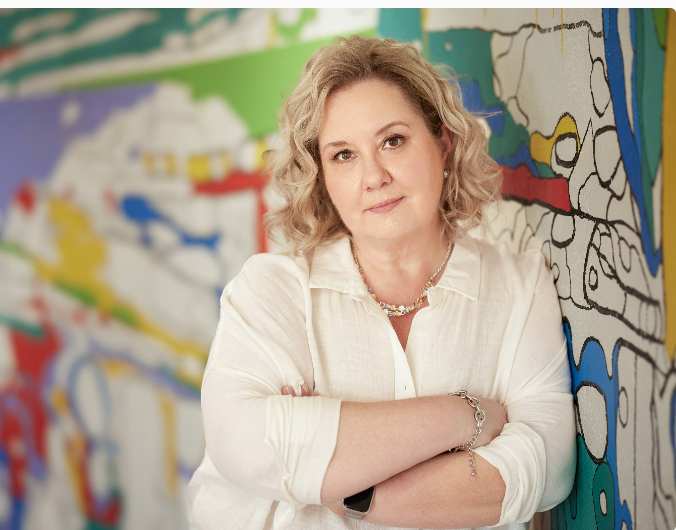
From her zig-zag journey to success to producing groundbreaking documentaries like Secrets of the Whales and Inside the Mind of a Cat, Shannon provides a behind-the-scenes look at crafting stories that captivate audiences. We explore her creative philosophy of tailoring life to fit your dreams, navigating the ups and downs of the film industry, and overcoming barriers as a woman in a competitive field. Whether you’re an aspiring filmmaker, a storyteller, or someone looking to chart your own course in life, this episode is packed with wisdom, inspiration, and actionable insights.



Show Notes
Padlin Creative
Website: https://www.padlincreative.com/
Portfolio: https://www.padlincreative.com/portfolio/inside-the-mind-of-a-cat
Connect with Shannon on LinkedIn:
https://www.linkedin.com/in/shannon-malone-debenedictis
Transcript
My guest today is Shannon Malone de Benedictis.
She's a multiple Emmy Award-winning producer and development executive.
After 25 years in television, she says she has seen it all.
Her portfolio includes documentaries such as Secrets of the Whales, done in collaboration with National Geographic and Disney, Netflix Fee Lion Fascination, Inside the Mind of a Cat, and Space Disasters, A Thrilling Journey Through Space Mishaps, to name a few.
Her philosophy is, life is what you make of it.
If it doesn't fit, make alterations.
Her parents actually expected her to attend an Ivy League school and pursue a legal career.
Shannon's interests, however, were different.
Dismissing a school counselor's harsh predictions of failure, she chose to go to art school and major in video.
There, she anticipated the future of video and internet media, which set the stage for her career.
She runs her own consulting company, Padlin Creative.
Clients range from startups ready to break into the film market to billion-dollar tech companies seeking creative solutions to everyday problems.
Welcome to my show, Shannon.
Great.
Pleasure to be here.
I appreciate it.
So tell me about your zigzag path to success in a career.
My focus on my podcast is to inspire other people who think things are impossible.
How did you do it?
Then of course, I'm also fascinated in creative types, like how do you do it because it's challenging.
You're following your dream and doing it.
Give me the lowdown on the zigzag path.
Well, the zigzag path is when I went to college, again, my parents expected me to become a lawyer or do something like that.
I said, no, I wanted to do video and video art and make films.
When I graduated, there wasn't a lot of work.
This was back in the 90s during the first Bush recession and before cable exploded.
I took my talents and I became a talent agent for creative professionals.
So it was a good balance of analytical and creative, because I was working with creatives, I understood them.
But a family tragedy, I had to move back home.
I was living in Chicago at the time and I had to move back home.
I was on a really good career path, but my mom needed me.
I went drinking one night with a good buddy of mine, who's still a dear buddy, he's a brother from another mother.
He said, look, you were always really talented editing, why don't you come and become a midnight editor at the Discovery Channel?
Which I was doing, it would have been a 30 percent pay cut, 30 to 40 percent pay cut, and I would be living at home briefly.
Twenty-nine, got a lot of moving home at 29, but it got me toward my goal.
So this is where we talk about the zigzag.
Yeah.
Also, it's inspiring because most people would be, I would think, oh my gosh, should I take care of my mom?
Well, of course, I have to take care of my mom, but then I'm losing my dream, my career, and I'm moving back home.
But you chose the right thing to do, which led to a good opportunity that you could not have expected.
That's exactly it.
It's one of those things where if you had said to me 40 years ago, you're going to spend the majority of your life in your hometown, I would have been like, absolutely not.
No.
But life throws you hurdles, and you've got to adjust.
You've got to make do.
It was important for me to be with my mom.
What that did is that put me in, even at an entry level, in what became my ultimate career path, is I started just digitizing shows and working on shows at two in the morning and doing things like that, and then 20 years later, I've won two Emmys and have reached the kind of top of the field.
And so I think that not letting hurdles get in your way and still pursuing that creative passion, because even though I do a lot of analytical work, in my heart, I'm always creating.
I'm always telling stories.
It's just a passion of mine, as well as learning.
So that is part of the zigzag of how I ended up got to where I was.
Yeah.
And step one was you told your parents, I don't want to be a lawyer.
At Ivy League College, a prestigious law degree, I've got something else in mind, which how are you going to make money with that?
Probably they asked you, right?
Oh, completely.
And then when I, I mean, part of the reason I didn't want to be a lawyer was my father was a lawyer.
My father was a good lawyer.
And I think, I don't know if at least my family, it was that just meant arguing over every point all the time.
It was like growing up in a household litigating everything.
And I'm like, I don't want to be in a career where I'm doing this all the time.
And but I was also writing plays when I was a little kid and I was doing things.
And so they were really worried for me to move into this field.
You wrote your first play at the age of 10.
Yeah.
It was not good, but I wrote a play.
Yeah.
That's what I was going to ask you.
I wasn't going to say it.
We all get better as we, we all get better whatever as we go along, right?
But some people think, oh, I'm not good enough because I should have wrote this hit movie when I was 10.
And it doesn't work that way, right?
You have to work, work and develop your, your skill, right?
Absolutely.
I just read something today that someone said that the more you write, the better you will become.
You have to just do it over and over and over again.
And this is the same with television producing.
It's the same with everything.
The more, the more practice you get.
And I think that as an artist, you know, think about Picasso.
Picasso didn't immediately start doing cubism.
He started, he had his classical period.
He had his blue period.
You look at Renoir.
Renoir had a very classical style until he evolved.
So I think that's part of the process.
I think that my willingness to write and act in a play when I was 10, was part of just that need to constantly be creative, to constantly tell stories, that I just love telling stories.
So what was your mindset though to, you know what you like, what you love, tell stories.
You know you want to write plays.
Of course, they're not like you're not sitting down at the piano like Mozart, write a symphony at first, at 10.
What was your mindset?
How did you actually go tell yourself, this is, I don't want to do that.
Maybe it's a process of elimination.
I don't want to be a lawyer.
You guys were lawyers.
This is what I do.
How did you have the confidence to do that, to pick that path?
Is it confidence or is it useful kind of whimsy?
I think it was for me that I knew in my teenage years that I needed to go someplace that was going to nurture my creative side, and that a standard university and a legal majoring in law or majoring in marketing or majoring, and I'm not dismissing these, but my brain wasn't like that.
My brain needed something that was going to create all the time.
When I got accepted into the Savannah College of Art and Design, it was a revelation because it fed all those creative elements.
It fed every part of me.
I admit when I was in high school, I wouldn't say I was a slacker, but algebra to this day, I still don't comprehend.
It's just not something my brain is.
But I was always interested in other things.
And when I got into college, I just, it was like heaven for me.
Because I was in an environment.
Yeah.
Getting accepted was kind of like a green flag.
Like it felt good.
Yeah.
And if you hadn't gotten it, maybe things will be different, but you trust it.
Would you call it instinct or trust or just like a whimsy?
I'm just going to apply and see if I get it.
No, I think I was really impressed and I knew that's what I wanted to do.
And when I got accepted, my mind was made up.
It was, and I had applied to other schools and other programs, but that one was the one I just said, no, this is what I want to do and I want to go for it.
And I'm thankful that my parents were like, okay, they supported me.
They said, okay, we're going to do it.
We're going to just graduate.
Like, okay, yeah, I will do it.
They didn't win that argument.
They didn't win that argument.
They also, we found a way financially to make it work too.
So that's the other issue.
Yeah.
So you're back till you're doing the job, you moved back to take care of your mother.
What company was that with again?
When I came back, I was working for the Discovery Channel Networks, working the Midnight Shift.
Yeah.
Doing video edits?
I was doing basic video editing.
Back then, you would have to cut a show to make sure it fit for commercial formats.
I would do that and I would log, and this is the most basic level of editing.
So that's basically getting your foot in the door.
How did you get to make your first film?
What's the zigzag path to, I made my own film?
It's a lot of observation, and one thing about making your own film is you can't do it alone.
I know there are people who are like, I can do it.
It's like, no, you've got to have a team around you.
During my time at both Discovery and National Geographic, I would leap at any opportunity to learn from my colleagues.
Some of the best cinematographers, some of the best editors, some of the best line producers, people, line producers are the ones who make sure that you stay on budget, you stay on schedule, and they are so important to the whole process.
Learning about the whole process gave me confidence to then take the step, take a leap of faith.
What was your first one that you keep telling the story?
No, the first one I worked on independently was when I was with Red Rock, and it was Zombie Shark.
It was a Shark Week special, and in that, it was my business partner at the time.
We both had the same adventurous attitude and said, we're going to take on the world.
We went and filmed Orcos and Great White Sharks around the world, and that just started opening the door to many more productions.
Oh, so we missed a step between business partner and working the night shift to do video edits.
Yeah.
The step that we missed was when I started Discovery, and then I was at Discovery for seven years, and during that time, I grew from being midnight editor to editor and producer to producer to senior producer.
So I grew during that time, and even then, there were moves that weren't strictly vertical.
There were moves that were a little bit staggered step, moving up, because that was the way to learn and get ahead.
So I say this for anybody, it's getting ahead isn't necessarily a straight line up.
It is a lot of times you take side moves in order to strategize.
It's just think about it like chess.
You're going to sacrifice upon occasionally so you can get ahead, and that's what you're going to do.
Yeah.
So they're paying you a salary by the hour.
At what point did you go off on your own and form your own company or the partnership you were just speaking of?
Yeah.
I left so after Discovery, I was at National Geographic for a few years, and there I continued to produce, but I also moved into show concept.
It's called Development.
I moved into show, taking ideas and developing with companies and getting them greenlit.
And then I left the corporate world, and I joined a very tiny company called Red Rock Films.
And my business partner, Brian Armstrong, he had been at National Geographic as well.
And we started with zero commissions, and together we put our heads together.
We said, let's do this.
Let's tackle the world.
And we started with one show we produced, and then we made a second show, and then we got a little series.
And then within 10 years, we had produced about 80 hours of documentaries, and won four Emmys along the way.
Yeah.
So the shark one, the first one, did you basically say, okay, to your business partner, this is our best idea.
Let's go start filming and you pay for it yourself before you get it done?
No, God, I wish.
No.
The way that most commissions work in film and television is you have an idea, you get a lot of the materials and experts and everybody together, and then you go and bring it to specific networks and say, do you want to buy this?
Do you want to pay for this?
My background had been a lot of experience working around the edges of shark week, shark-type programming.
So when we came up with this idea, the person I went to go meet with at the Discovery Channel, actually had been a client I had worked with before, and we brought in a few ideas and said, look, we can do these, and he's like, take these two and put them together.
We said, got it.
We took two ideas and made it into one idea, and that's how the first idea comes about.
Don't say no when an opportunity presents itself.
No, you find it.
Sure.
Unless it's completely impossible, but most of the time it's like, no, you can find a way.
You can do it.
So almost all of the things that we've, I've produced in the past with few exceptions, have been clients coming to us and saying, okay, we like this idea, let us pay you for it and we'll transmit it.
Yeah.
So the Inside the Mind of a Cat series, the Netflix one, was, do you have a cat?
Is that where the idea came from or is that one that people just suggested like, I can do cats?
That's an interesting story.
It is, so we have been doing lots of animal programming at this point.
For Netflix, we had produced an idea that we came up with called Penguin Town, a series about the jackass penguins off St.
Simons Island.
Netflix realized that they wanted a cat idea and who were companies they could go to, who they thought could capture what they wanted.
We were on the list because we had just worked with penguins, and we had done a whole bunch of other types of programs.
We sat down and they said, give us some ideas, give us your best idea about cats.
We're like, okay.
We did a brainstorm session.
We thought about what we could film, what we couldn't film, and what would be the best thing to achieve what they wanted, which is a kind of comprehensive special that said, this is what your cat's all about.
Now, I have a cat.
I confess the cat I have is more my husband's cat, and he's resented since day one that I interfered with their bromance, right?
But I've had cats all my life.
And so we kind of put all these ideas together and came up with a concept and brought it to Netflix.
I said, this is what we think.
This is great problem solving, problem solving, analytical and right and left.
That's exactly it because sometimes this is, this is poo-pooed by creatives, but your creative idea, you may feel passionate about it, but almost everything you make, you're making for an audience.
You do have to keep that in mind.
Who, what your audience or who you're bringing it to.
Because if you're making something just for yourself, then you may not communicate in a way that's going to connect with anybody else.
It can be a tree falling in the woods and no one's there.
So we take into consideration a lot of the things that we do, of like, what's your North Star?
Who are you trying to appeal to?
What is going to be the element that's going to lure people in?
With Inside the Mind of Cats, we knew that we're going to get cat lovers because they're going to want to see it and learn all about the animals they love.
But we're also going to get the cat curious because people still have assumptions about cats, like cats don't love you.
No, actually, they do love you, you know?
So we answered all those questions, but then put our creative side in and made it incredibly fun.
Lots of fun graphics, lots of fun jokes.
That's the fun part.
Yeah, we had fun.
That's when you can be yourself and just not worry about selling it, just have some fun.
That's exactly it.
Yeah, so that's how that came about.
So when you're doing this process, when you keep saying we, do you have a bigger team or is it you and your business partner or even kind of good and bad, do you use AI a little bit to ask?
AI, what's the list of questions or a list of things people might want to know about cats?
What's the process when you say we?
Well, okay.
So we is for many projects, I work with collaborators because it's incredibly difficult to work in a silo.
It's very difficult.
And for Inside the Mind of a Cat and Penguin Town, I was working when I was at Red Rock with my business partner.
Now with my independent company, I have a few projects that I'm working on that I have created on my own.
I'm working, I'm in pre-production on a documentary about Farmville, Virginia and the Civil Rights Movement and Barbara Johns.
I'm also working and I'm looking over my board.
I'm also working on an idea that is about the people who finish in the back of the pack at marathons and races.
With Martin S.
Evans, who is the creator of DFL and so is F running.
Those are the ones I work at and I go and seek collaborators to help me fulfill the idea.
Then I have companies come to me, right now I'm co-producing with a company about the baseball rivalry of Dominican Republic versus Puerto Rico.
So I'm coming in as a consultant, I'm working with them on this idea.
So that's when I say we, it's so infrequently done in isolation.
Here's a really good example.
I recently was contracted by a wonderful company called Rebel Girls who creates books and stories and things for young women and to empower young women and give role models.
They wanted a series of digital shorts, high-end digital shorts to highlight really talented women in STEAM.
So science, tech, etc.
in education and profile these women who are working at Metta at the moment.
So I needed to bring a team on who could do an amazing job with me.
And I brought in some colleagues I know, their company is called Make a Scene.
We work together.
The work that Make a Scene, to the point I'm kind of embarrassed and I'm just the EP because literally they did such amazing work.
It's incredible the videos that they did.
You know, that's the collaboration that comes together.
Right now, what I just heard is that these videos, these Rebel Girl videos have performed four times better than any previous video they've put up.
That's how great of a job Make a Scene did.
So that's the collaboration that comes together.
And what about film festivals?
So I don't know much about this, by the way.
That's why I'm asking.
Yeah, I've heard a lot of indies.
They kind of do have to make the film themselves more or less or find someone to help them finance it and they have to go sell them.
I was never aware when I go to these film festivals, see all these movies, a lot of them people are trying to sell.
How is that different from what you're doing?
I work on a different scale usually directly with the client.
The client and I have a relationship, I know what they're looking for and I produce it for.
Think of it like a work for hire situation.
But at independent film festivals, many independent filmmakers have an idea and either they self-finance it or they find angel investors who believe in the mission, believe in the content, and they help support it.
Then once that film is in a place where either it's in rough cut or they have a proof of concept or it's even done, then they bring it to film festivals to find distributors outlets where it can be shown.
At that point, hopefully, the angel investor and the filmmaker recoups their initial investment and then some, then they make their profit out of that.
So, like the documentary, I talked about the Farmville documentary currently, I'm self-financing that and I'm about, I'd say $14,000, $15,000 in the hole, you know, on that, probably going to be a little bit more.
And then I'm going to bring it out and try to find either angel investors and or distributors who will pay for it.
So that's how those film festivals work.
A lot of people that go to the festivals when they're just, you know, they're getting hot chocolate, let's say the one in Sundance Film Festival, you know, it's freezing outside in January.
They don't realize that behind closed doors, there's all these deals going on, right?
Or hopefully deals for people trying to sell their films.
It's like a high-stake life or death situation for some of the people showing the films, right?
Oh, absolutely.
No, Sundance, Toronto, New York Film Festival, Tribeca, all those.
Banff, those, the majority of the filmmakers who are there, it's not just to exhibit their films, but also to get distributors on board to buy their film and then release it.
That is a big part of it.
Even Cannes, we all talk about Cannes.
Cannes is the same way.
So you have companies who funded it, taking a bet on it, they'll fund the film and then they bring it out and hope that they get their money back and then some.
Are they watching for the audience reaction?
Does it help if you stand up and clap a lot if you're in the audience, you really like the film?
Audience reactions always help no matter what.
I mean, I think that if you bring a film and even if you think it's great and half the people walk out in the first 20 minutes and whatnot, yeah, that doesn't bode well because, again, back to what I said, it's important.
Yeah, so what's the future of the industry?
I see some people, it sounds like for what you do in your company, someone wanted to do an independent film that they then sell at a film festival could come to you to have it help put together, or someone like Netflix or Disney would come to you with an idea or you pitch them.
How's the future look?
Is it going to change a lot or kind of it's kind of a?
You don't know.
This is always have to be diplomatic.
They have to be diplomatic about it.
But right now, the industry is, I've heard it described as a dumpster fire, Pompeii.
One person said it's the implosion of the planet Vulcan.
The entire mix, everything has changed in the past two to three years.
And what was once a reliable outlet, cable television, is no longer a viable outlet for a lot of filmmakers, television makers, whether you're making a TV show or independent film or documentary.
Is that because they can't make enough money off of a single episode or something?
It's kind of a perfect storm of massive investment into streaming that didn't make it, that ran companies billions of dollars in debt.
And with people cutting their cable, their lost revenue from cable, both advertising and just subscribers.
So the media industry had a reckoning about a year and a half ago that everything started shutting down.
Everything stopped, they stopped green lighting, they stopped doing this.
And contrary to what some people believe, it had nothing to do with the writer strike and the actor strike.
That was just an excuse to not spend money, the business app.
So what you're going to find is people still want films, people still want these programs, but there's going to be fewer outlets for it.
There's going to be fewer places to bring it.
They're going to green light less.
Some of the areas are going to narrow.
So instead of having like six streamers to bring it to, maybe it's now going to be four, that it's going to happen.
And you're going to see a little bit more curation.
The other area though where people, it's going to thrive is for independent creators like yourself.
This is an area where you're finding people who are finding their own voice, who are bringing it out and finding, identifying audiences who want that content.
And so advertisers, if you can bring that to an advertiser, then you can bring revenue in.
So this is kind of the split that's happened is you're going to see narrower and less green lights and less spending on major media, but more focus for advertisers and to independent creators to do that.
What do you think of the new that's still in development, but with the AI technology, we have chat TBT, but there's ones coming out that will help you actually make a movie.
And my thought is, well, you don't know where they got the content, the pictures, the copyright, it might be good for getting ideas, but not creating a whole movie.
Tell me your take on that AI and how it fits in here.
I have a lot of conflicting views on it.
It's AI has always been there in the background.
It's when you're mixing audio and you have a part that's a little crackly and you ask Pro Tools to clean it up.
That's AI.
I mean, that's part of it.
Same with images when you're having filling in.
That's all part of it.
So that is, there's benefits to it.
The concern I have overall about AI is, one, like you said, this idea of taking other people's creativity and other people's artwork and feeding it in to create something new is exploitational.
It's demeaning and it's diminishing the impact of the creative person who created it.
So like the scandal that just happened about what?
So I didn't hear about that.
Yeah.
When you said the person creating is actually what the word, you used a different word to basically, you're disempowering yourself because you're not sharing your true creative self.
You're just being a worker.
You're just going out and asking for stuff instead of contributing really.
Yeah.
And I think so the scandal was that they found that one of the AI companies had taken closed captioning scripts of about 15,000 different assets and fed it into their computer, and without the acknowledgement or credit to the authors, the script writers, etc.
And I think that that's wrong.
I mean, you're using someone's creative idea, someone's copyright.
You're also going way right brain or left brain.
You're going way analytical.
Yeah.
You're being analytical with AI instead of creative with your creative self.
Yeah.
And then even that, and this is what concerns me the most, is that AI is going to take all that and create the average.
And the average is not what excites me in the morning.
The average is not, you know, if you stick with the average, then everything's just going to be watered down and kind of gray and just enough to sustain you.
You know, you don't go to a restaurant, a fine restaurant to get average.
You want something exceptional and unique.
And that's my-
It reminds me of the music industry.
Pro Tools is a good useful tool, but when everyone can do it in their bedroom, and they don't go for collaboration with good musicians in a good studio, it's the collaboration and what people bring.
It seems like the music industry suffered and I don't-
there's good and bad like you're speaking of.
So it sounds like maybe the film with the AI might also have to find its place to balance that out.
I think it's going to have to.
I think there's going to be some type of thing.
And back to the music thing, not to totally age myself, but when they remixed the Replacements album Tim, and I was so thrilled to listen to it, and it occurred to me that the reason why I like that music so much, my music from my teenage years and 20s, is it feels like I'm at a live event.
It feels like I liked listening to music at a club.
And today's music is so just streamlined, so clean and so perfect that I don't feel like I'm at a bar listening to a really good band.
You know, when I was in the studio, one of the studio guys, he got a bootlegged Pro Tools of all the tracks, the vocals, the guitar, and piano for Queen's, the original Bohemian Raps for Me song.
And nowadays, you're trying to autotune, everyone make them perfect.
He's out of tune.
He's screaming at top of his lungs.
You would correct it these days in Pro Tools.
Then he's like, watch this, Daniel.
And instead of just soloing the vocal and soloing the guitar, he unmuted everything, let it all play together, and it sounded amazing.
Yeah.
And he's like, and then he's checked this out.
If I, if I corrected for autotune and I, I sync the guitar up to be perfectly, listen to this, I'm like, oh, that's, that's not as good.
Like, why is that?
Yeah.
I think it's because perfection is boring.
Perfection is just, okay, that's just it.
It's the little flaws.
And, you know, I, I saw something, I thought this was a really great meme, is that you know that marriage and relationships are great when you have a great relationship.
When you can be weird and your partner accepts you for your weirdness.
And it's like, yes, when it's the imperfections, those are the things that make you kind of love people and things I love in art and films and whatnot.
So that's what AI has me worried about is it's just makes everything kind of, you know, sterile.
So let's talk about what you do day to day in your company.
Brings to mind if you had a client come to you, would you ever tell them, no, stay, don't use, you know, use the AI a little bit, stay out of that box most of the time.
How do you, you almost coach them?
Do you have to sometimes if it's a client who needs direction, doesn't have as much experience as you do?
Yeah, I think that I don't, I'm not of the feeling that AI can't be used at all.
I think AI is good sometimes to help push or maybe, you know, give some highlights, some points.
But what you're going to lose if you only rely on AI is your voice, is your personality, is those things that makes something just unique.
And so I would advise a client, and I have with some clients is saying, it's okay to use AI as an inspirational starting point or like an addition, but that shouldn't be where you stop.
It shouldn't be that because AI is just going to give you, like I said, the mean.
It's not going to give you the exceptional.
And so to make the exceptional is got to be something that you care about and what you want, and that's the personal touch you put on it.
So that's how I advise my clients.
And so let's talk about your business.
You offer, I see like you give a free consultation or something like that.
And you have all kinds of people, it sounds like come to you.
It could be small, big.
Tell me about that.
Tell me about what you do actually at your company.
So clients come to me with a variety of issues that they need solved.
Sometimes it could be that they need something produced.
Sometimes they're stuck on a creative finding, trying to find a creative solution.
Sometimes they want to rejuvenize their development or their creative team in a way.
And during my years, one thing that I do have a talent for is coming in, I say, at 10,000 feet and looking and saying, this is where, look, you should kind of move things.
This is where things might be a little bit better.
So for some small companies, it's just consulting with their projects and working with them on finding solutions on, this is the best way to creatively present it.
This is what I think you ought to do.
Maybe this is who you should partner up with.
That's one thing.
And then on other ones, it's, okay, we're going to produce this film together.
I'm going to help you keep your eye on, this is your North Star, this is what your film is about, and I'm going to help you stay focused on that North Star.
And then for other people, I work on saying, okay, this is what your creative process is, what can you do to expand it?
So it's a little bit, creative consultant is probably the best way to do it.
The vast majority of my work is in television consulting, and creative consulting.
I'm also launching an empowerment series called the Fully Unapologetic.
This is about being in my 20 plus years in television as well as corporate world, I would walk into conferences and be the only woman over a size eight.
And you learn a lot when you are a unicorn in these types of situations.
So it's a discussion and a forum for people to talk about, for women to come and talk about what it's like to be that unicorn and how to make sure you stand out and you are your best self and not be subjected to biases even internal, external, etc.
What is your quick one or two tips for women to stand out and have their voice heard and be themselves in these situations?
One, don't be submissive, even passively.
Make sure that your status is important.
There's a wonderful book called The Likeable Badass.
And it talks about ways that you can still be likable and still be yourself.
Bring out your confidence.
Don't feel like you have to always conform to what everybody wants you to do.
I, for one, hate wearing blazers.
It makes me look like a linebacker.
I will not wear blazers anymore.
I am much better in dresses and cardigans.
That makes me feel more confident and be more assertive.
And assertive isn't a bad word.
Assertive is fine.
So find that element.
And then I find people who are your cheerleaders, find people who inspire you and tell you, hey, you are powerful.
You are good.
There's no reason for you to be sitting in the shadows, whether you think you should be in the shadows or not.
And I say this, Daniel, because fat people and particularly fat women are told from their entire life to try to make themselves feel small, to make themselves as small as possible.
And you know what?
Don't be yourself, just be who you are.
And those are my few, my...
Also, you're more memorable when yourself, because nobody can be like you, wear what you wear, look how you look.
So you're more memorable.
Exactly.
Whether they like you or not.
Hey, you remember that woman or that person that blah, blah, blah, is for good or bad?
Yeah.
And you wouldn't be in the room, you wouldn't even be in the room if there wasn't a reason for you to be there, if you weren't good enough.
Exactly.
Exactly.
So it sounds like you don't need to do an exercise or a hobby or something to do this.
A lot of people wonder, is there some secret to staying creative?
Something you do like if you're an author, a film, like a mindset.
Is it just you do so much every day and work, you don't need to, or you have some other trick up your sleeve, like meditating or journaling or some spiritual things?
How do you stay creative?
There are two big things.
One is every three to four months, I need to go take a break.
So I will take a vacation or take some type of thing to go and literally do a brain dump and recharge again.
It took me years to realize that, but that is something I have to do every three to four months.
If not, my creativity just plummets.
It just goes to nowhere.
The second thing is, is there is something about exercise and, and or doing something in a very routine, repetitive thing that does open up the mind.
I used to be able to run, but I have a bad knee and I used to go running.
So now I go to the gym three times a week.
It's something that helps me.
I also occasionally take an art class, even if it's something that I'm horrible at.
I just took a mosaic class and I'm really bad at it.
It was really funny.
The teacher is like, no, it's fine.
I'm like, oh no, it's horrible, but it's totally fine.
It was a good inspiration to be like, okay, you know what?
I'm just doing something creative.
Even if I'm not good at it, that makes me feel good and bring up those creative thoughts.
So I think it's always good to push yourself outside your boundaries, even in your creative space to remind you what you really enjoy.
Anyway, and on your website, there's a blog post, Media versus Reality.
Yeah.
When what is real is too real, I guess that's on what you're watching on TV or the movies.
Tell me about that.
As a wildlife filmmaker, I am astonished consistently that people believe that animals are just right there.
And this was inspired by being on a cruise ship and a passenger complaining out loud that they had been on the boat for two days and they hadn't seen any whales or dolphins or sharks and whatnot.
And it's, you know.
Oh, they're expecting it like the Discovery Channel.
There's a whale now and there's another dolphin and there's some fish, like every moment, right?
That's exactly what they expect and they don't fully comprehend.
The reality is, is you have filmmakers who are out there for days, weeks, months, capturing that footage.
You have that when you're filming, and I believe I heard previously you live out in Utah, you're in Utah, right?
Zion National Park.
Yeah, you've got bears, you've got mountain lions out there, the whole deal.
You don't get close to these.
The cameras we use are incredibly long lenses.
Yeah, speaking of mountain lions, you'll see once in a while in the news tips on what if there's a mountain lion?
How does they say for what to do?
I'm like, well, for starters, you're lucky if you see one.
They don't want to be seen.
If they see they will run and hide.
It's not like they're going to attack and eat you.
Yeah.
What is this?
What are you trying to scare people?
It's sensational.
Yeah.
And it is.
I mean, mountain lions, their nickname is the ghost cat because you don't see them coming.
You know, that's part of it.
That's what I was talking about, the reality and versus reality television, is that so much what we present, there are tricks of the trade that we put in there, that bring these incredible things into your living room.
But that doesn't mean that's real.
It's the reality is huge distances waiting a long time before the animals will show up.
If the animals show up, a lot of collaboration with experts who might know where these creatures are.
And I think that was part of the inspiration behind it was there's magic.
And even in documentaries, there's magic that we use in order to bring it to your living room.
I mean, you wouldn't turn on the TV if it was the same as being outside because it would be a little slow and boring.
Exactly.
Exactly.
You're not going to be exactly like reality.
No, of course not.
And that's that was what inspired that essay.
It was also the people who were wondering, I was in Casablanca, Morocco, and they have a tourist thing called Rick's Cafe.
And there were people who were asking, is that the real Rick's Cafe?
And you're like, Juan, do you remember the plot of the movie?
There was a war going on.
They weren't letting US crews film in Nazi-occupied Morocco.
Maybe like when the pandemic was going on, if it was kind of weird because you'd see some stuff with people wearing masks, you still do once in a while.
And there was a pandemic going on, and you wanted to film it with nobody wearing masks or something like that.
It's taken out of context.
Exactly.
So is there anything we haven't talked about you want to add at all, like anything that comes to mind?
The only thing is I really have appreciated this because talking about being creative and the creative process, I think with AI and some other things, I think that being a creative is a little bit under attack right now.
And I remember I was joking with a friend that there needed to be like a PSA out of going and there'd be no music and no TV and no books and no magazines and no nothing and what life would be like.
The books are another thing.
The books are taking the books away.
First, I thought it was some conspiracy and they're like, well, Daniel, a lot of the papers, like if you're in academic science, they're written for the Internet.
They don't even publish it in paper anymore, so you can't get it in paper.
I'm like, wow.
What are we possibly doing to ourselves that we're not aware of until it's 50 years from now?
Talking about the analytics, I mean, the analytics again is going to give you the average, and it's the things that are above average or what stick with you, the things that push it.
I think that to talk about creatives and creative process, I think it's important because you need that.
That's what inspires people.
That is what makes, for me, makes life enjoyable.
Yeah.
I have a friend who, he went to a film school.
He did his film.
His dad gave him some money to help pay for it.
It was a basketball hero flick.
He couldn't sell it.
He's a creative type looking for a job, couldn't sell scripts, and he's found now a job opening in an AI company that's up and coming.
And they want him to go use their tools, show them what he can do.
And then I guess he's going to get a job helping them develop the AI program.
And part of me, I was like, great, you're getting a job doing what you, I don't want to do.
Do you have any last words of wisdom for him?
I know it'd be tough, but you did, because I'm still a kid, you should go back to sell on your, try to sell your script.
Why'd you give up on that?
I think the only words of wisdom I would say, look, the industry is in a tough space, so I'm not going to begrudge anybody in the roles that they take.
But I think that it would be, always keep in the back of your mind, what were the pieces of movie or artwork or television or whatnot inspired you and do you think that AI could create it?
The truth is no, probably not.
Great way to put it.
Yeah.
The things that stick with you, the things that you think about, how on earth did this ever get greenlit or how on earth did this ever get, I mean, how everything everywhere at once.
How did that get greenlit?
Thank God it did.
Someone saw how weird and amazing that film is.
I doubt seriously AI would have greenlit it.
So always keep that in mind.
Keep in mind what are those really unique special things that inspire you, when you're dealing with this technology.
Just imagining I was him, I don't know what exact idea I would get, but I know I would think, oh, they can't do that.
I could if I kept on that path and I could do both.
I could work for them, get a paycheck and still do my thing on the side.
So before we close, what should we be on the lookout for?
What are you working on again that's going to be coming out?
I have a new series coming out called Saving Yellowstone.
And right now, I don't know when the air dates are, but that's in the process of being sold.
I suspect that will be on in April.
Everybody's talking about Yellowstone, ironically.
You must have known that when you pitched it or got pitched to you.
Everyone I meet, like, have you been to Yellowstone?
I'm like, no, I haven't.
Well, yeah, Yellowstone's going through the boom because of the whole, that television series, the Kevin Costner television series.
But the other thing about it, this series that we talk about is because it is the largest intact ecosystem, one of the largest intact ecosystems, temperate zone ecosystems on planet, it's a perfect laboratory to study the impacts of climate change.
And so this is a story, a four-part series about some of the scientific work that's going on, as well as the animals who are in there.
So it's a nice way to talk about how we can learn to live in the 21st century world.
And then I'm also just doing a few webinars through Pavlin Creative, about through my fully unapologetic umbrella, as well as some webinars about how to develop an idea from an idea to pitch, and how the makings of an animal documentary, how you do an animal documentary.
Oh, cool.
Those webinars can be found on my website.
Like for everybody, for anybody, you don't have to be a million dollar.
They're all free.
They're all free.
As you can see, I have no problem talking and I love giving advice.
Even free.
Yeah.
And her website, it'll be in the show notes is padlincreative.com, P-A-D-L-I-N, creative.com.
Yeah.
And you can also go there to book an appointment with Shannon if you want on her website.
And I'm going to definitely check out the first stuff you talked about, the free stuff.
It sounds great.
Really appreciate it.
This has been a lot of fun.
Yeah.
Thanks so much for being in my show, Shannon.
Okay.
Have a great day.