About This Episode
Host: Daniel Stih is an aerospace engineer, senior iOS software engineer, first-ascent mountaineer, and author of 12 books. For more than 20 years, he has investigated complex problems spanning environmental health, engineering, technology, and human decision-making. Learn more about his approach: Why I Think This Way.
Guest: Jonathan Taylor is an internationally recognized classical guitarist, composer, arranger, recording artist, and teacher. With more than 32 albums, performances for world leaders and diplomats, and decades of experience adapting music from classical works, film scores, folk music, jazz, and popular music for solo classical guitar, he has built a career around both technical mastery and creative interpretation.
Central Question: What separates technical skill from true artistic mastery?
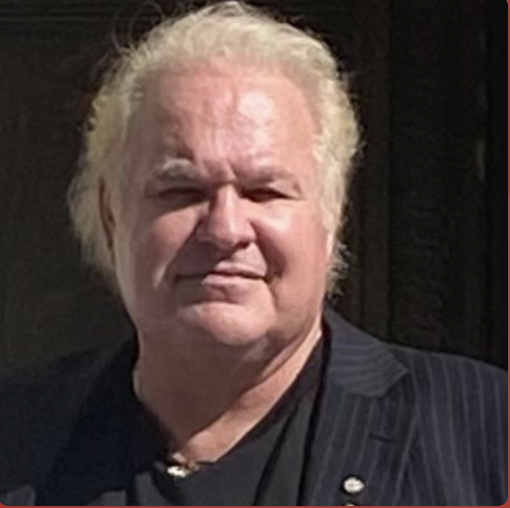
Many musicians learn to play notes. Far fewer learn to interpret, arrange, and transform music into something uniquely their own.
In this conversation, Jonathan Taylor shares how he became one of America's leading classical guitarists, why classical guitar remains one of the most technically demanding instruments, and how he approaches adapting iconic works like Over the Rainbow, James Bond themes, and Beethoven for solo guitar. Along the way, we discuss creativity, composition, practice, inspiration, and the lifelong pursuit of mastery..


Questions Explored in This Conversation
- What makes classical guitar so technically difficult?
- What is the difference between playing music and interpreting it?
- How do musicians adapt famous songs for new instruments?
- Where does creative inspiration come from?
- How do composers develop musical ideas?
- Why does learning never stop, even after mastery?
- What advice does Jonathan Taylor have for beginning and advanced musicians?
- How do you build a lifetime career doing what you love?
Editorial Summary
Following a Calling
Jonathan describes knowing from an early age that music was more than an interest—it was his life's work. Inspired by Andrés Segovia, he committed himself to becoming one of the world's leading classical guitarists, pursuing decades of disciplined study rather than taking a more conventional career path.
“I swore to myself I was going to be one of the top ten.”
Why Classical Guitar Is Different
The conversation explores why classical guitar is often considered one of the world's most demanding instruments. Unlike many instruments that play a single melodic line, the classical guitarist performs melody, harmony, accompaniment, and rhythm simultaneously while working within the physical limitations of a naturally decaying sound. The result is an instrument that requires both technical precision and musical imagination.
Creativity Is More Than Inspiration
One of the most fascinating parts of the discussion is Jonathan's approach to arranging music. Whether adapting Over the Rainbow, James Bond themes, Beethoven, or psychedelic rock, he isn't simply copying existing music—he reconstructs it for an entirely different instrument. The conversation explores musical structure, development, composition, and why inspiration alone is never enough without craftsmanship.
“You have to go somewhere.”
Learning Never Ends
Despite recording more than thirty albums and mastering the traditional classical repertoire, Jonathan explains that his work continues to evolve. Rather than repeatedly performing the same compositions, he continually expands the repertoire by arranging music that had never previously been written for classical guitar. His perspective illustrates that mastery is not a destination but an ongoing creative process.
The Mind Creates the Music
The episode concludes with Jonathan's advice for musicians at every level. Beginners should immerse themselves in great performances, study with experienced teachers, and develop their ears. Advanced musicians, he argues, should remember that technique alone is not enough—the goal is to translate the music already imagined in the mind into sound.
"The music is already there in your mind."
Show Notes
Jonathan Taylor - Official App
https://apps.apple.com/us/app/jonathan-taylor-official-app/id6448588105
Jonathan Taylor on Soundcloud:
https://soundcloud.com/user-75630746-880803498/albums
Jonathan Taylor's Website:
https://new.express.adobe.com/webpage/5R2b8Hv3U7p4r?
The Wonderful Wizard of Oz - Arranged for Classical Guitar
https://www.youtube.com/watch?v=gHmlK3w1ccE
Transcript
My guest today is Jonathan Taylor.
Jonathan's a world class guitarist with 32 albums.
He's acclaimed as one of the most fiery and charismatic guitarist of our time, and one of the best American guitarist and guitar teachers.
He studied music at Chapman University on a presidential scholarship, and was head of the music department at the Newport Institute for the Arts.
Jonathan has performed sold out concerts for UN delegates, American ambassadors, and foreign heads of state.
His music can be heard anywhere you listen to music, iTunes, Spotify, Pandora.
Just type in Jonathan Taylor and you'll find him.
Welcome to my show, Jonathan.
Thank you very much.
I appreciate it.
So one of my themes in my show is doing the thing you're called to do, what you want to do following your dream.
Sure.
So tell me your story and the reason you chose to play guitar, and classical guitar in particular.
Sure.
Well, first of all, I believe that most people don't follow their dreams from childhood.
I actually believe that most people get trapped in a job they don't like, or a career they don't like, or a marriage they don't like, or something like that.
And I think it's very rare for people to follow their dream.
I did that.
I swore to myself I was going to be one of the top 10 when I was very young.
My grandmother was a silent film organist, so I should be playing around the house all the time when I was, you know, in infancy, and a little toddler.
And so I think I had that musical influence in the background there.
He worked with all the people you know about from that era, like Charlie Chaplin, the Keystone Cops, worked many times with Harry Houdini playing, and people say, well, silent film organists, I go, well, you did vaudeville back then as well.
So how did you pick up the guitar instead of the organ then?
I listened to Andrei Segovia when I was very young, and I saw him in a concert when I was like 16.
I listened to him before that and studied guitar before that.
I started really picking out tunes when I was four and five, and then getting more serious when I was 10.
But really kind of, you know, the coup de gras, the light went on when I saw Segovia at the Dorothy Chandler Pavilion in downtown Los Angeles.
And there he was, didn't need a group.
He had just, he's playing all the parts himself.
And so he was polyphonic, the guitar was, and I couldn't believe, you know, what his fingers were doing technically, and then also the beauty of the music.
And so I said, this is what I want to be, what I want to do, and study that, study composition, arranging, you know, many other musical things in college and that.
But I knew that the classical guitar, who was it?
It was the great violinist, Yasha Haifet said, the violin is the most difficult instrument to play in the world, with the exception of the classical guitar.
And why is that?
And I go, well, most guitarists, rather most of the instruments of the orchestra are monophonic.
If it's a clarinet, you have one voice.
Yes, there are dyads and triads on a violin, but not as oft used as the single line.
By that, you mean a single note, like a single on a clarinet at one time?
That's right.
So that isn't the easiest thing to do.
Like on the electric guitar, it's usually single notes if you're not playing chords.
It's not polyphonic, it's not two or three things going on at the same time.
And so I knew that that was going to be, and there's no real-
So when you say polyphonic, do you mean you're playing the bass note with one finger and the melody with another or something like that?
And poly means many, of course, many voiced, and the answer is yes to your question.
So is that with classical guitar in general, what makes it special?
They're doing everything at once?
I think that is true, and it can be complete and whole.
It doesn't need other members.
It doesn't need other musicians there with it.
It is making a piece like, I don't know, Requerdos by Darrega, for instance.
You're doing the tremolo, and then you're playing the bass notes, is playing the melody, and sometimes it's playing accompaniment, and the tremolos are playing the melody.
So a quick question for myself, because I just play a regular guitar.
For anybody listening who's inspired to pick up the guitar, I've seen classical guitars with nylon strings and they're a little bit shorter.
Why is that?
Versus a regular acoustic guitar with?
The nylon strings are meant to, and I won't say shorter, but the neck is wider.
And the reason why the neck is wider and the reason why nylon strings is because your fingers need to get in between the strings, right?
So there needs to be more room.
The electric guitar is played with a plectrum, a pick, and that is close quarters more.
But with the classical guitar, the reason the nylon, before Segovia and Augustine made these nylon strings, I go, well, the gut strings wouldn't hold the sound, because remember, the string is taut, and of course, it's going to slack it, right?
As time goes on.
You mean it wouldn't resonate, it wouldn't hold it, like sustain it?
It wouldn't hold the pitch, it wouldn't be an A, it would be below an A, right?
So, so the nylon strings are also meant for the fingers to...
Oh, you're talking, Nats on perfect pitch, huh?
I never noticed that before with...
Yeah, yeah.
So, so the neck is wider because you're accommodating the fingers on the right hand.
And then of course, you're going to have, what should we say?
A platform in which you're going to create beautiful music in a different way.
It's not electronics, no gizmos, you know, no...
No pedals like the electric guitar players of the 80s.
Yeah, no, no, no gizmos.
I go, well, if you make a mistake, you make a mistake.
It's, you're naked on stage.
So you're not covering up with electronics and that.
One of the reasons the electric pedals came about is the sustain of the sound.
That in, like the piano and the harpsichord, the guitar, once the note is plucked, it fades.
In other words, it's not going...
If you have a bowed instrument, like the violin or the cello, you can move that forward and the sustain is there, but not with the guitar.
So the illusion of legato or connectiveness has to be done with the mind in a certain way, because the physical reality is that the moment it's hit, it's going to start to decay.
Now, with the piano, it's the same way unless you put the pedals on.
And what about the classical guitar?
That's what I was talking about, the classical guitar.
It decays.
Oh, okay.
So you have to keep your fingers on the strings longer.
You can keep your fingers on the strings, but the note will still decay, right?
I mean, the more you hit it, it's going to decay.
Yeah.
You don't bow it.
You're not making a sustain with a bow.
But that's one of the reasons the guitar pedals and that came around, to create that dimension of playing.
So tell me about the one of the videos I saw on your channel was about that.
You trans, you made, you adapted the song Over the Rainbow from The Wizard of Oz.
You arranged it for the classical guitar.
Uh-huh.
And I arranged a whole suite of the pieces from The Wizard of Oz.
Maybe you just saw a standalone arrangement I've done of Over the Rainbow.
I don't know which video.
Well, I also saw the story where the movie company that hired the songwriter.
Was the song originally called If I Only Had a Brain?
Yes.
And what you want to do, I mean, they are adapting children's books at that time in 1938, released in 39.
And MGM, Louis B.
Mayer, they got a screenwriter to adapt one of the books.
There's a series of books.
Those books are actually written.
And some of them in the Hotel del Coronado in San Diego, when L.
Frank Baum took rooms.
That was in those days, early 20th century, late 19th.
In those days, it's very common for people to take rooms and live in a hotel and have your meals there downstairs and that.
People didn't live in suburbia until the 50s when Eisenhower built the roads, you know, the interstate freeways, and when the warriors came home from the war and got GI loans for a house in the suburbs.
I go, well, people didn't live like that in 1938.
So they had this book or you said it was a book and then it was a song.
A series of books, the adventures of.
If I only had a brain.
So the composer, how did that become Over the Rainbow?
Well, that particular song didn't become Over the Rainbow.
I can tell you how Rainbow came about.
They had, they had Harold Arlen, also born Hyman Arlick, the son of a Jewish cantor in New York, wrote most of the songs of the movie before he wrote the ballad later to be known as Somewhere Over the Rainbow.
I will tell you how that came about.
He was driving down Sunset Boulevard going to a matinee with his wife in 1938, and he was headed toward the matinee, and believe it or not, it had been kind of drizzly or rainy, and believe it or not, sounds like a bunch of BS, but it's true that he saw a rainbow.
And people say, oh, how can that be?
I go, well, you know, truth is always stranger than fiction.
And so he saw the rainbow, and like any good composer, he kept in his glove compartmenters, suit jacket or whatever, manuscript paper, and he started to get the basic structures of the A&B themes.
And he started writing them down.
A&B themes for people who aren't musicians, that's like the verse and chorus?
Verse and chorus.
And they would be, and the reason why is they needed a ballad, and that's an aspirational ballad, right?
I mean, you know, in sepia tone, at the beginning of the film, Dorothy wants to get off the fricking farm, I hate it, you know?
And somewhere over the rainbow, right?
Way up high, there was a land I heard of once in a lullaby.
And so then, as we all know, you get to Oz with the house growing up in a hurricane or a tornado.
But the truth about that song is that it should have never been in the movie.
And why is that?
Because it was taken out three times.
And a lot of people don't know that.
And so when, in those days, you'd have daily rushes.
The big cheese, Louis B.
Mayer would say, what did we get today on film?
Right?
What's in the can?
What did we shoot today?
Go down, see the report about what we accomplished.
And there is Dorothy in sepia tone on the hay cart with Toto singing her song.
He hated it.
Louis B.
Mayer hated it.
That stupid hick, Francis Gumm, that's a real name, that's Judy Garland's real name, is Francis Gumm of the Gumm Sisters, a vaudevillian act at that time.
And says, it looks terrible.
So he commanded them to take it out.
Well, other people in the production convinced him to put it in again.
And then somebody else was offended.
Now, this is ridiculous, when you, what I'm going to tell you now.
And people say, what do you mean offended?
I go, well, you know, in our culture, we're never offended by anything.
He said, psychastically, that somebody that octave leap, that octave leap at the very beginning, offended somebody said, well, it shouldn't start with an octave leap.
And you know, the ironic thing is it's so hard to do.
Most modern singers, they need, they need auto-tune to go to do that.
Right.
So, so, so that then it got taken out again.
And then the forces that be, you know, got it back in.
And I go, and it has become one of the most beloved ballads in the American songbook for the last, you know, 80 years or whatever it is.
Right.
And I go, well, you should, when you know the history of something, I go, you should have never heard it.
Yeah, you know, seeing the rainbow, there's some people who they've never written a song and they don't understand.
They think it's magic.
Like you're Paul McCartney and, and John Lennon, you just sit down at the piano and you have a hit song.
They don't understand where the inspiration comes.
Like if he had never seen the rainbow and instead stayed in his logic head, like been like, I have to write a song about the brain, right?
Yeah, it's, it's those.
It would have never happened if he also had never had his notebook, like you say, be prepared, get the notebook, be ready for it.
And the thing is about, you know, the human mind and the memory, I go, well, you'll forget what you do a second late, like 10 seconds somewhere.
In John Lennon's case, he'd use a little tape recorder and he'd play the thing into like one of those cassette recorders.
In my case, because I write songs to Jonathan or even if I have an idea, any idea, I immediately look for pen and paper, like in panic mode, like block it and try to block out any thoughts, like I can't let any other thought come into my head.
Like, what am I supposed to do today?
I lose it in a second.
And tape recorders, if I can reach my phone, I'll speak it, but a pen and paper at least.
Right.
You know, it reminds me to the two other movies.
Bob Dylan song, Knockin on Heaven's Door.
He wrote that that was that was originally made for a film.
I don't know what the name of the film was, but the director too hated it.
And it was amazing that how popular knocking on Heaven's Door.
I know it's a lot more simpler than classical guitar for The Wizard of Oz, and the Born Free movie too, or the song.
Born free, as free as the wind blows, as free as the grass grows.
You know that song?
Sure.
Yeah.
And you know, it's an African hunting movie, or Cage the Animal movie, or something like that, right?
And the director is a tough guy, and he's like, I don't get it.
How did they, how did they, do you know the story on how they convinced them to keep it in the movie, like in a polite way, like, hey, boss, I know you don't like it, but can we give it a try?
The Born Free?
No, for The Wizard of Oz, going back to-
Well, I've told you, I've told you everything I know about how they, back and forth, it was taken out, then put back in, then taken out, then put back in.
And each person had their own reason, like, how can anybody be offended by an octave?
You know how stupid that is, right?
Yeah.
In other words, you can't-
It's like what was in the Amadeus movie.
The King says, too many notes, too many notes to Mozart.
And Mozart says, well, there's as many notes as what it takes to be this piece.
I mean, the King is funny.
So, Over the Rainbow and of course, many of the other ballads and lines from the film, one of the lines everyone knows in Your Little Dog 2, everyone knows we're not in Kansas anymore.
But another line that was very famous was, a heart is not judged by how much it loves, but how much it is loved by others.
And so, there are many episodes to that film.
Many of the characters, like the guy that played the coroner in that film, now they've landed in Oz, and the witch has been killed by the house landing on her, right?
And so, the munchkin, the mayor of Munchkinland, and all the people come out, the lollipop kids and all that, and the coroner comes out to officially say, she's not just most sincerely dead, she's really, really dead, you know, and sings that part.
And I go, well, that guy that played that, you'll notice he had a red, dyed little goatee, and he had his kind of like a monkish habit on, and a green outfit, and then he had his red hair, and I go, he actually became, what's his name, something mine heart.
I go, he became later in life, in the 50s, the spokesperson for Oscar Meyer Wieners, and he became little Oscar.
But you see him in that film, of course, he was very young, but he's made luck to look like an older person, right?
So, you know, there are many stories in about how the wicked witch of the West, Margaret Hamilton, I can tell you stories about her.
She caught on fire when going down the trap door, when she was leaving, you know, she's going to fly off now, and I'm going to get to you.
Better watch yourself, Dorothy.
And now there's a big poof of red smoke, big poof of red smoke.
Well, in those days, the pyrotechnics, I go, well, they didn't know a lot of stuff.
Well, she had on this green paint, and as the bomb, the smoke bomb goes off, it of course, it caught the green paint on her face on fire, and she's going down the trap door to land on a mattress with a couple of union guys, and oh my God, Margaret's on fire, right?
And trying to blot her out.
And so she didn't have, she spent a little while, she didn't have serious burns, but who got seriously sick was the tin man, originally was Buddy Epson, who everyone knows as Jethro Clampett or Barney, Barnaby Jones.
And I go, okay, original.
I go, he's a hoover.
Jed Clampett or the actor was originally a vaudevillian hoover, meaning he was a dancer.
Christopher Walken is a dancer.
A lot of people don't know that.
I go, he started in musicals.
He's a dancer.
And didn't he do a rap video or some video or that too?
I only think of him as a spooky guy.
Well, he's a wonderful dancer.
But so-
That's like Patrick Swayze.
I didn't know Patrick Swayze started as a dancer because he's another tough guy.
You know, a tough guy is a-
Yeah.
Yeah, he was a ballet dancer.
Yeah.
So from Texas.
So a very small guy, very small, very thin, very slight.
So how did you-
what made you decide to choose the Over the Rainbow?
And then how long did it take you to actually work out?
You described earlier how difficult it is to play the classical guitar and do all the parts.
Well, I took-
I have taken music from many different genres, all right?
I have, let's say, American folk music of the 19th century, Stephen Foster.
I have done and adapted psychedelic music for the classical guitar and an album called Psychedelic Love.
You'll see videos up there on my YouTube channel of-
I had too much to dream last night.
And so, film music, I've adapted the 007 themes.
I've adapted-
I wanted to do Wizard of Ovales, and of course, that's contained in the musical, with all the other pieces too, right?
So-
What's your process?
Like, you like the song, clearly, it shows it, then back to what you're speaking of, you know?
Right.
You rarely just sit down, even Mozart, maybe, and just, it all comes out one swoop.
Well, I'm-
Or does it?
To answer your question, I studied composition, a serious orchestral composition I've written.
It's much easier to write symphonic music than for solo classical guitar.
And what do I do?
Well, occasionally, I will use a babbit square and compositionally.
I try not to write anything on the guitar because you don't want to write on the instrument that you're good at.
I can't play piano.
I'm a crappy nothing piano player, and so I use sound sourcing for that, for sounds.
And so I know all the instruments of the orchestra.
I've written for violins, for cello, for clarinet, for piccolo, bassoon, whatever, viola.
And so I, if I'm adapting a piece that has already been written, not, you know, original piece, but then I am taking the elements of that piece, and I'll give you an example.
All right, so all the orchestra instruments are tuned in thirds, with the exception of the guitar, which is tuned in fourths, with one third between the G and the B.
What do you mean in tunes and I'm tuned in third?
That means that in the violin, a G, the next string, if it's G, would be B, right?
Because that would be third up from G.
So whatever the strings are, or whether it's cello, viola, whatever, the instruments have a different voicing because of the way they're tuned.
So this is one of the reasons why the classical guitar has such a unique sound in the voicings.
I go, well, it's a very different relation.
Is it tuned differently?
Is it tuned differently?
It is tuned in fourths, not thirds.
It's not like a regular guitar.
It looks like a regular guitar almost.
It is, right?
It is.
Well, electric guitar is different in that it relies on electronics.
It's mostly plectrum.
It's either chords or melody lines at one, each separately, not together.
And so the relationship between E and A is a perfect fourth.
The relationship between A and D is a perfect fourth.
The relationship between D and G is a perfect fourth.
Now, there is one third from G to B, but then it picks up again the relationship of B to E is a fourth.
Always drives me crazy because when I played the bass guitar, they all stay in fourths and then I go to guitar in that last, that second to last string, kind of different scale.
Right.
So they're tuned differently and the instruments of the orchestra are tuned not in fourths, in thirds.
So what does that mean?
I go automatically, just the platform itself is going to tell you the relationships between the notes is going to be at a different plane, just like if you're going to use an Android phone or an Apple phone.
I go, well, the platforms are different.
Right?
So that is one of the distinctions of this.
So then do you do it on paper then?
In your head on paper?
I can do either or both at the same time.
So if I'm writing a development section, for instance, the Wonderful Wizard of Bob starts out with an adaptation of the fanfare.
The fanfare of the film music from Wizard of Bob is bum bum bum bum bum bum bum bum bum bum bum bum bum bum bum.
Right?
That is the opening fanfare.
And then dun dun dun dun dun dun dun dun dun dun dun dun.
Right?
And I go, well, the opening fanfare is adapted in Clos Coutar.
And then it starts out, instead of doing the order of the pieces, the, you know, it's an arrangement.
So I'm doing the the declaration.
No?
Okay.
You can add a development section.
Okay.
Okay.
You can add to it, your arrangement, and take away or move it.
Okay.
So the difference between Western music, meaning Western civilization, not country and Western, the difference between that and Asian music, and difference in the arts is a very basic thought structure that is common to literature as well as to music.
And what is that?
Exposition, development, and recapitulation.
What does that mean?
Expose either the character or the themes, the tunes, and then they go through a development, they go through an adventure, and then they come out at the other end changed.
Exposition, development, and then you recapitulate.
In other words, you're not the same person coming out as what you were going in.
Lord of the Rings, like Lord of the Rings, goes on a journey and comes back alive.
That's right, right.
There and back again is the title of the book, right?
The Hobbit.
So The Unexpected Journey.
So in Asian civilization, before these ideas came about, I go, well, you just have a pentatonic scale, dun, dun, dun, dun, dun, dun, dun, dun, dun, dun, dun, dun, dun, dun, dun, dun, dun, dun.
Very repetitive, you can be rhythmic in that, but it's just a very repetitive thing.
It doesn't develop.
So that's one reason why Western civilization came out on top, right?
Yeah, I mean, you got the Taylor Swift song, and sure, or, you know, a pop song, they just repeat stuff the whole time, but then they go back, yeah.
That's a very primitive art form.
There's no development.
It's just present the A theme, and then do the, everything revolves around the hook.
I mean, it's not, it's for mass consumption.
It's French fries.
There's no journey.
There's no journey.
It's French fries, right?
It's just for mass consumption.
Is there any good thing at French fries that go?
Probably not.
You know, there's probably good in the moment.
Yeah, there's probably not much nutrition there, right?
All right.
So back to how do you...
I'm still trying to get a picture on my head.
And like, if you want, you're doing this.
I want to do it.
I want to learn classical guitar.
I studied composition for many years, and you have to go to school to study composition.
To give you a quick answer, I've just told you some of the forms that exist in Western civilization.
So in the Wizard of Oz piece, I am starting with the fanfare.
I didn't have to do that.
And then I'm going to a, not the first song, because the first song is actually Over the Rainbow.
You have the fanfare.
The first song is Over the Rainbow, because she's aspiring to be away from this condition that she's in.
And then the next song is Come Out, Come Out Wherever You Are to the Munchkins, which Glinda says.
So instead of doing the Rainbow, which is more of a, that's the least energetic.
It's a ballad, right?
Not energetic, but it's a ballad.
You know, I never thought of it as a ballad.
I always think of ballads like love songs, like slow, sappy, like minor key.
Or I never thought of it as a ballad because it's so inspiring.
Yeah.
Well, it is the slowest piece of all the...
Right there, that's an uptempo.
Oh, evil.
That's programmatic, meaning you have a theme that she is identified with that theme.
Right, the witch is.
Dorothy is not.
And then the scarecrow is identified with the theme.
If I only had a brain.
Right?
And each character kind of has their...
That's called a leitmotif, okay?
Wagner did this.
During this Nibelungen and Siegfried and Das Reingold and Brünnhilde and all those, these each character has a theme.
And that's not always true.
You know, it can be true and other times it's not.
So if you're asking compositionally what I do, those are a few of the ideas that are in my head.
It seems like you have a lot of mean you do you have a lot of experience so.
So it's, it's sounds like something you can't, you can't tell.
Tell me in, in real quick.
Yeah, it's not.
You had the opportunity.
It sounds like growing up.
It's fascinating.
I didn't.
I'm not going to ask you how old you are.
Sure.
You mean your grandmother, you say played Oregon for silent films.
So was your mother or your grandmother?
My grandmother.
Grandmother.
It sounds like you, you absorb some of that culture or whatever the word is for the lost stuff, the stuff that's kind of lost today.
I think the culture is, you know, we probably have the worst diet of any human beings that ever.
Right?
Think about culturally our diet.
You know, the food that we eat, I go, that's pretty crummy.
I mean, Japan has the longest living people, right?
In Okinawa, and they are fish and rice and, you know, good food, right?
But that shaped your music, your journey, your career, your exposure to that.
I think that I'm an American.
So one of the reasons I adapt all these different types of music is I accomplished, by the time I was 24, I knew all the masters, the classic guitar masters, because I had done the Chaconne, Leyenda, Recuerdos, El Hombro, Sevilla.
I had done all the Bach.
I had done all those things.
And so now where do you go?
What do you just keep repeating?
I don't think we need another recording of the Chaconne.
I recorded it umpteen years ago.
And, you know, I've recorded all that.
So what is that repertoire?
I go, it's going to be five albums for anybody, right?
And you have thirty two.
Yeah.
So I go, well, you've done it now.
You're finished.
What am I supposed to do?
Lay down and die now?
You know, I mean, so I wanted to adapt.
For example, I have, you know, Russian folk songs or Polish pieces or pieces.
You know, I'm doing Chopin.
I did an adaptation of the second movement of the Moonlight Sonata.
Dee dee dee dee dee dee dee dee dee dee dee dee dee dee.
Right?
You know, I mean, everyone knows that.
So adapting pieces for classical guitar heretofore never played on the instrument.
And so I've added to the repertoire and done it from many different angles, like Scott Choplin, you know, on the guitar, the entertainer, you know, different things.
So I knew after a while in my mid 20s, I knew, well, I pretty much did a lot of the repertoire, you know, 80% or something.
So you have to go somewhere, right?
So like I thought I climbed all the mountains I wanted to climb by the time was 30.
And I was completely wrong.
I've had quite a prolific lot of experience since then.
Right, right.
So each day that goes by, I'm arranging the I'm arranging two pieces.
I'm arranging Take Five by Dave Brubeck and Incense and Peppermints.
And I'm arranging another and a couple others.
Do you ever play with a band or does that not go with classical guitar?
I have not really played with a band in years when I was a boy, I did.
But no, I'm interested in just being a solo classical guitarist.
I'm occasionally doing concertos with the orchestra.
But mostly I don't really want to be a part of a group.
It's kind of hard because you get overshadowed in the loudness, all the noise kind of drowns you out really fast.
Yeah, and the classical guitar is a very quiet voice, but it also sucks you in.
And then you post each of these that you do.
Tell me about your recording process.
Do you record at homelands since it's just one instrument and you?
Recorded in studios.
It's easy to me when people say, what do you do?
I go, I sit in front of the microphone and play.
Because he knows how to play people.
He doesn't need auto-tune or his computer to fix it.
They just put a microphone in front of him.
The other thing is, when people collect all these guitars, people say, how many guitars do you have?
I go, I've had one guitar for the last 30 years.
Nice.
And people say, well, don't you want to collect?
I go, why?
I can only play one at a time.
I can only eat one meal at a time.
As long as it stays in shape.
I put my pants on one leg at a time.
It's like Willie Nelson's acoustic guitar.
I think it's called Tiger or Tiger.
It looks all beat up.
Say, how do you keep your guitar in shape for so long?
Like Willie Nelson's guitar, Tiger, whatever he calls it, it's all beat up.
Yeah, this guitar is very beat up and I don't keep it in shape and I need new tuning pegs and I need a new tap plate and I just haven't done it.
OK, well, that's inspirational because my guitar is kind of getting beat up too.
You can tell this guitar went all over the world.
Although, you know, the case fits perfectly in the overhead baggage, so I never put it down, you know, in the hold of the ship.
It's too cold to destroy it.
Yeah, you know, that's a myth I got into.
Well, I didn't argue with him because I just let him think he was right.
You know that myth that you should loosen your guitar strings before you put your guitar, check your guitar, if you're going to check his baggage.
You don't need to do that.
I know it's the opposite, right?
Because when I got my guitar, I was like you do.
One time I was traveling long distance and I wanted to check it.
I mean, I didn't want to check it.
I wanted to put it in the overhead and there wasn't room.
So they checked it kind of like when you get off the plane, they'll give it back to you.
First thing I did when I got off opened it and it was like icy, frosty.
Yeah, it's really, really bad.
And then I went flat, which is what happens when you loosen strings, right?
Right.
So this was a luthier who I was trying to ask him, well, aren't you supposed to, isn't it bad?
Do you loosen your strings?
Aren't you supposed to keep them in tension?
The reason that the short answer, I think, is because when the baggage people throw them, if you don't loosen the strings, your guitar might break, not because altitude.
Well, I think that if you subject your guitar to, meaning the classical guitar, to either cold temperatures or very hot temperatures, you have a big chance of something bad happening to it.
Yeah.
So I always put it in the overhead bin.
It works there.
It's fine.
So what are you working on now?
I'm working on the arrangement for take five, the arrangement for incense and peppermints, and a couple other pieces.
And then once you get them, oh, here's a question for you.
Do you ever go into the studio and you're in Southern California?
What part of California are you in?
Huntington Beach, Orange County.
So you got lots of studios from Hollywood and LA around there, real close, right, that you can go to?
You can do that now.
In the old days, you definitely did.
It was $300 an hour back in the day.
I mean, back in those days.
And you don't need it now.
Your iPhone is better.
Your, it's nothing.
All those, do you know those big cameras on the Ed Sullivan show that you'd see people sit on?
I go, yeah, that the red, green and blue chip of 20 years ago, 20.
Yeah, 20 years ago destroyed those cameras.
They're nothing now.
Those cameras are nothing.
You can now put it in your iPhone.
You have more picture clarity and sound clarity in your iPhone than any of that stuff.
But you're saying you don't record at home.
You go into a studio.
I will go into a studio occasionally, but I do occasionally also.
You know what I'm really doing?
Daniel, so I'm always filming on location videos.
So right now, I'm in Cyprus at a location.
But it's been so freaking cold.
I haven't done it.
It's been so cold outside.
Where's Cyprus?
Northern Orange County.
Okay.
And so I did a, I do videos all the time.
So that's how I record.
And if I want to, I can strip the sound off of it.
But, you know, on location, the problem, the good thing about studios, your sound will be perfect.
The bad thing is visually, I go, well, you've got nothing.
And you have to, maybe a kid walks by, maybe a plane goes overhead, maybe, you know, the camera fell into my guitar once.
You know, there's all sorts of...
When you step outside your house, something's going to happen, right?
So...
And are these the same audio tracks you release on Spotify and Apple for just music, or these are just videos?
These are just videos.
They're not the same tracks.
Those were done inside on a controlled conditions.
And if you do one under controlled conditions, and then you release it on Apple or Spotify, you ever get the times when you're like, oh, I spent that money in the time in the studio, I don't like it, let me do it again, but it's too late, I already put it on, then I already released it.
No, I don't.
That's because you're so good, you're tight with your, you play it.
Thank you.
You know, the thing is, Daniel, when you, I do a few takes, and the reason I do a few takes, I go, which one is better?
And I go, I don't know.
You know, this one has, you know, let's say a better feel for this section, and maybe this one has a better feel for this.
Sometimes it's just willy-nilly.
It's not better or worse, it's just different.
Yeah, yeah, it's hard to pick the best one and then...
Sometimes it's not that this is so much better.
And do they ever sound, do you ever record one in the studio, post it, and then someone sees your video, and it's a different medium because they got the, you're doing a live too, which is very respectable with the video.
But do they ever go, this isn't, it's different, it's not the same song.
I like the video better than the audio or the audio better than the video because...
Yeah, I haven't had that comment yet, but I'm sure people think that.
Just because maybe the song is...
Do you always play it exactly the same?
Exactly?
Because I'm such an arranger and that, that I actually looked at my year old recording of Bond 2 with about the James Bond films.
And I looked at it and I said, huh, I have, sometimes it's like an ongoing process of arranging.
So do I always play it exactly the same?
No.
Sometimes if it's an arrangement, I will keep arranging.
So I looked at that old video, a year old, and I realized, oh, wow, I took out that section and added this one.
And I didn't remember I did that.
So Jonathan, I don't know how much time you have.
I've got two more questions for you.
Here, please.
What advice would you give to somebody who, okay, so two types of people.
Let's start with the beginner.
Someone just, I'm inspired.
I'm going to learn how to play Wizard of Oz Over the Rainbow.
Beginner, what advice do you have for them?
And what advice do you have for an expert classical guitarist?
Okay, the first advice is that you should listen to the recordings of Segovia, the Romero's, Parkening, Julian Breen, Jonathan Taylor, and listen to those recordings, watch those videos, get a teacher at a university somewhere.
There should be a classical guitar teacher somewhere, and start studying with the masters.
I studied with Pepe Romero privately in his home for five years, and he was one of the greatest guitarists in the world.
And master class with Grifford Parkening, I knew some Metzogovia, I didn't study with him, but I've spoken with him and that.
And he gave me some tips.
And so that's my first advice for beginners, and to learn how to read music, and learn how to start picking things out with your ear, and find players that you like, and what turns you on, what inspires you.
Now for an expert, I'd say, always make sure your head is matching with your fingers.
The most important thing is to translate from your mind the feelings and emotions that you have, as well as your thoughts about phrasing and that, on to the instrument.
You actually don't create music with the guitar.
The music is already there in your mind.
And you're just kind of, what should we say, playing through the guitar, the music that's already there.
Nice.
Is there anything you want to add that we haven't talked about?
I know.
We'll do another one and we'll talk about other stuff.
But, yeah.
And tell us how we can, where people can go listen to your music and watch a video.
Just type Jonathan Taylor Guitar into Google and you'll get a zillion links.
You'll get my SoundCloud thing, you'll get my YouTube channel, you'll get Spotify, you'll get everything.
You know, just Jonathan Taylor.
Make sure you put guitar in there because there's a black football player that comes up with my name.
And although I look like a black football player, I'm not a black football player.
And he's a very fine athlete.
But if you type guitar in there, you'll get me Jonathan Taylor Guitar.
And I have it.
It'll be in the show notes, too.
Yeah.
And you have what?
And I have an app in the Apple Store.
If you just type Jonathan Taylor Guitar, you'll find it come up there.
Oh, cool.
What does the app do?
It has videos on it and audio files and adventures and touring, all sorts of things.
Is that kind of like the new way to do things versus a website?
Yeah, I think so.
Yeah.
The website is past saying now, if you know what I mean.
Yeah.
You just got to download.
The only frustration I have with the app store is, forget my Apple password, get locked out all that other stuff.
I do it all the time.
That's been great, Jonathan.
I appreciate you.
Being with you, Daniel.
We'll do it again sometime and really love it.
And you have a wonderful rest of your day.
You too.