
About This Episode
Freemasonry has fascinated—and divided—people for centuries. It has been described as a charitable fraternity, a philosophical society, a network of influential leaders, and the subject of countless conspiracy theories. In this episode, I speak with Austin Shifrin, a 33rd-degree Scottish Rite Mason and longtime member of the Free and Accepted Masons of Pennsylvania, to explore what Freemasonry is, how it works, and where popular myths differ from the organization's stated beliefs.
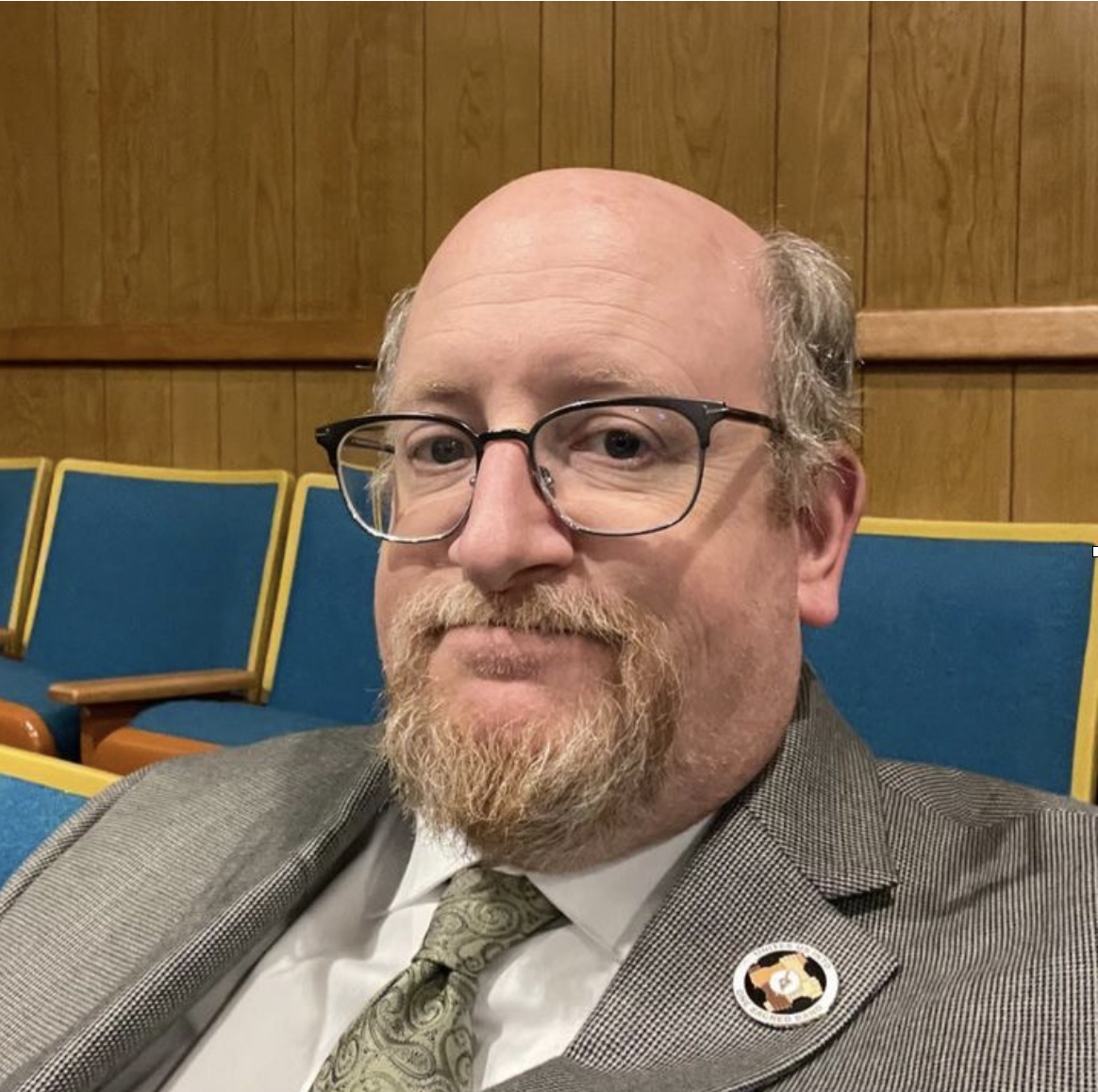
Rather than relying on speculation or internet rumors, this conversation draws on Austin's firsthand experience as a member, author, and speaker within Freemasonry. Together we discuss symbolism, degrees, secrecy, politics, history, and why many misconceptions persist today.



Questions Explored in This Conversation
- What is Freemasonry?
- Is Freemasonry a secret society?
- What does a 33rd-degree Mason actually do?
- Are Freemasons connected to the Illuminati?
- What is the relationship between Freemasonry and the Knights Templar?
- Does Freemasonry influence politics?
- How does someone become a Freemason?
Interview Summary
The conversation covered several recurring questions about Freemasonry, including its origins, symbolism, organizational structure, secrecy, and common misconceptions. The sections below summarize the major themes discussed during the interview.
What Is Freemasonry?
Austin explains that modern Freemasonry is a fraternity focused on moral development, fellowship, and personal responsibility. While many of its traditions originate from medieval stonemason guilds and symbolic rituals, today's organization emphasizes ethics, service, and lifelong learning rather than political or financial influence.
"The 33rd is not about what you have already done... it's about what we expect from you from now on."
Why Are Freemasons Considered Secret?
The discussion distinguishes between secrecy and privacy. According to Austin, many traditional signs, ceremonies, and methods of recognition originated as practical ways for skilled stonemasons to identify one another. While some rituals remain private, much of Freemasonry's philosophy, history, and charitable work is publicly available through books, websites, and educational outreach.
"There is no single coordinating body over all of Freemasonry."
Separating Conspiracy Theories from Historical Evidence
One of the central themes of the conversation is evaluating common claims surrounding Freemasonry. Austin discusses frequently repeated ideas involving the Illuminati, the Knights Templar, political influence, and hidden control, explaining which claims have historical foundations, which are symbolic traditions, and which lack supporting evidence.
"Everybody likes to have a boogeyman."
What Does a 33rd-Degree Mason Actually Mean?
Austin explains that the 33rd degree in Scottish Rite Freemasonry is an honorary recognition rather than a level of secret authority. It reflects long-term service and leadership within the organization, with an expectation that recipients will help preserve and strengthen the fraternity for future generations.
How Do You Become a Freemason?
Whether you're a skeptic or simply curious, this episode offers a rare, insider perspective on one of the world's most mysterious fraternities.
Show Notes
Austin Shifrin, Amazon Author Page
https://www.amazon.com/stores/Austin-Shifrin/author/B09Y63VGJN
More Light: Collected Masonic Writings 2017 - 2021
A collection articles from the magazine of the Scottish Rite Valley of Pittsburgh, along with a history of Freemasonry.
https://www.amazon.com/More-Light-Collected-Masonic-Writings-ebook/dp/B09WZDBX8S
Black Ink, Farther Stars.
Examines topics that give insight and understanding about the Masonic fraternity.
https://www.amazon.com/Black-Farther-Stars-Austin-Shifrin/dp/B0DBCD7PBM
Connect with Austin Shifrin:
Facebook: https://www.facebook.com/profile.php?id=100086089363075
Instagram: https://www.instagram.com/austin_shifrin
About the Host
Daniel Stih (danielstih.com) is an aerospace engineer, software engineer, indoor environmental consultant, and author of 12 books. For more than 30 years, he has investigated complex problems spanning engineering, technology, the built environment, and human decision-making. His work explores how evidence, assumptions, and systems shape the conclusions we draw—and whether we're solving the right problem. Learn more about his approach in Why I Think This Way.
Transcript
My guest today is Austin Shifrin.
We're going to talk about Freemasonry and the Masonic.
Since 2006, Austin has been involved in the Free and Accepted Masons of Pennsylvania as a member in two regular blue lodges and seven other Masonic bodies.
Of notable accomplishment, he received a 33 degree in Scottish Rite Masonry.
The articles he's written for Right Now, the magazine of the Scottish Rite Valley of Pittsburgh, have inspired spirited conversations.
His two books are More Light, Collected Masonic Writings 2017 to 2021 and Black Ink Father Stars, both written to encourage discussions about all things Masonic.
Welcome to my show, Austin.
Daniel, thank you so much for having me.
I've been looking forward to this a great deal.
Me too, because this is a mysterious topic.
How did you get involved in this?
Because I'm sure a lot of people are wondering, how do you get into this almost like secret society?
It's so funny.
It's a common thing among Masons to share this story with each other.
The more fellows discuss this, the more patterns you tend to see a little bit repeating, that there seem to be common ways that fellows wind up joining Freemasonry.
It's obscure to many people.
Then the funny thing is, if you have a family relation who's been involved, and they're active in it when you're in your youth, and you get some exposure to it, it doesn't strike you as being so strange and obscure.
If you grow up exposed to it.
Kind of like the religion or any other organization.
Much the same way.
What seems exotic to you might seem perfectly ordinary to somebody else.
I guess that's one of the interesting things about life, isn't it?
Sharing our stories with each other.
I think there's a lot of myths.
I'm going to get to those, ask you about them, that it's a secret.
One of them is that Freemasons descended from the Knights of Templar.
Sure.
Common enough story that gets kicked around.
My best understanding is that there is no really reliable historical evidence that proves that, but it has been incorporated so much into our own mythos.
And we, you know, there is a bre-
now we're gonna have to circle back to my story about myself.
Yeah, go back.
No, no, but there is a branch of Freemasonry that derives much of its ritual, its heritage and its lessons from the Knights Templar.
So it does tend to help promote that legend, whether or not the historical tie between the groups is necessarily that accurate.
It does tend to promote that story.
So it would be like the story of Jesus and the story of the Bible, and the Jews have a Bible and the Christians have a Bible.
There's some piece or part of it that's true or authentic, but not literally one-to-one, we are the Knights of Templar.
I love the way your conversations go.
Look, the truth is that archaeologists in the Middle East continue to uncover relics and items that help support some historical veracity of some of the things that we hear about in the Old and the New Testament.
Like place names and events that happened in these locations.
We know that some of this is accurate, and if some of it is harder to verify, then I think a more valuable question is, does that make the stories any less important?
Does it make the stories any less instructive?
Don't we still gain some value in our lives by sharing these stories, whether we can prove them factually or not?
Well, it's also with today's Internet.
Statistically, if you ask AI a question, it's not the right answer, it's the most popular one that people post that will come up as the answer with AI.
There's a lot of misinformation propagated.
Tell me back to your story though.
Did you just wander into a meeting one day or someone tapped you on the shoulder and go, hey, you want to join our club?
Not entirely.
My story is one of the variants on stories that I have in common with some of the other fellows that I've met.
My grandfather was a member.
I grew up in New York City and when I was in my teens, I started to become more aware of the fact that this was something that he had been involved in.
Now, he hadn't been active in a little while by the time I was that age, but I uncovered the fact that he had been a member and he wasn't being especially secretive about it, but because he wasn't active anymore, it wasn't something he discussed a great deal either.
Is there a secret, not a secret handshake, but a code of conduct?
I guess it would be like any meeting organization.
You don't talk about business outside.
Is there anything like that, a rule like that?
Daniel, you asked terrific questions.
Not only is there a secret handshake, there are several.
You learn several as you progress through the things that you learn in this organization.
There is also a code of conduct.
The code of conduct dates back to the actual origins of Freemasonry.
Freemasonry began most likely in the 14th or 15th century with fellows who were actually building things out of stone.
A guild of people who were building cathedrals and towers and walls and castles and so on and so forth.
This was effectively like a trade union.
When you were teaching somebody a valuable skill for a career, for one thing, you wanted to make sure that if they were to travel from their hometown to somewhere else and present them to someone else, a prospective employer as a Mason, they needed to be able to prove that they were what they said they were.
So if they approached a group of masons elsewhere, they needed to be able to demonstrate something that they could only have learned in this union that nobody else would know.
That's the reason that the group had secrets in the first place.
But as far as a code of conduct, like some other organizations, this fraternity of men didn't want anybody to go out into the world and set an inferior example that would reflect poorly on the rest of the group.
So not only did this union teach these men a trade, but they said, if we're going to permit you to use the label of our group to categorize yourself, if we're going to permit you to go out there and represent yourself as part of our group, we want to make sure that you are also going to be upright, well-behaved, civic, kind to others, you know, a broad list of other characteristics.
And they said, you have to promise that you're going to adhere to this because we don't want you to walk out into the world and reflect poorly on our group.
Now, in terms of proving you are who you are, is that where this symbolism comes into place?
Because a lot of people believe in, if you go downtown, there's a building and there's a certain symbol, honor, shape or symbol that's a code for something.
I'm going to give you the good news and the bad news.
A symbol doesn't genuinely prove anything.
I can put a cross or a star of David on a chain around my neck.
That doesn't prove to you I'm a good man, does it?
That's exactly how I was going to put it.
It's unfortunate.
The symbols, though, are supposed to be mnemonics.
Do you know what I mean by a mnemonic?
Something to help jog your memory, right?
Each of the symbols that you see represents a lesson that we're supposed to learn in the lodge.
The symbol that you see on this little plaque behind me, or on this ring that I'm wearing, you see a square, right?
It's this little bottom part that's 90 degrees, and a compass sitting above that.
That's for drawing circles, and a letter G.
Each of the components is supposed to remind us of a lesson that we were taught in the closed lodge, where only members were sitting, about how we're supposed to treat each other, how we're supposed to think about ourselves, and our relationship to some higher power.
Nice.
So, now, to bring things back a teeny bit, here I am, I'm 17, 18 years old, and I approached my grandfather, and I said, you know, I know, he had, by the way, he had always been sort of a hero of mine.
I had always looked up to him as an intellectual.
And I had come to understand that he'd been a member of this group.
And I said, you know, I understand that it is an organization that has some secrets.
I don't know how much you can tell me, but it's something that I would like to learn more about.
What can you tell me?
And he said to me, well, Freemasonry is fundamentally, first and foremost, a fraternity.
You're about to go away to college.
Why don't you go see what the fraternity experience is like?
And if you enjoy it and it's something that interests you, let's talk about it more.
And I was fine with that idea, except there was a miscommunication here, because I think in the 50 or 60 years since he had been on a college campus, he didn't realize how much fraternities had changed.
So I went away to school.
I came here to Pittsburgh to go to college, and I went to some fraternity social happenings.
Oh, he asked you literally to go to college fraternity.
And I was like, well, this is fun, but I don't see this as being something I want to pursue for the rest of my life.
And so he and I didn't end up discussing that more.
I see.
Fast forward like a decade, I'm still living in Pittsburgh, and I knew that I must have missed, something must have gotten lost in translation.
So I'm living in Pittsburgh and I'm living in a particular neighborhood called the South Side, where there's a lot of rock venues, there's a lot of rock shows, and so there's always flyers hanging everywhere.
And I'm walking around in the neighborhood one day, and I'm walking past the delicatessen that belongs to a friend of mine, Eric.
And hanging in the window are all papered, all these Xerox flyers for all these rock shows.
And off in a corner is a strange flyer that says, come out and hang out with us and eat hoagies, sandwich rings, watch the Pro Bowl football game, shoot some pool, and it's sponsored by, and underneath I see the logos of several different Masonic groups.
And I'm like, well, that's different.
And I walk inside and I find my buddy Eric, who owns this deli, and I said to him, what is this unusual flyer hanging in your window?
And he just lights up.
He's like, oh, I'm so glad you asked.
He says, I've been involved with the Freemasons for five years.
It's something I care about a lot.
So I'm helping them host this social, where people who are already members can hang out and enjoy each other's company, and people who are not members can come meet some of the people.
That's fraternity life.
That's like a fraternity.
Yes, yes it is.
So I approached him, and I just basically told him this story about my grandfather and how I felt like we had gotten our wires crossed somewhere, and there was something I probably didn't understand correctly.
And my buddy Eric said, well, why don't you come out, meet some of the guys, see what you think.
If you enjoy the event, then let's talk about it some more.
And I went into it not being sure what to expect, because I thought about some of the same myths that you have heard about and were asking me about at the very beginning.
Was this going to be a bunch of fat cats with cigars in a back room pulling the strings of the whole world?
Was it going to be like the Stonecutters episode of The Simpsons?
Or the occult like rituals?
Sure, right?
These are the questions.
And I get there and I was like, oh, this is a bunch of just nice ordinary dudes.
But more importantly, there was a certain type of diversity in this room.
So there were guys who were attorneys and who were professors, but there were also guys who were like utility workers and appliance repairmen.
And I was like, oh, so it's people from a wide variety of different backgrounds and walks of life who might not otherwise have any reason to come together, but they have this.
And I was like, well, this seems really nice and wholesome.
So afterwards, I said to my friend, Eric, yeah, this is something I want to know more about.
He was like, oh, good.
Well, you just took your first step.
And then did you probably want some in through some initiation, but where I'm really leading to is you've got the 33rd degree Mason, which is at the top of the pyramid normally, right?
The top of one version of the pyramid.
Now, another thing I got hanging behind me here, there's this old timey diagram that talks about some of the different subgroups within Freemasonry and the different routes that people tend to go.
So that 33rd for people just listening, it's quite colorful and detailed.
It's not a simple flowchart.
It's quite elaborate.
And it's a little convoluted.
But, you know, that we can come back to that 33rd.
You're asking.
It's like a work art, that flowchart.
You know, I think our lives should be filled with more art.
I think we would all stand.
You've got some cool artwork hanging behind you, for any listeners who aren't familiar with that before.
Oh, but I'm getting off topic again.
Yeah, to your 33rd degree.
And then what's special about it?
Like what's your responsibilities?
What did you have to learn or do etiquette wise?
Like we're talking about code of conduct.
And do you have any response?
We'll talk about the 33rd, and then we'll work our way backwards a little bit.
Okay.
Okay.
The 33rd is actually an honorary degree.
A lot of the different branches of this organization operate on a similar dynamic where you petition to join.
That's a word that we have a tendency to use.
It just means an application form.
You approach the organization, you say, please, I would like to be a member, and you send in an application form.
The 33rd is one of the few things which you cannot send an application in for.
There is a offshoot of regular masonry that's referred to as the Scottish Rite.
Here in the US, it's basically an optional activity.
So like I said, we're going a little backwards, but I'm sharing that with you anyway.
In the Scottish Rite, meaning in the Freemasonry group, the Scottish subgroup is optional, kind of like an elective or a tangent.
Very good.
Yes.
The Scottish Rite contains, hold on, make sure I get this straight, 28 degrees.
No, hold on.
I got my math wrong.
Sorry, 29 degrees.
See?
You're a 33rd degree of the regular Mason or the Scottish Mason.
33rd in Scottish Rite.
So I'll explain to you, because like I said, you chose to do this backwards.
It's going to get a little more confusing, but I promise I'll bring it home.
So Scottish Rite has 29 degrees.
Remember, it's an optional thing that you can choose to do.
When you join a regular Lodge, it is an initiation process that you do not just receive one initiation ritual, you receive three.
Those are your three degrees.
But if you choose to do Scottish Rite on top of that, you have this other 29, that brings you to 32.
So all over the US and other places in the world, you will find fellows running around with a ring or a hat or a shirt that says 32 on it, because they are a Scottish Rite Mason.
The fellows who govern the Scottish Rite are the 33rds.
It's an honorary group, and every so often, the guys who already have this degree will convene and discuss who they would like to confer the degree on next.
Then those fellows will get tapped and say, guess what, you're next in line to receive your 33rd.
It's like a teacher, so you can pass on the knowledge to new students in the future?
The 33rd is an honorary degree, but really a fellow who I admire greatly, Sam Williamson, taught me, he said, this degree is not about what you have already done for the Scottish Rite.
It's about what we expect from you from now on.
Basically, I am now responsible for being a good custodian of the Rite, helping make sure that it can succeed and persist long enough to continue sharing these lessons with other men.
And prevent the misinformation and disinformation, which is probably why you write your articles for the 2D, right?
You know, I write for two audiences at once, and that's always going to be a little bit of a challenge.
I like to write for fellows who are masons who want to understand more about what the organization and its philosophy and its underpinnings have to offer.
But by the same token, yes, I think it's super important, to the extent that I can, to get good information out to the general public, to the extent that it's at all possible to help combat the tsunami wave of bad information that's out there.
Okay, so a bad or piece of information that's probably nothing has a truth wrapped around it completely, that Freemasons are connected to banking and politics in this quote new world order like conspiracy theory.
I can tell you how very little accuracy there is in that.
Now, why would you grant any kernel of truth to that statement?
I'll tell you why.
Because any organization likes to flaunt its most successful members.
So anytime American Freemasons are trying to make a good impression on men who might potentially be interested in joining, they'll trot out that list of how many US presidents have been Freemasons, right?
You will trot out some kind of demonstration of the people who have been successful, who have risen in their fields, so on and so forth.
That doesn't mean that any coordinated effort is actually going on behind the scenes to run anything.
But the organization does have a tendency to parade its most successful members, which is pretty much true of any school, college or university you've ever heard of.
We'll say, hey, look how many of our members went on to be successful in this thing or that thing.
It totally makes sense.
You will still have some kind of influence because if you have this group of people, it's going to be natural that you have some kind of something you all share common interest in politically and like you mentioned, like so-and-so is in one field, one professional.
You have a diverse group of people.
Yeah.
Would it be true you have no connection to politics?
You make that like, let's not go there to your group, or it's optional?
You really do ask terrific questions.
The fact of the matter is that there is a semi-spoken and semi-unspoken prohibition about talking politics in large.
You're just supposed to avoid discussing it to the extent it's at all possible.
Now, that's the US take on things.
I am told very clearly that this is different in other countries.
There are countries where Freemasonry creates a coordinated effort to try to have some kind of political impact or influence within their country.
It's not true in the US.
And in fact, we are urged not to discuss politics.
Why?
Because it is more likely to foment division.
Yes, mm-hmm.
Maybe never more true than today.
There are men that I sit in lodge with who we are diametrically opposed on the US political spectrum.
What we choose to focus on is the things that we do have in common.
So we have conceptions of ethics, civics, and morals that we find common ground in.
And we say, let's choose to focus on that.
Let's respect and appreciate each other, both for our similarities and our differences.
Which would help make the world a better place.
Maybe that's the original intention.
Guess what?
You just figured out the big secret of Freemasonry.
Poof!
The veil has disappeared.
In Freemasonry, the beginning lessons are, look around you at this group of men who are in this private setting, in this private session, in this meeting that is closed to the rest of the world.
Try to learn to recognize them in yourself and yourself in them, and treat them as brothers.
But very quickly on the heels of that, one of the next lessons that we are taught is, someday you are going to need to learn to extend that courtesy to everyone you meet.
If we could really inculcate that in everybody, wouldn't it be pretty cool?
Historically, why do you think in other countries it's shifted a little bit to be in more, they are in politics more so than the US?
The best of my understanding is because conceptually, you've already understood what I'm saying to you about us hoping that the lessons that we teach to our membership can gradually and eventually influence the world around us to create positive change.
This is another group just deciding that a different route will be more effective to a similar goal.
So it's up to, I think my real question was, is there a bigger group above these little groups?
That's part of the, you know, maybe a little bit of conspiracy.
There's like bigger, there's a big pyramid and there's small pyramids.
Is there any truth to that?
I swear, if I had had an opportunity to feed you a list of questions, this could not have come out better.
The fact of the matter is that globally, there is no single coordinating body over all of Freemasonry.
In the US, it is governed separately state by state.
So an individual body of members, like you would say, the Boy Scouts have a troop, the Freemasons have a lodge.
The word lodge is used three different ways.
It's a reference to the unit or group of men who are all members under one little sub-branch.
So the lodge that I belong to is number 812.
We are Lodge Ad Luchum.
That is our lodge.
But in a lot of cases, people will also use that word to refer to the building.
Oh, I was driving around in a suburb and I went past this building, and it's got a square and compasses on it.
That must be a lodge.
But we also use that word to refer to a session of a meeting, right?
It's held on the fourth Monday of the month.
Oh, we held lodge.
So it would be grammatically correct to say the lodge held lodge at the lodge.
Is there a trademark or not a patent, but some ownership to it?
Daniel, that's actually one of the biggest problems we have.
You can't trademark the square and compass, which means, unfortunately, that people will slap it on all sorts of things and sell it, and because there is no one central authority that owns it, there is very little we can do.
So each group literally is its own business entity in a sense?
Well, I know about this.
For people who are listening and not watching, Austin holds his hands about four inches apart.
I know about this much about the legal and tax structure of these organizations.
I don't hold myself out as an expert, so I don't know how much.
It's probably like a church.
You could be a priest and you want to start a parish, and there's some kind of organization.
Let's come back to that in one second.
So the reason that I was bringing up these ideas about the individual units of a lodge is because all of the lodges within, let's say, Pennsylvania, are governed by one central authority for our state, and we refer to that as a grand lodge.
There is a grand lodge of Pennsylvania.
It's headquartered in Philadelphia.
They have a beautiful building, but there's also a grand lodge of Massachusetts, and a grand lodge of New York, and a grand lodge of Arizona, and a grand lodge of Texas.
And each of the states, all of the states have their own grand lodge governing the little, what we refer to as the subordinate lodges.
Now, when you get into some of the optional organizations that I was discussing, like the Scottish Rite or the York Rite, you have a grand body that actually governs for the whole country, but you still don't have one authority running the whole world.
So that's another thing that sort of undermines the conspiracy theory, oh, that the Freemasons have some coordinated effort to run the world.
We don't even have one body that covers the whole world.
Plus, if you couldn't talk politics locally, I imagine it'd be more difficult to get together like with China, and speak American Chinas.
So back to your responsibilities as the 33rd, besides teaching people manners, what other kinds of things do you write about?
Do you try to keep the new people coming in, really teach them?
Let's see.
So we focus on civics, on virtue.
What else can I explain and describe?
Now, it's interesting because the legends that Freemasonry has built itself upon all derive back from the Old Testament, something that you and I were discussing just a little bit ago.
So sometimes I'll write, expanding a little bit on what people may or may not be familiar with about those stories.
Now, that might be ethnocentric.
That might be a cultural bias, but the-
Can you give me an example?
Sure.
I'll give you the-
I think the best example that I can point back to is this, right?
You have this fraternity of men who worked in stone.
It gradually evolved into something that was more of a intellectual and spiritual pursuit among people who still harkened back to this guild, this trade union.
And that union always leaned pretty heavily on the story of the construction of King Solomon's temple.
So you go back to the Book of Kings in the Old Testament, and there's a description about how there was David, who was king in Israel, and he wanted to build a temple.
And he was advised that because he had been a warrior king, a person who had engaged in such violence, it would not be seen as favorable for him to build this temple, but that he was promised a son.
And his son Solomon would be considered qualified to build this temple.
And there's a story of how all of this came to pass, and the Masons have always harkened back to this legend where they styled themselves as the ones who were present at the construction of the temple building this edifice.
Now, do I know whether I can rustle up archaeological proof of that?
I cannot, but it has always been woven into the mythos of this organization.
So there's a lot to be explored and a lot to be unpacked there.
That's something else that I also talk about.
Is it passed on to you verbally, or do you have, like, when I go climbing to see if a mountain's been climbed, there are books in the back office at the National Park Service.
In your fraternity, do you have something like that you can reference that's not maybe on the Internet?
So I think there's, like, maybe three different categories of this transmission of information, right?
I'm going to start with the stuff that's about...
Okay, I'm going to start with the stuff that's the most public, right?
Many books have been written by many authors concerning Freemasonry, some of which are accurate and factual because they were written by, you know, men who were Masons.
They were speaking from the inside.
They weren't conjecturing that stuff.
It's considered perfectly legit and permissible to put things into writing that are not considered part of the essential secrets, right?
The essential secrets really boil down to what I refer to as the modes of recognition.
So you remember I was telling you earlier, there is this notion that in the early days when it was genuinely a guild, a union, and they were trying to teach a career, they wanted to ensure that a fellow traveling from one location, one cluster of masons to another, to meet and to work with people that he might never have seen before, he needed to demonstrate something to them that would prove in their eyes that he had been trained by the legitimate group and was not an imposter.
So, if he was able to...
It's not like how good you are, it's do it this way, cross your T this way, anyone can cross it.
Somewhat like that, right?
If I can, if I can reproduce and perform the secrets that I learned over here to somebody over here, then they know that I could only have learned them from fellow masons.
Well, the short answer is clearly something has to be private in any organization.
Everything's not public in any organization.
Look, I understand that different people have different life experience.
If you happen to be a guy who works for a large corporation, they don't just let people saunter willy-nilly in and out of companies nowadays, right?
You have an ID badge.
Even the vice president doesn't have access to some of the things the president of a corporation does or the CFO, the finance officer.
Yes.
Even the leadership has different levels of hierarchy.
If you want to walk into that business, you got to take your little ID badge and you got to swipe it in a little doohickey, and then either a siren is going to go off and they're going to throw you out of there, or something is going to go bing and they're going to let you in, right?
In an era where none of that technology existed, someone else needed to prove they're bona fides.
They needed to be able to demonstrate to somebody, I belong here, but I'm getting off track.
So, no, you're still on track.
Now, also, by the way, they must really trust you.
You're the 30th for your level that you got awarded.
They must really trust you with.
You raise a perfectly good point.
They do.
And why would they come to that conclusion?
What makes them capable of trusting me?
Well, it's almost two decades of service to the organization.
So, you are being watched when least suspecting, right?
And the fact of the matter is, guys who are already in these leadership positions, in this other echelon, are observing your commitment, your dedication to the organization, your willingness to go out of your way to do something positive, supportive and constructive.
And they say, well, you know what?
That's the kind of person in whose hands we want to leave the future of the organization.
Yeah, not somebody like in my climbing realm.
I thought I'd found the kid to be my, that I could mentor.
And like my secret stuff behind climbs that I was doing, climbs that hadn't been done, climbs that I would do if I lived to be old enough.
And first and next thing I know, six months later, he's talking about putting everything on the internet.
I'm like, that wasn't what I had in mind.
Yeah.
So probably some similar.
They don't want someone coming in for a year and taking all the knowledge, like a business, like we're talking about, like any-
Right.
I mean, you got it right.
So sometimes there's an aspect of seniority when people rise up in an organization, but it ordinarily isn't purely just based on the fact that they've been there X number of years.
Okay, well, we'll award him some kind of promotion.
Yeah.
It's not done exclusively on those years.
The question is, what did he do with those years?
So I think I covered most of the big conspiracy theories, but I have to mention this word, because it's on everybody's mind, that the Freemasonrys are tied to societies like the quote, Illuminati.
Well, a few hundred years ago, they were.
There was a real organization that existed called the Bavarian Illuminati, and as a matter of fact, they wanted to infiltrate Freemasonry.
And the fact of the matter is, they were shot down, they were squelched, and the Illuminati no longer exists.
And everybody likes to have a boogeyman.
Everybody has to have an imaginary monster under the bed that they need to be able to point to and go, this is the cause of all the world's problems.
But I've never heard this part of the story.
So they tried to infiltrate, so say I'm part of the Illuminati, and I go, oh, I want to join your Freemasonry, but then I got to put in 20 years or 10, 10 at least before I get anywhere.
And in the meantime, just by observing and becoming friends with them, you realize their true motives were, their intentions weren't authentic.
I mean, look, I can't speak in too much detail to it only because I wasn't there.
Right, right.
Like I said, you're talking about a couple of hundred years ago.
I know I'm a little bit gray in the beard, but I haven't been around that long.
But the fact of the matter is that the Freemasons sometimes get thrown under the bus for things.
Illuminati gets trotted out of the closet for the 900th time.
Because people often feel a need to be able to point to something sinister and large and overarching, to explain aspects of their life that they're disappointed about, instead of maybe recognizing that there's things that they could be doing to affect positive change instead.
Control.
They want to feel, they want to play victim and think somebody else is in control.
There's a fair amount of that going around.
So wait, if we can get back to something, books, right?
So it's fine to put plenty, there are many things about Freemasonry that you can put into writing without really jeopardizing anything.
Now, but one of the things that you were asking was how do people learn these lessons and how do people teach these lessons?
And for centuries, it was done exclusively in a manner that we refer to as mouth to ear.
You were not permitted to put anything into writing.
And the only way that people could learn and the only way that people could teach was to get together.
Kind of the way my buddy Eric taught me the first oath that I needed to memorize.
In fact, we didn't live very close to each other.
We would do this on the phone.
We would ensure that each of us was in a place with total privacy over the phone.
And he would give me a couple of sentences and I would memorize that and I would parrot that back to him.
And he'd say, okay, now you're going to call me a week from now, and you're going to see whether you can remember that couple of sentences.
And a week later, I'd call him, he'd correct me on two or three words.
I'd recite it correctly.
He'd give me another two sentences.
Oh, you couldn't write it down.
Nothing in writing.
And this went on for months until I had the information that I needed and I could recite this entire oath.
So, now, for better or for worse, in recent years, in an effort to make these kinds of activities easier and more convenient for busy modern men, some of these things have been committed to writing.
And the lodges and the grand lodges keep a very close eye on how many copies of these booklets exist, and they are numbered, and, you know, your lodge secretary needs to keep track of where they are.
A great deal of caution is exercised with these printed rituals.
We do the same thing at a board.
I'm a board member of a non-profit.
We do the same thing.
They're numbered when you're in a meeting, and nobody's going out the door at the hotel until everyone passes on those booklets that are numbered.
Yep, so you understand this perfectly.
So the three levels of things that I'm telling you about, right?
There is teaching and learning that goes on mouth to ear, which is the oldest and most traditional thing that Freemasonry has.
There is this middle ground where there is ritual that in the past decade or so has been committed to writing.
You know, some people feel like that move was the best thing that happened to the organization, to help out fellows for whom some aspects of this were inconvenient.
There's an argument that could be made that, in fact, there was a side effect of requiring that this be done mouth to ear that was positive, which is that you're creating more excuses for socialization.
There's more guys hanging out one-on-one.
Okay, after we get done practicing, maybe we'll have coffee and cookies, maybe we'll have a beer, maybe we'll hang out and just talk and share with each other about our lives, and that was facilitated by the fact that we needed to get together to learn this anyway.
Is one reason possibly that you were worried about losing new members, if you could make it a little easier?
I will tell you that there was at one time, say 70 years ago or so, a peak in membership and membership numbers have been declining considerably for quite a while, and yes, there is a great deal of concern in many quarters.
It's a compromise, you're compromising.
Yeah, it is.
You do what you got to do.
You probably thought about it a lot before you made the compromise.
The decision wasn't in my hands, but I know that the fellows who were responsible, the decision weighed heavily on them and they tried to do what they thought was best for the organization.
And they probably kept the good stuff for the ear to, for the mouth-to-ear thing still.
What happened?
I think I've thrown all the obvious conspiracy or secret questions at you.
What am I not asked so far that you think is important for people to understand about this?
There's questions that people have a tendency to come up with because they're tiptoeing around the idea of joining.
So I think that the first thing that people should know is because the organization is trying to create more of a public face by and large, like even in all of these separate places where it's governed separately, if you live somewhere and you are interested in Freemasonry, the first thing that you should do in order to look for information that will be valid and legitimate instead of a bunch of nonsense is look for the website of the Grand Lodge of your state.
And if you do that, you will find a lot of information about what Freemasons are and what Freemasons do.
And if you are a person who's interested in joining, the most important thing that you could do, well, maybe not the most important thing that you could do, but one way to get yourself started on that path would just be to find the website of the Grand Lodge of your state.
And see what activities, events, like we were talking earlier, Fraternity or someone who is a member that you could go talk to about joining or learning.
Yeah.
And that's part of the reason that I bring this up is because most of these Grand Lodges have now tried to create some kind of sensible pipeline when they receive contact from people in this situation, to put them in touch with somebody at a subordinate lodge near where they live, and help create that conduit.
So nothing is automatic.
That person isn't instantly going to be judged as appropriate and worthy of joining, but to at least begin that connection so that both the lodge and the prospective member can start feeling each other out.
Perfect.
So you can find, Austin, I think you're on, I found you on Instagram as Austin Shifrin.
Yep.
I'm on Instagram.
I'm more active on Facebook.
I've got two profiles on there because somebody told me as an author, you should have an author profile.
But if you look for Austin R.
Shifrin, comma, author, you'll find me.
And it's probably the best way to keep up with me because there's a combination of stuff that I put out there.
I try to put out something informative every day.
But I also put on there upcoming locations where I'm going to be speaking.
Nice.
So it's a good way to keep track of what my activities are and where you could see me presenting.
Outside of Pennsylvania or mostly in Pennsylvania?
I'm going to say like 85 percent of it's been in Pennsylvania, but I've done some presentations in Ohio, New York, West Virginia, so I travel around a little bit.
I'm looking to broaden it more.
I should also, in the interest of more transparency, point out that a lot of these events thus far have been for an audience of members only.
However, having said that, everything that I write is in fact safe for consumption by the general public, because if it wasn't, I wouldn't put it in writing, right?
I've promised not to do that.
So if people are interested in finding a speaker to cover these kind of topics that are affiliated with organizations that are not necessarily Masons, I don't mind showing up, but we can talk about that.
That's great.
And the details will be in the show notes.
Perfect.
Thank you so much.
On your contact, on your Facebook, Instagram and your books.
His books are More Light, Collected Masonic Writings, Writing and Black Ink Father Stars.
Austin, thanks so much for speaking with me and being on my show.
Daniel, it has been a terrific pleasure.
Thank you so much for having me.
I learned everything I was wanting to know.
Well, the big stuff.
Yeah.
Illuminati, conspiracy theories, all makes better sense.
We sure covered a lot of bases.
Great.
Have a great day.