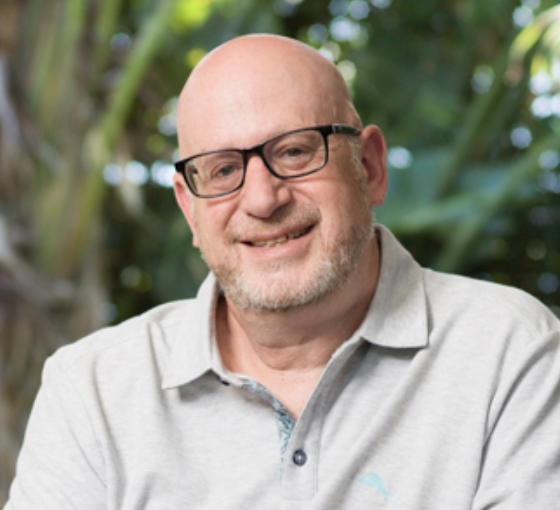
Explore the powerful question of “What’s the point?” and dive into redefining success, and adopting a mindset grounded in respect, empathy, and gratitude. In this episode, I’m joined by Alex Kain, author of The Philosophy: A Critical Upgrade For Humanity. Alex argues that the systems —capitalism, politics, justice, education, healthcare—are misaligned with personal growth and human flourishing. Join us for a deep, thought-provoking conversation on why humanity might need a new operating system, and what it would look like.



Show Notes
Get the book! On Amazon:
The Philosophy: A Critical Upgrade For Humanity
https://www.amazon.com/dp/B0F82RXCV9
Welcome to THE PHILOSOPHY
http://www.thephilosophy.net
Transcript
Our guest today is Alex Kain.
Alex is the author of the book The Philosophy, A Critical Upgrade For Humanity.
The philosophy suggests the systems humanity depends on, capitalism, politics, justice, education, health care, are misaligned with the goals that everybody wants, human well-being and personal growth.
The book opens with the question, what's the point otherwise?
Kain presents a way of re-framing success and proposes a human operating system upgrade based on respect, empathy, and gratitude.
Welcome to my show, Alex.
Thanks, Daniel, for having me.
So, what made you write this book?
Was there a point in your life?
I read you left your company, and you have a lot of business experience, a software company that you created.
And your opening chapter says, when you left, it was the universe telling you, you have permission to work on this project.
And if you don't, I don't want to ever hear it about it again.
So, what happened to get you to that point where this is what I got to do?
Well, I don't think there was a specific epiphany or a moment.
I think it's just everything that I've been witnessing in life, that we're told to go chase success, whatever that means.
And it's that success that's been modelled to us that, for me, felt empty after a while.
You keep chasing it, chase money, make more money, accumulate wealth.
And at the end of the day, you do that.
And you have to ask yourself, why?
Why am I doing this?
You're doing it because everyone else is doing it, because that's what's been told to you.
This is what life is about.
But then you go along and you do it, and you go, I feel like I'm chasing false idols here.
It feels a little empty and hollow.
And so for me, it was like, well, as I was achieving my success, I started to feel I don't feel successful knowing that there are so many around me who are doing it so tough.
And for me, that was the awakening, I guess.
And I think you say, you know, everyone needs food, water, clothing, housing.
And we're driven to, okay, I don't want to be on the street.
Then you're always afraid of being, well, what if I lose my job?
I'm on the street.
And there's never a sure thing that much security.
And I think then in the end, once you have that, what are you doing it for?
Right?
Yeah, I mean, there's a certain minimum level that we all need, right?
For housing, food, clothing.
But over and above that, it's more about what rather than need.
And so in the book, I go through, I guess, how do we provide for everyone that minimum basic level of need first?
And then how do we go for want, but not in a way where it's just open-ended, so that you get these extreme levels of poverty and extreme levels of wealth?
And the disparity between them doesn't help any of us.
You know, you could live in a beautiful mansion and have everything you want, but if there are other people who are struggling and for whatever reason, they commit a crime or they do something against you or your family, all the wealth in the world is not going to help you.
But if we help those people also to be doing better, then we're helping ourselves indirectly anyway.
What do you propose?
Do you want to give me your...
I think that's the general philosophy.
Do you want to talk about Pacific systems like education, health care, or the justice systems one by one, or how you like to attack this?
Well, look, for me, the book opens with what's the point.
So when you understand what are we all here for, what are we chasing?
Is it money?
Is it experiences?
Is it connection?
Whatever it is, that's the framework that says, okay, why are we here?
And I think if you start to question causality and why things are rather than trying to treat the symptoms, we look at society and we go, okay, well, why are there homeless people?
Why is crime so rampant in certain areas?
And rather than trying to say, well, let's just build more houses that solves homelessness, because we could do that tomorrow, but we don't.
And so what I ask in the book is, well, why don't we?
And a lot of these issues boil down to a lack of respect that we have for each other.
You know, that seems to me to be the root cause of the problems that we face.
And so in answer to your question, well, how do we solve this?
For me, the answer is through education.
And I don't mean education as in the standard curriculum people learn at school.
I'm talking about a completely overhauled education system that not only teaches subject matter, but also teaches values, life skills, respect, empathy and gratitude.
Because I think once we respect each other more, it's hard to let someone sleep rough on the street.
You know, we enable it now and we stay in our own lane and we acknowledge it, but we still get on with our little life.
We're still climbing our little Maslow's pyramid to get to the top for ourselves.
And for me, that's where we've got it wrong.
What you just described to me sounds like something your parents should be teaching you before you even go to school.
But then, of course, your parents are just trying to keep the roof over your head.
So you're embedded in the same struggle, the same problem that you might propose to solve.
Well, I can't help other people.
I'm just trying to make it on my own.
You're suggesting more of a social studies kind of curriculum, it sounds like, in school.
Well, I think it goes even deeper than that.
I, in the book, I talk about teaching respect, empathy, and gratitude in an age and culturally sensitive appropriate way, right from preschool all the way through.
So that it's not just a tick box for the school to say, oh, we've taught diversity now.
It's got to be something that needs to be taught and felt all throughout a child's education when a child is a sponge.
Well, give me an example, because I'm trying to recall when I was in school, I mean, your teachers go, you know, be nice, don't fight, we don't tolerate gangs or bullying.
I think they're trying.
How do you propose they do better?
Well, I think a lot of that material is supposed to be indirectly absorbed through texts that you're studying.
So you'll read a book, you know, maybe it's To Kill a Mockingbird or something.
And you'll try and they'll tease out some of the themes from that about tolerance and everything.
But it's you may or may not pick up on it.
You may or may not get it.
I'm talking about overtly teaching respect, empathy and gratitude.
Well, you know, it comes to mind.
The way I think is, I imagine myself as the kid or in the school, because then I can get feedback like, where am I?
What am I seeing?
What am I hearing?
The first thing comes to mind is, I get it.
But when I leave school and I see all the violence and the crime, and I have to be careful to cross the street or if I'm too young, I can't be by myself.
Someone might kidnap me, especially if I'm a young girl or even a boy and you know, I see what's going on in the world by the adults.
Who's going to change first?
Well, yeah, I mean, you look at what's role model to us and you have to question, is this the best that we can do?
I'm back to survival mode.
My mom told me not to talk to strangers.
I don't trust anybody.
Look at my mindset now.
But it's true, and that's what happens to us.
And in touching on your first point, yes, we should learn this in the home, but there's no guarantee we're going to, because our parents are also the byproduct of their upbringing and their influences.
And that's why I say the education system is our opportunity to touch every single person in a consistent way across the globe.
So basically, we tell the kids, we're all broken, your parents, me included, your teacher, and it's up to you to fix it, by the way.
So I'm telling you now, because we're admitting we're broken.
We can't fix ourselves either.
So it's up to you.
So just remember this when you grow up, something like that.
Well, yeah.
And that results in therapy, right?
So I think it's for from from my point of view.
If we instill these values in our kids and they learn that, think about what happens after all those years of schooling.
They come out with that as their view.
Rather than now, they've learned, you know, math, science, English.
It's great.
But what sort of human beings have we created?
You know, and so I talk about school should become less of just an institution for learning.
So I'm going to play devil's advocate.
Yeah.
Or just the other side of the coin.
Because it seems to me, a lot, there are a lot of great teachers.
Yes, a lot of homes are broken, but parents are trying the best they can.
To which a lot of kids, you know, you get sent home because you're a bully and your parents discipline you, ground you.
There are some bad apples out there who just have no empathy or respect.
And that's, of course, why we have laws to enforce that.
Okay, if you know what you're not supposed to do, you're doing it anyhow, that's why we have a law and you broke it, you go into prison.
Are you suggesting that that would disappear if we just taught more in school, more education?
I don't think it will ever disappear.
You're always going to have narcissists, psychopaths, sociopaths and people who don't have the capacity to take this on.
But what I am saying is, imagine that the kids of today in school, they go through, they learn this new way of being.
They then become the parents of tomorrow.
And their kids are raised in the same way.
All of a sudden, you start to see a shift.
And that's why I don't see the philosophy as an overnight fix.
It is a multi-generational approach.
And we still need to have laws in place to punish those that do the wrong thing.
We still need to feed the homeless.
But we got to draw a line in the sand.
And we got to say, we can't keep treating the symptoms and keep enabling this.
We actually need to come up with something that solves it at the root cause level.
And for me, if we all were more respectful to each other, think how different the world would be.
And again, I acknowledge we can't save everyone here, but we can do a lot.
The homeless is an example of something that you sympathize with the people who just lost their jobs.
Maybe they're over their head financially, and they should have known better, because in school, they should have.
They were taught basic accounting and personal budgeting, and they knew they shouldn't have bought the house or the car.
So they end up homeless.
And I think there needs to be resources in order to help them back on their feet.
But then they're the people that poop on the streets, don't care, they shoplift, they know better, they just don't care.
They don't want a job.
You can't give them a home because they don't really want it.
But if you're going to make them do anything to...
They're basically like a parasite, is what I'm saying.
I'm not being judgmental.
They can live how they want, as long as they don't bring us down with them.
I'd love to hear a solution on that for those who...
It's not because they fell in hard times.
This is the lifestyle they chose.
Or they need medication.
A lot of them do have mental illness.
And that's our issue to take care of.
How do you address the ones who just...
Like I say, they're going to shoplift, they don't want to work.
What do you do with those people?
So I think, look, homelessness is...
It's not a simple thing.
There are a lot of different reasons that people find themselves homeless.
Obviously, some people have just fallen on rough times, and we need to have the empathy to help them out as well.
There are people who choose that lifestyle, absolutely.
But you've got to ask yourself the question, where did that choice come from that you choose to live on the street?
As I see it, we're all born as blank slates.
Now we then become whatever we become from the influences that impact us, whether it's our family, our friends, our school, all of those influences.
I don't think anyone comes from a loving home and then just decides, no, I'm giving it all the way just to sleep rough because I just want to sleep.
And it's probably, you know, it's a fact.
If you look at the average homeless person, they have nothing of value to give.
They can't get a job because there's nothing besides being a cashier, pumping gas, mowing the lawn, whatever, which is actually, I mean, I've mowed lawns and pumped gas, so that's not an excuse.
But I think your idea of having a purpose and a meaningful personal growth strategy, they, I'm just guessing this, tell me if I'm on the right track or not.
They have nothing to offer.
Well, I don't think except they have nothing to offer.
I think they feel that there's no meaning or purpose in their life.
And I don't know that we're encouraging or helping them to find that.
A lot of them do have mental health issues and they don't even have the capacity to work that out for themselves necessarily.
Okay, perfect.
I'm with you.
So you're right.
I believe everyone does have a skill or a talent.
Then tell me if I'm on the right track here.
The real issue is society doesn't value what they have to offer.
Society values what we all, I want the new car, I want the iPod, I want what Steve Jobs is selling, the new iPhone.
I don't want what you got.
And that's it, because what we value, I believe, is where the issue is.
We've chosen to value success, achievement, keep climbing.
And in a capitalist society, that's what it's all about.
He who dies with the most toys wins.
And unfortunately, for me, that's where we've got it wrong.
We've undervalued what currency is.
Currency, we see, is purely financial these days.
And really, there are other contributions we can make that are just not valued in the same way.
Does that tie into somewhere on my cheat sheet?
Is it you and your bio that suggest or have some mention of universal basic income?
Yeah, that's right.
So a universal basic income in its simplest form is a payment that's made to everyone.
It's not means tested.
It's just available to everyone that provides for a minimum level of covering food, shelter expenses.
As I see it, we're all born into this world, and none of us made that choice or decision.
We just came about.
The issue is we then lumbered with this requirement to feed, clothe, and house ourselves.
We have to, most of us have to work day in, day out, most of our lives just to keep that going.
We have very little time to explore other parts of ourselves because we're just trying to survive.
For me again, that seems like we've missed the point of being really human.
There are so many more things that we can do.
We're very creative.
We've got the ability to do so much more, and yet most of us are no different than the animals that spend their whole day foraging for food.
We just go to work in order to get the food that we need, but we're still spending just as much time just trying to survive.
So a universal basic income provides a minimum level of funding to cover some of life's basic needs.
Then you can decide, do I want to do more, to earn more, to achieve more than that?
Do I just want to be artistic, creative?
And even if it's not commercial, I enjoy what I'm doing with my life.
I may not make a ton of money, but at least I got my basic needs met doing something that is meaningful to me.
Now, I have heard this mention even in politics recently, but I don't know anything about how they propose to implement it because I'm sure that the people like Donald Trump and Elon Musk don't want to settle for a base, give all their money away and settle for, I mean, they could do it now, they don't need any more money.
But if they were all supposed to not have, you know, be billionaires, I don't think that'd be fine living on, living like everybody else on a universal basic income.
So how do you propose you implement something like that?
Well, that's what I say, you don't have to live on that.
It's for those who want that level of support, to enable them to do things that aren't necessarily commercial in nature.
A lot of people want to look after their elderly parents.
They don't want to have to work.
They become carers or they want to do volunteering.
They're not necessarily...
Oh, you're talking about welfare.
Well, no, I'm not saying it's...
I'm not calling it welfare, because welfare already has the stigma attached to it.
I'm talking about that everyone can retain their dignity by having their basic needs met, and then they can choose what to do with their life.
That really should be the starting point, but it's not.
We're already behind the eight ball, unless you're born into a family.
Well, there's actually some easy ways around that.
You don't even need the basic income.
Someone else had on my show, in another country somewhere, we were talking about electric power and water, like how expensive things are getting.
We can't even afford, like you're saying, electric power for my house, turn on the lights, and water.
The issue was, people using too much water, using too much power, the billionaires that can afford it, or the millionaires or the people with.
And somewhere in the world, this is going on, like, oh yeah, we solved that problem.
We just, at a certain level of income, you have free utilities.
So basically, it's if you make more than this, then that's your deterrent to conserve energy and water.
If you make less, you get free, solved.
You don't even need a universal income, you just get that free utility, that free basic clothing, housing you're speaking of at the bare minimum.
And then, solved.
It's actually pretty easy.
You don't even need to give people money, just give them.
Because if you give them the money, they're going to spend it on alcohol, cigarettes, or movies, or Netflix, or app on their phone.
You just give them what they need.
Yeah.
And there's different ways to implement a UBI.
So it can be funded, it can be in-kind.
So every person could have housing and food provided.
It's more about the concept and whether we're prepared to go down that road.
You know, as I say, in a capitalist society, it's every man for himself.
But what I'm talking about is more the mantra from the US.
Army, leave no man behind.
And it really should be about, we should all be having each other's back and looking after each other.
And that collective responsibility, I think, is what's lacking.
We're just so focused on climbing to the top of our mountain that we may acknowledge that there's people either side of us, but we either are so focused on achieving our goals or we're not even interested.
And that's even worse to me.
Imagine that we did have this, and now everyone has their basic home, even if it's project level.
They have food, they get free water and power.
It seems to me there'd be still no encouragement for them to do something, to contribute.
What's to make them still dig deep and find out?
What do I need to contribute?
What if they just decide, no, I'm just gonna still hang out, watch TV till they cut my power out.
This is what I want to do, just sit here and play video games.
Yeah.
And that's a very common question.
So where they've conducted trials of a universal basic income, such as in Alaska, Finland, and a number of other countries, they found that people didn't slack off.
What they did do was find that they could cut back some hours, or they would take on other jobs that they wouldn't necessarily have considered before, because they had their basic needs met, and they could do another part-time gig or something else on the side.
So history is showing us that people don't just clock off.
Of course, there'll be plenty of people that will.
Well, I'm speaking more of the homeless people, not the middle class that would fit that.
The homeless people who, at the low end of the society.
So I think what we're expecting is that we give welfare to people who need it.
Everyone else should just work.
And what I'm saying is that contribution doesn't necessarily have to be paid employment.
Now, there may be other things.
Now, not everyone is capable of working, and that's why some people are on welfare, because they don't have the ability to work.
But that comes with a stigma as well.
And I'm saying...
Sorry to interrupt.
Hold the thought.
I just had the thought that if you're homeless, I imagine myself homeless, I have all time in the world.
And yet I'm still not doing my purpose, my thing.
Nothing's really stopping me.
I don't have to work.
But what's your purpose?
You're homeless, you're living on the street, you're probably mental ill.
You know, what's your purpose in that context?
You may not have one, you may not have had the ability to even think about what that is.
Well, you do.
That's what I'm saying.
And help me out here.
Where I am homeless, I wake up on the beach.
When I'm hungry, I get food.
They feed me across the street because they know I'm homeless.
I could do anything.
I'm not doing anything except sleeping on the beach.
That's not going to solve the problem if you give me a house.
I might even like to sleep on the beach even if you gave me a house.
Now we still have homeless.
What I get in that is, I don't know if I really understand that's the problem with homeless for that part of the population.
I don't think giving them a house is going to help them find their purpose and make them contribute to society.
Yeah.
What I hear here in Australia where I'm from is that we solve homelessness by building more homes.
I disagree with that.
What I'm saying is that homelessness is not just about a lack of housing.
Homelessness is also about the people who we don't see.
We just lump them into a group of homeless.
And we're not looking at them as individuals and their individual needs.
So we don't, as a society, value the life of a homeless person in the same way we value each other.
And for me, that's the lack of respect that we have for all human life is the cause of that problem.
If we see these people as people, you know, if they were our family, we would go up to them, we would talk to them, we would try and encourage and find ways to help them.
We don't, we walk past them and think, they're but for the grace of God go on.
And I think that's where the problem is.
It's a shift in perception how we see each other, not about the house itself.
Yeah, I'm imagining myself walking by homeless people.
I have the persona that I just, they seem to target me, like, I'll make eye contact with them.
When 50 people on the street, somehow, they see me walking.
And I will always give people money if I know they need money.
And somehow I discern that, are they just panhandling them because they're going to go home and watch TV, or they're really homeless?
They're real homeless people.
I don't know, like you said, giving them a house is not the solution.
And I'm kind of losing where I'm going with this, except that they're still going to be homeless.
I don't see how you, you know, maybe it's not even a problem except those facilities, they need bathrooms, you know.
Because they can get food and they can find a shelter if they want.
What's even really the problem, except that they show up in your neighborhood and pitch a tent?
That's the problem.
Well, that's a problem for us, right?
So, and that's what I'm saying.
There, we see them as problem people for us, but we don't see them as people.
And the difference...
That's because they want to pitch a tent on my lawn, and that's not okay.
I work for the lawn.
I chose to work for the lawn.
That's the problem, really.
It's not that they're homeless.
They want to sleep on my lawn.
Well, yeah, but they may have another place they want to sleep.
It could be on the doorstep of a store.
But the problem is, here in Australia, we've seen that, and a council here wanted to find them for doing that.
Then they decided, no, we're not going to find them.
We're just going to have move-on orders, so we can ask them to move on.
We're never really solving anything.
We're just dealing with the symptom of a homeless person.
We're not treating the cause of homelessness.
As I say, there isn't a single cause here, because it is quite complex and people are homeless for a range of issues.
But I think we need to consider, are we seeing them as we see each other?
I think the answer is no.
Because the same thing happens in so many other areas of life.
I look at-
We tangent, we flip.
I see them as one when I walk by them on a park bench.
It's when they're camping on my lawn, leave and they poop on my grass that I'm not thinking of them as, I'm thinking of them, yes, as a bad person now.
They don't care about me, I guess is the way to flip it.
They don't have respect for me.
Yeah, I agree, I agree.
And that could come from a number of issues.
It could be a mental health issue.
It could be an entitlement, the streets are my domain, I can do what I like.
There could be any number of issues at play there.
And I agree that it's not nice in our neighborhood to have homeless people camping on our front lawn.
But have we dealt with it?
Have we tried to find a solution other than moving them on, go and stay in a shelter?
Because that doesn't solve anything.
The other solution that comes to mind is the other part of the problem.
They just don't want to get a job, not because they're lazy, because they're buying the system that you spoke of earlier, chasing the tail where they know if they open that door, go in and get educated, go to school, they're never going to be happy, then they're going to be like you or me, chasing the I can never have enough money, and they're just like, nope, ain't getting on that train.
Which gets us back to solving the problem, is solving the problem for the well-to-do people, not the homeless people.
Again, what if everyone had this basic needs met?
Let's say the homeless person didn't want to get a job.
What if we were okay with that?
What if we said some people just aren't going to work?
Some people are just going to paint all day, and that gives them a sense of joy and achievement.
Why does everyone need to go to work, to pay an employment?
There are different ways also, as I mentioned earlier, to contribute.
Volunteering is still contribution.
Caring is still contribution.
We just don't value it in the same way as a job.
And I'm saying we might need to shift that a little bit.
So, what are your actual, now we've been philosophical for a bit, what are your actual concrete action plans?
Do you have anything specific in mind or is just a philosophy?
So, as I say, the actual tangibles here is firstly, to change the education system, right?
So, we start educating children from a very young age on what it means to be human, not what it means to learn subjects so that you can get a job, but what it means to become truly human and to relate to each other and to find meaning in those relationships.
That is at the core of the philosophy.
And again, over the next 50 years, if that were to happen, you would potentially see three generations already being brought up in that way of thinking.
That way of thinking in turn shapes every other system that we have in society.
Politicians will be more empathetic.
We will see the legal system that's not just a legal system, it becomes a true justice system, because we start to see each other as humans who deserve that respect.
You know, I question this in the book.
Do we have a justice system or just a legal system?
And for me, justice is not often served.
We have to go through legal loopholes and legal checkboxes and say, yes, we've done this, this and this.
But are we really helping people who need to be helped?
The economy, you know, we've had cost of living crisis that we've all gone through.
We've had high inflation.
And so the way to combat inflation, put up interest rates.
To me, that doesn't make any sense at all.
So what we're doing is we're actually targeting mortgage holders and making life more difficult for them.
When it's really people who don't have a mortgage, who have lots of free cash potentially, who are the ones who are spending and keeping inflation up.
So for me, it doesn't make any sense that we're treating it with a sledgehammer that everyone who has a mortgage has to pay more.
And everyone who's got more money invested in their bank account, because they're fairly wealthy, is getting more interest anyway, which induces more spending, which contributes further to inflation.
So those kind of things, we look at them and we go, well, that's just how we've always done it.
But it doesn't make sense when you start to question it.
If you want to finish this inflation line of thought, my simple explanation for inflation is that there's interest and loans given on money that's make-believe anyhow.
Because if I'm the bank or I'm your country, I'm Australia, did you say?
Yeah.
I print $100 and I'm going to loan it to at 10 percent.
You need to pay me back $110.
There's no extra $10 for you to pay me.
That's where the inflation comes with.
Your $100 now has to be worth less, because you can't pay me back because there's no money to pay me back.
The problem would just simply be solved if you didn't charge interest on money that doesn't exist.
Well, that's not going to happen, is it?
No.
And why isn't that going to happen?
Because that's the system that we've accepted and we all abide by it.
We have to abide by it if I want to buy a house and I don't have a couple hundred thousand dollars cash.
I used to think when I was a kid or go to the bank and the bank's got half a million dollars in it to give you.
How's that possible now?
Because I only have a couple hundred dollars in that bank, you only have a couple hundred.
How's the bank loan that seats half a million dollars?
They make it up and then you can charge interest.
And there's your inflation, bingo, just like that.
Yeah.
And so we become the recipients of the problems that go along with that.
And so I'm, what I'm saying...
The basic solution is don't charge interest.
If your country is printing a hundred dollars, your country, your country just doesn't charge your citizens interest.
Why would they charge you interest?
It's your country, it's your money.
Then you have no inflation because you don't have to pay, you don't have any interest at all.
Yeah, but then you're dealing with other countries as well.
But like you say, well, to solve your problem, it's going to have to be a universal philosophy.
Can't be just the United States and Australia working on it.
Yeah.
We'll both go down together.
It has to be a world philosophy.
That's right.
Yeah.
It needs to happen everywhere at the same time.
So we all need to adopt that.
And I talk about how would that look?
And it might be a global organization that would handle something like the International Olympic Committee.
It sits across all countries.
It's not just tied to one country.
So there are things that we can do and look at the different systems that we have.
Would they still operate in the same way?
Looking at the environment and how we treat the environment.
I don't understand how, why we put sometimes profits ahead of keeping the Earth safe and sustainable.
Now, we do that because we're in it for ourselves.
What matters to us?
But if there's no world, then none of that matters.
But we don't see it that way.
Again, it's a lack of respect that we have for the planet.
And in the book, I talk about four relationships, right, that undermine respect.
It's our relationship to the universe, and that's the planet and nature, our relationship with ourselves.
Who are we?
What are our blind spots?
How are we programmed?
Understanding that, our relationship with our inner circle of family and friends, how do we treat them?
Do we treat them how they deserve to be treated?
Or do we treat them based on patterns and triggers that we've developed?
And finally, our relationship with community.
And that's everyone we don't have a direct connection with, but we're all connected through humanity with.
And if we deal with those four relationships, then we start to transform because we start to see each other very differently and the planet.
And that's when we can start to evolve.
And I think that's the missed opportunity that we haven't done because we're so busy chasing our tail here, trying to earn a living, trying to make money.
And I think we've actually taken our eyes off the real prize, which is leveling up as humanity.
I love your ideas.
I just, I just thought of, take my brother and I have four nephews, and him and his wife are both working just to keep a nice house over their heads while they go to college.
And they started with the college fund the day the kids were born.
So they could go to college.
Now the kids got to struggle to get a job, and they're kind of confused like, wait a minute, I went to college.
You're telling me now that's hard to find a job.
I can't find a job.
They're just trying to survive, and these are middle class people.
They care about the planet.
They care about other humans.
They'll give money to a homeless person if they see it.
I don't see how, what could they do, Alex, to make this happen, for example, because they're kind of the middle class, if you will.
What tangible thing can they do?
They already know there's a problem, but they're just trying to get by.
They're not billionaires who don't know what to do with their money.
What could they do?
Different.
And this is the difficulty, right?
The book isn't a self-help book.
It's not something you could just read and go, I can change my world.
You can change your world.
You can change your awareness of how you operate within the world.
But we're talking about large structures and systems that are working against us in a lot of cases.
So the book talks about how do we make these changes happen.
They're not things that we can just do.
I talk about some simple things we can do.
We can do some volunteering if it gives us pleasure.
We can go and meet our neighbors, right?
Because humanity starts with just talking to the people who live next door to you, which these days a lot of us don't even do.
We're so in our silos, we're so isolated, we drive into our home, we lock the door, turn in a security camera, and we're scared.
Loneliness is a big pandemic.
A lot of people are lonely, depressed, and therefore maybe end up homeless because what's the point?
So yes, so back to my brother.
They're in their neighborhood, they always make an effort to go meet the neighbors, new people that move in.
They always have the Thanksgiving, a neighborhood get together before they do the family get together.
So that's a nice thing to do.
Because you are correct, there are a lot of people who don't even know their neighbors.
Yeah.
And we used to have the old village was the people you lived with, and now that's all migrated online.
And it just, we've lost that connection.
In the most connected time in history, we're the most disconnected we've ever been.
I'll just get a nap for it.
It's like funny.
I'll see people in the coffee shop.
Well, even some friends, they'll text you back and forth.
I'm like, and then I'll call them.
Seriously, you're going to text me for, call me back and forth.
Yeah.
Yeah.
And that's part of the problem is that we just accept that that's life today.
We're busy.
We're trying to make ends meet.
We don't have time for other people.
We barely have enough time for our own family, friends.
But we've created this.
This isn't something that has to be, you know, in the book, I talk about money.
I talk about borders.
These are manmade constructs.
They don't exist in and of themselves.
We've created them.
We all agreed that this piece of paper or plastic holds value.
There is no intrinsic value in that plastic.
We've all just agreed.
If we stop agreeing that there's value in that, we have anarchy, right?
It's only by that come homeless.
Those are the brilliant people who aren't, don't have mental illness or didn't lose their job.
They live homeless because they're just like, I'm not going to participate.
It's an insane system and I'm just not participating.
Yeah.
And there's plenty of people that drop out, live off the grid and just do their own thing.
But as I say, in answer to your question, it is big changes that need to happen.
I can't say you can just go out and do something yourself and that can change the world.
We're talking about big systems across multiple countries over decades, centuries, the finance system, the economies.
These are long, well-entrenched systems.
And there are a lot of people who don't want to see them change because they're doing quite nicely.
Thank you very much.
And so you're working against that inertia as well.
But what I'm saying here is if enough of us think differently and question the status quo.
Oh, I love that, by the way, your three cards.
Question everything.
That's one of my mantras.
And think different.
And then your last one is actually apply from after questioning, after thinking, apply it.
Also like your website, the join the philosophy.
We connect and meet and hang out with like-minded people.
And then you have the conceive button join groups that resonate with your areas of interest.
And you create, which is actually roll out an action plan and change the world.
It's good.
Websites good.
The ideas are good.
I didn't say it's easy.
And I get it.
The how is the hard part, right?
The how is the hard part.
But we need to have an appetite for change.
None of this change happens.
Like if I go and talk to politicians, say, let's introduce a universal basic income, I go, no, we're not going to do that.
But I kind of agree with them because before you change anything, it's all like people love change.
Just because you randomly change stuff doesn't make things coming better.
You have to really understand what the problem is before you make a change.
Otherwise, you're solving the wrong problem and creating new ones.
Yeah.
And look, I'm part of an organization here in Australia called Basic Income Australia.
And we look at, you know, we've developed a policy for this sort of rollout here, which we'll be talking to government about.
But it's not based on, yeah, we'd all like some free money.
It's based on, well, what's the, again, it goes back to my original question.
What's the point?
What's the point of life?
If you start from that, then you have to ask yourself, is the point of life to be working five, six days a week just to survive?
You know, I talk about in the book, the phrase earning a living.
You have to earn to live.
You don't just by being born have a right to live.
You've got to earn your life for your whole life.
And for me, that just feels wrong.
It feels that we've missed.
Tell me about your universal income in Australia.
I didn't know you actually were that deeply engaged.
What's the, what are you proposing the government adopt?
Yeah.
So here we're developing policy around what a role that might look like and maybe even some trials to do that.
It's not out there yet.
It's in development at the moment.
But the fact is we're looking at how we can introduce it at a very small level initially and then build that up.
I know in Alaska, they've got a centralized fund because what they're trying to do is say well all the oil reserves and all the resources we have access to now that are generating wealth for the country won't be here forever.
But we shouldn't negatively impact the future generation.
So they've created this fund with billions of dollars, which they roll out to all Alaskans.
Yeah.
It's been there for decades.
Every citizen gets a check every year from that oil.
Those are people who are already well off.
Everybody gets a check.
Tell me about your universal income.
Is that going to be for everybody or just a certain poverty level?
So in theory, by its definition, it's universal.
It goes to everyone.
Now, it can be tweaked.
No, I'm not saying that's how it should be rolled out, but that's how it has been developed in all the countries where it is.
I'm saying it doesn't have to be.
Now, you could have a minimum or a maximum cut-off level or everyone gets the same amount.
But if you're wealthy, it's going to come back to the government through your taxes anyway.
So if you don't have money, you get to keep it.
It's going to cause inflation like COVID.
During COVID, where they gave everybody a check, everybody spent it.
Nobody saved it, rich or poor.
And then, how are we paying that money back?
Because people thought we just had all that money in the piggy bank for two years?
No, that's part of the reason we have this hyperinflation.
We got to pay all that back now.
Where is it going to come from?
It's how is it?
I'm trying to understand how it's going to solve.
You give everybody more money.
How that's solving, it seems like it would cause more inflation.
People are just going to spend it.
Let me ask you this question.
What's inflation?
Inflation again is a man-made construct.
It's when you want to go buy something, and now the money that you had last week is not worth as much.
It's not because of demand.
Demand is the same.
I still want to go to the store and buy the same, you know, bottle of milk.
But now it's $2 instead of a dollar.
But why is it $2?
Because my dollar is not worth what it was last year.
Because for two years, like during COVID, we were just passing out checks that had nothing behind them.
It was like borrowed money we have to pay back now.
It's there's no value.
It has less value.
It's not that people like in high school was like, oh, you see the curve, demand, more demand, your money's worth less inflation.
No, it's because the interest I mentioned earlier, you have to pay back interest.
How do you pay back interest when I only had so much money and now I need more money?
That means my original money has to be worth less.
But like money that's a man-made construct, so is interest, so is inflation.
Money could be your value as a human.
I'm just going to give you $100.
It's not a loan or a check.
There's no interest on it.
Kind of like you're proposing, except that to really make it work, it would have to be flat.
Everybody would only get $100.
So if I said to you, you just mentioned the value of someone.
Why is it that someone working for an hour building a website in the US makes so much more than an hour of someone in India building that same website?
Because I can find someone in India who will do it for less.
Yeah, but what does that say about valuing humans?
You just mentioned valuing humans, right?
We're not valuing us the same.
That's where the problem is.
And also that person will do it.
If that person wouldn't do it for less, I would be forced to pay more to the person that charges more.
Yeah, but that's the whole society there.
It is.
It's the competition.
Well, I can't come up with a good, better, innovative product, so I'll just build more of them cheaper.
And that's the way you compete.
I'll just build faster, more cheaper.
And again, it's just a survival thing.
I can't be innovative and make something better, contribute that way.
So my take, my company kind of persona is just going to be to, I'm going to be the cheap brand.
So I'm going to undercut the other guy.
So it's, yeah, this is the capitalism thing you're speaking of, because we don't work together.
We're separate.
And it's because of the money, the money's what's the money and the value.
It's the money.
And as you say, we are operating separately.
We pit one country against another country.
It's like we're all humans.
We're all just trying to get by.
And yet now we need to win, but you might need to lose so we can win.
For me, again, that doesn't make any sense to me.
So back to your real, I'm interested in the reality of you have this pitch you're doing down there.
Do you have anything else specifically?
Like you're going to give it to everybody.
Is there a dollar amount that you're proposing?
And where would the money come from?
And things like that in the law that you're proposing?
Yeah.
So look, there's a number of ways it can happen.
What it does do is it reduces expenses on welfare, because now you don't have to have welfare.
It doesn't have to be means tested.
Everyone just gets it anyway.
Right.
So that already cuts out a lot of cost in trying to manage welfare as it is.
I see it the way I see it, which is not necessarily how they see it rolling out here.
Again, the full model hasn't been finalized.
Is that you have this universal basic income at the bottom level, but you also have a wealth ceiling at the top level.
Okay.
That's not necessary.
You can't make more than so much money per year?
Yeah.
So your wealth that you can accumulate is up to however many millions of dollars you're allowed to have.
And once you exceed that, that's not going to work because they'll just play games with it, go to other countries, hide the money, get a better tax account and that's why it has to happen globally, right?
Because you can't.
So it needs to work globally.
But the theory of it is that once, because the small percentage that are earning obscene wealth is enough to overflow and then come back in and support the basic income at the bottom level.
It sounds like the Reagan, Ronald Reagan trickle-down theory.
Well, is, are you familiar with that?
His idea was give tax cuts to the corporations and will trickle down to the working class the money from the tax breaks.
Yeah, but that's, you hope it would trickle.
That's what I'm saying.
Well, you hope it will trickle.
When, if I'm a billionaire and I'm like, you know what?
I'm just not going to, I can't put it, take it to another country.
I'm just going to lay off some employees.
Because then my company won't make anymore.
I'm not allowed to make any more money in this company.
No, you can make, you can make, but you're just contributing back into the system, to the pool.
You're not just growing your own personal wealth to extraordinary levels.
So you're saying if I make more than so much, then the government gets it, like a tax.
We won't call it the government, but it goes into the universal basic income pool.
So it would be like a tax.
Yeah, considerate attack.
Yeah, it's a 100% tax over a certain income.
And it might be staged over from this level to this level.
It's this percent.
And so we're not, we don't want to, we don't want to stop people from continuing to grow, but we don't want growth just to become a wealth magnet for individuals.
Yeah, I think that's what ChatGVT's CEO basically said.
We can't, this company is not allowed to make more than so much money to just keep it from doing something unethical.
Suppose I am just pretending now, I am some billionaire that really trying to come up with some global solutions to fixing problems and have some good businesses that are making huge amounts of money.
And you're saying, if I make surplus, that will go to the pool, which is respectable if the pool spends it properly, because it also inhibits me from being more innovative.
Why?
Why can't you be innovative because you want to do good?
Because whatever you've capped that at, you don't know how much money I need to make to, let's say, and I don't want to go to Mars, but I'm just using this as an example because it's an expensive idea.
I have some brilliant idea to make, to get free energy for the whole planet, but I'm going to need a billion dollars to fund it.
And now you're capping me at 500 million, I can't make the other 500 million to design the new technology I want.
So I'm going to give it back to you guys, but I can't do the innovative idea that I wanted now because I can't make enough money to do it.
Yeah, and so that's what I'm saying.
It may be staged and so, and there may be exceptions and there may be things that were there for the public benefit that there are allowances.
I'm talking about in a very broad sense how it would work.
It comes off the top, comes back and feeds the bottom.
Because when we talk about how much do we need to live off, we don't need $200 billion to live off.
You don't need money at all, Alex.
You don't need money.
You can't eat money.
If you go in your house and turn on the power, money is not flying out of your furnace, your air conditioning vents.
You don't need money at all.
You know you're going to build a house.
You need wood framing or steel framing.
You need food, you need food.
You need seeds, put them in the ground.
You need gasoline to power your car.
You don't need money at all.
Right.
So why are we allowing people to make obscene amounts of money for individuals?
Well, you know the answer for that.
No, I know what the answer is.
And I'm not saying it's the right thing for us to keep doing.
So I'm challenging it.
It's control.
It controls what it is.
When you have money, then you can control who gets the food, the gasoline, who gets to go to school.
You can control that.
And why do you need that control?
For me, it seems like a personal deficit that you need that control.
I would go to a counseling, get some therapy.
The politicians and the people that control that, the bankers, they're kind of psychopathic, like you mentioned, mentally ill.
They have no empathy.
You can't teach them empathy.
It's not in the way their brain works.
It's a control mechanism.
The money is a way to control.
Power and control, absolutely.
But for me, that is a personal deficit.
Right?
It's not something you need to have.
You need to have it to compensate for something else.
Right?
And so it's trying to deal with that stuff.
So if you're brought up through school, learning about yourself and others, again, it's not going to save everyone.
But maybe it's going to dissuade some people from just being in the, I'm in it for me, myself and I all the time.
That's what I'm trying to do is shift the narrative.
If the money is the trouble, why don't we, instead of giving a universal income, just give people basic food and power?
Same difference.
Same difference.
Give them a roof over their heads and give them a way to have food provided for them.
Absolutely.
I'm not against that.
It's not about the money.
It's giving people a minimum quality of life as a starting point.
Then they couldn't spend the money on Netflix or popcorn at the movies.
They would have because they didn't get money.
They got free utilities to a certain basic level, free electric power, free gasoline.
I'm all for that, Daniel.
All for that.
How's your group?
Then you've got a base foundation, right?
Then you got a foundation from which to go, what do I want to be?
What do I want to do with my life without worrying about how am I going to eat today?
Yeah.
That changes humanity when you start to think, what can I do?
How can I help?
How can I contribute?
How can I do something meaningful?
A lot of people who are living below the poverty line, they don't get to choose what they can do meaningfully.
They have to do what they need to do to live.
And I'm saying that's unfair when so many other people are living the high low.
It also removes the control factor.
Now those people use the money to control that population.
You can't control them with the money.
And there's no issue with the homeless and there's no argument on, you know, politicians arguing about how to fix all these problems.
It's fixed.
And now you can't control that population.
So, like you say, there would be real change because people wouldn't be under the thumb.
Yeah, that's right.
So has your group, any of your, the people you engage with, this is a big project, I assume you're working with people, have they considered that?
We haven't discussed that in that way.
It's more, and this is the problem I have with all these ideas, is that they're great in and of themselves in isolation.
But getting government to even have the appetite to want to deal with some of these things, they may see it as unpopular.
It's basically easier, is what you're saying, to give everyone a check than for utilities.
Well, it's easier from an administrative point of view than to just build a house.
So if everyone gets X number of dollars, you decide, do I want this house?
Do I want this house?
If I'm earning more in my business, I get to get that house.
But everyone gets something as a minimum.
You still have the trouble though, on you're making an assumption that there's no inflation, that housing prices don't go up.
We have it where I live in a small town, it's a tourist town, and there's no place for people to live if they just wait tables and work in the hotel industry, in the service industry.
So like, well, we have to have a minimum.
So many apartments in this town as a landlord, you can't charge more rent for.
It doesn't solve the problem though.
It never has, the fixed rent part of it.
And it seems like there's some similarities here with your universal basic income.
But there is something happening here now.
The government is co-purchasing with individuals' properties now, because it's become so difficult to get into the housing market.
The government will...
They did that here too.
I didn't realize it.
The nice houses.
I mean, they're like the nicest houses in town.
I never knew the city owned them to buy them from the city.
You have to work in the city full time.
I'm assuming that there's some clause where if you then quit working in the city, you have to sell your house.
The city I know is not the type of city that will give people the houses.
I'm sure there's strings attached and they don't really own the houses forever.
It's pretty super nice deal for the...
They wouldn't ever be able to afford such a nice house with the job they have.
That's what I'm saying.
Here, the government is actually co-purchasing with you.
So you own it together.
And when you sell, you have to pay out the government at the same time.
So it's a way to help people get into the market.
It means that they can purchase a property with only a 2% deposit now, which is unheard of.
So these people are not allowed to actually sell the house except back to the city.
Right.
And the government, because otherwise, they could just cash out.
They got a house at a cheap deal and they could.
And then there'd be no opportunity for the purpose of it, which is to have housing for those who work in the city and need housing in the city.
It takes the whole incentive to just cash out by selling your house out of the equation.
We're letting you buy a house and live here, as long as you work here.
And you leave, then you sell back the house.
That's an innovative approach to having people working in the city as well.
So, there are pros and cons.
I think there's lots of innovative ideas around, but it's about what do we have the appetite?
What do we want to do?
What do we want to do for society?
And I think that's why it's called the philosophy, because you can't take action unless you have the thought behind it, and the thought starts with what's the point of life?
And when you start from that and you follow that all the way through, you realize it's not to be working your whole life just to live.
Copy that.
Amen.
So, if for people listening overwhelmed by all the problems in the world, what's one thing you want them to remember from this conversation?
And one small step, maybe it's ringing the doorbell on their neighbor's house.
What could they take to start applying this philosophy in their life?
So I think as you mentioned, go out and meet your neighbors.
That's the first thing.
If you don't know the neighbors in your area, you might know someone on either side.
Maybe you've had a dispute over a tree or something.
But I'm talking about really getting to know your neighbors.
I know my neighbor, Carol, she'll bring my bins in.
I'll bring her bins in.
And we kind of look after each other.
And I think having that is bringing back a little bit of that old village.
Now, you may or may not know that there is a National Neighbor Day, and it happens pretty much globally, and there's definitely one in America.
I know we have one here as well every year.
And if you look it up, you'll find that there are activities going on where you can be part of that and bring that into your neighborhood as well.
Have a street barbecue or have something going on and bring everyone together.
To, I'm not sure if my neighbor likes me.
It's my get out of my free card to ring their doorbell and go, hey, I'm your neighbor.
It's Neighborhood Appreciation Day.
I'm allowed to do this today.
Tomorrow might not be a good neighbor, but today.
Well, I'm advocating you do it every day.
Go and knock on a different neighbor's door every day.
But seriously, it really is about just reconnecting with people again and getting to know who's around you.
And it helps you get outside your comfort zone of your people that you normally associate with, getting to meet people from other cultures, people who you otherwise wouldn't meet with.
And that's part of breaking down those barriers.
So that's something we can all do.
We can all go and do volunteering as well.
I talk in the book about how doing stuff for others is selfishly good for us.
And we don't realize that we think, you know, we're doing it just for other people, but it actually benefits us in so many ways.
From a mental health point of view, you can get out of a depression snap just by going and doing things for other people.
So those sorts of things are things that we can all do.
But really, as I say, a lot of this is big picture stuff.
I guess go and talk to other people about these ideas.
And that's what the websites there for.
It's the philosophy.net.
And if people go there, there's also a community platform where you can go and share these ideas and talk to other people about some of these concepts.
And that's what this is all about, getting a conversation started.
And is it anything that I haven't asked you, we haven't talked about?
Because we've got in deep in certain topics, anything that you'd like to add that we haven't talked about.
Oh, look, there's so many things in the book.
I did have a chapter there about, it's called The Human Operating System.
And it talks about how much is nature versus nurture, and how much can we change about ourselves.
So I talk about nature being like our operating system, like Windows or Mac, which controls how we do things.
But it's the programs that we run, which is the nurture part, that we do have the ability to change.
And so what programs do we want to run?
Those are our choices.
And we can make those choices if we're aware of ourselves.
And that was relationship number two, our relationship with ourself.
So once we understand ourselves better and realize our strengths, but also our limitations, our blind spots, our triggers, our patterns, then we're in a position to be able to do something about those.
There's also another chapter called The Magic Glasses, which is effectively once you learn the philosophy, the ideas behind it, you can choose to see life as it is, or you can choose to see an alternate option that you can take.
But you don't get to see that option unless you put the glasses on.
It's kind of like augmented reality glasses.
But those glasses only happen when you've learned the ideas behind the philosophy to be self-aware enough to be able to see that alternate reality.
So last thing, so someone still poops on my lawn, pitches their tent, puts out their cigarette in my driveway.
Why don't you have a roll of toilet paper just sitting on the front lawn for them?
Yeah, so that's your solution, just go with it.
No, I'm saying, look, we need to change things, of course we do.
But just telling someone, move on, get off my lawn, isn't really going to solve it because then your neighbor is going to deal with it.
And the whole point of the philosophy.
He's out of town, he won't know.
Go down to Alex's house.
That's right.
Yeah.
We seal those three tents on Alex's lawn.
I sent three other people down there.
Don't tell him yet.
That's it.
So, that's effectively what we do.
We just keep moving people on.
We're not dealing with it.
So, what we want to do is actually get people off everyone's lawn.
And to do that, we actually need to deal with these issues at the heart of the problem and not keep tidying up around the edges and trying to tweak things as they are.
And my question was, what do I do in the moment?
Go and talk to them.
Go and talk to them.
Find out who they are.
Find out about their life.
Be a neighbor.
That's the philosophy.
Go and talk to them.
So basically, just let them camp on my lawn, trash my lawn.
Go with it.
That's what you're saying.
Be nice to them even though...
No, I'm not saying let them do that.
I'm saying go and talk to them.
Find out who they are.
Maybe there's something they need.
Maybe you can help them.
Maybe you can help them to find somewhere else to live.
That would be your line.
Also, I've got my kids to pick up from school.
I also have my boss wants a project by tomorrow that I still have to solve.
My engineering job, I haven't got time to really go out and talk to him, besides to tell him to get off the line.
You know what?
That is exactly what's happening in our world.
I don't have time to talk to anyone else, and that's what I'm trying to resolve here.
I'm scared of them, okay.
Alex's book is The Philosophy, A Critical Upgrade For Humanity, Alex Kain's available on Amazon, and his website is pretty easy, thephilosophy.net.
Links to it are in show notes.
Alex, thanks so much for being on my show.
Thanks, Daniel.
I love everything about this discussion.
Thank you.
Cheers.