
AI is changing how people write, present themselves, and connect online. The real question is:
What actually works when everyone has access to the same tools?
My guest is Al Kushner, author of The AI LinkedIn Advantage.
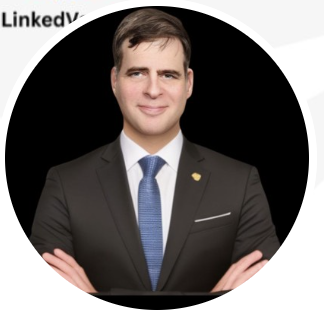
We explore:
• How AI changes personal branding on LinkedIn
• What makes messaging effective—and what makes it feel generic
• Why more content doesn’t necessarily lead to better connections
• The difference between visibility and real relationships
• Where AI helps—and where it can hurt credibility
This isn’t about hacks or shortcuts. It’s about understanding how connection actually works when tools get easier.
Whether you’re job hunting, pivoting your career, or aiming to grow your business, discover how to use AI as your secret weapon to thrive in today’s hyper-competitive professional landscape.


About the Host
Daniel Stih (danielstih.com) is an aerospace engineer, software engineer, indoor environmental consultant, and author of 12 books. For more than 30 years, he has investigated complex problems spanning engineering, technology, the built environment, and human decision-making. His work explores how evidence, assumptions, and systems shape the conclusions we draw—and whether we're solving the right problem. Learn more about his approach in Why I Think This Way.
Show Notes
Linked Vantage:
https://www.LinkedVantage.com
Al Kushner on LinkedIn:
https://www.linkedin.com/in/al-kushner
Al Kushner Speaks:
https://www.Alkushnerspeaks.com
Transcript
My guest today is Al Kushner.
Al is the author of The AI Linked-In Advantage, Unleash the Power of AI and Dominate the Competition.
The book is about how to craft standout personal brands and meaningful connections on LinkedIn for career transformations.
It's designed to simplify AI and LinkedIn strategies into steps you can take to thrive in the competitive and technology-driven business world.
Al has worked with a wide range of clients, helping them to grow their networks and attract leadership positions.
Welcome to my show, Al.
Thank you, Daniel.
Thank you for the opportunity.
Appreciate it.
What led you to write this book, The AI Linked-In Advantage?
Was there a moment or a time light bulb went off and you're like, I have expertise in this, I need to share it or something like that?
Yeah, pretty much.
I mean, I'd looked on the market to see what was out there in books.
And there was several books on LinkedIn, but not on LinkedIn and AI together.
So my book is a first in this industry.
So I think it was a great opportunity to take advantage of, to do it now.
And that's what I did.
How long has it really been AI integrated into LinkedIn?
Maybe it hasn't been that long, right?
Yeah, it's fairly, well, I say AI has been around for a couple of years, but in using it on the platform, it's fairly recent.
And I think that there's a lot of opportunity that people could use to make their experience on LinkedIn much more easier and more impactful, I would say.
What do you suppose the biggest misunderstanding, like, misbelief people have about AI in LinkedIn, or AI in general, might be?
Well, I think when it comes to this type of technology, it's kind of an unknown, and people are always scared when it comes to things that they're not familiar with.
But I think for those who are and embrace it, they are taking advantage of its capabilities, which are really incredible.
So I'm really fortunate to bring this resource available to people to learn more about.
What would be an example of that?
Walk me through an example of using AI on LinkedIn.
I often, if it pops up, I may choose to use it or not.
More often, I'm like, I'm just going to write something or go offline and use ChatGPT and come back and copy and paste if it's that important.
Yeah.
Well, exactly.
You can use ChatGPT to create a content for a particular post that you're writing or for an article that you want to submit.
It has a lot of applications.
And as you know, ChatGPT has making your life a lot easier, I imagine, in terms of creating ideas for content.
And that's exactly what this does.
It's a tool to use.
And it's something that's not an end all, but at least it gives you a good starting point in helping you craft a message that can be impactful and something that whoever you will be reading it, will find out what you're saying.
So I see the pros and cons, which is why sometimes I go, you know, maybe I should just let it go, have where I speak, not spend more time on this, unless it's really important.
The pros in that it helps me come up with ideas.
The downside is, is sometimes if it's just copy and paste or use, where did it get it on the Internet?
And is it really authentically me?
Is that how I speak?
And if I can get it that easy, why even post it?
They could just Google it.
I haven't given them anything of value and a personal authenticity.
How do you use the tool to stay authentic and brand yourself while not getting just hitting the button all the time and being a robot?
Well, the idea, of course, is that you want to customize it.
You get the raw information from ChatGPT or whatever platform you use, and then put your own spin on it.
That's really what you want to do.
Put a little more time into it.
What's great about it is that it gives you the skeleton, the framework to work with, and then you can add your own special sauce on top.
That really is going to set you apart from just taking the raw information and posting it, because people are going to see right through.
It's really just an automated thing.
But if you put your own spin on it and use other types of AI technology like, for example, Grammarly, which is really great, and it really helps you to refine your message, you'll find that it'll be sounding authentic, and that's really what you want to have to do when posting.
So can you give me an example?
Or is it just mostly posting we're speaking of when you go to post?
Well, posting is one thing, but also responding, replying to influencers who are on LinkedIn.
There are a number of them who are posting on a regular basis, and by you replying to that influencer, it can make a difference of you getting followers in traction on your particular profile.
Influencer, you mean somebody with a lot of followers.
Yeah.
So think of someone like a Gary Vaynichuk or one of these other major bloggers or what have you.
They have hundreds, if not thousands of followers, and when they post, they usually are followed by a number of other replies, which could be in the hundreds.
And that's an opportunity for you to take advantage of, because you could take that information that an individual posted, put it into ChatGPT, come up with a reply to that, perhaps something complimentary, just a question or two, and then post that immediately.
And you'll find that a lot of the followers will look at your profile because you sounded very intelligent in replying back.
And even the influence of self may reply back to you and says, hey, thank you for that, because it actually helps boost that particular post in the algorithm and makes it even maybe go viral as a result of your actions.
So it's a win-win situation.
On the downside, you're basically not really contributing to the actual feedback, except for you actually asking ChatGBT, here's what so-and-so posted, how could I reply?
And then Chat, the AI gives you some ideas, right?
And you pick one, that's authentic, or you just copy and paste.
You started, you've helped the influencer, but you really haven't come up with anything personal on your own, dad, to it, have you?
Actually, you have, because you can create a prompt that you can do where you can respond to it in a casual tone.
And guess what?
Even ask a question that maybe has not been posed by that influencer, and that influencer will have to respond to your question to address the issue, which could be very good.
So would you, you would ask Chat GPT what's a question I could ask for this reply?
Reply to the influencer, then ask a question.
Have Chat GPT ask a question to that particular post, and you guess what, you'll find that they'd be very receptive to that.
The influencer may reply back to you.
All of a sudden, you're on the influencer's radar that you never would have done before.
Just think of it.
Yeah, this is part of your strategy.
Exactly.
I like that.
Yeah.
Okay.
What is some other parts of the strategy that I'm not aware of because I haven't read your book?
What's another tip?
Well, most importantly, you want to optimize your profile, and that's essential because whenever you post or something, people are obviously going to look at your profile and you don't get a second chance to make a first impression.
So that's most important.
So you want to, for example, take a look at your particular profile.
If your headshot is not up to date, maybe you want to have more current headshot.
If you have a backgrounder that really doesn't convey what you're coming across as, for example, let's say you have an image in the background, which really is meaningless for the most part, maybe you want to change that.
Maybe you want to get something that has some bullet points or maybe some things that you want to convey whoever is reaching out to.
In addition, you have underneath your name a subject line that you can add to that, that you can have, let's say, AI to create certain keywords and phrases that maybe will help you to be reached out to, maybe potential podcasters if you're doing any interviews yourself or possibility of other people who want to reach out because of your record-setting climbing.
And maybe they have an event that may want you to attend, for example.
My Linked-In Profiles, it's probably unique in that it's not straightforward with people, you know, what do you do kind of thing, because what's the word for what you do more than one thing?
If you were to have hubs, like I know some speakers, you know, they have hubs because specialize in a couple different areas.
So, yeah, I've used it a lot to ask Chappie Chi, and I've learned if I want to dabble back from instead of entrepreneurship and podcasting, see, could I get another engineering job again?
I can just tweak, just flip my whole Linked-In Profile, and next week get a couple of recruiters calling me just because of the way I structure it.
Yeah, exactly.
So again, you customize it to your particular needs, and obviously you want to be able to reach the individuals that you want to connect with that may, whether provide speaking engagements or other opportunities to enrich your capabilities.
Are there ethical lines that we really shouldn't cross using this AI when we craft our LinkedIn messages or our profile?
Well, I mean, the key thing is to be authentic as possible.
Representing who you are is ideal.
You don't want to represent something that doesn't really reflect what your values are and such.
So that's something that you ask the chat GBT by giving select prompts to describe what you want to convey.
And coming across being authentic is really what you want to do it.
So you can customize it.
And again, you can change it at your will.
Let's say you have an award you won, for example, or maybe there's an accomplishment, another mountain you've climbed, you want to share with people.
Let people know on your profile, that really helps a lot.
If you've done volunteer work, that's also considered very favorably by many people.
This is part of your way to make your profile stand out and make a difference, that a lot of people are looking for.
What's also people should look at is endorsements.
Third-party endorsements are very important because it just showcases that you are who you say you are, and that you are able to have people, perhaps on LinkedIn, that can vouch for your capabilities.
So that's really important.
So these are the things that I stress with people is to optimize the profile, so it looks professional and whoever decides to reach out to you will know exactly that you're the person that you say you are.
What about somebody who either is just getting out of college and wanting to get a job, and doesn't have a long history, a long profile, and similarly somebody who wants to do a transition in their career, they have this huge track record on LinkedIn of being really special and successful in one avenue of work, and now they want to transition and they don't want to bring in, they don't want to bring the other part of them along because it attracts too much attention and like, that's not what I do anymore.
What tips, what could they do to make their profile and work with LinkedIn better to do the new thing they want to do?
Well, simply remove anything that you're associated with on your past job and just update it with your current position, where you want to go and if you have to start new, that's fine, it's not an issue.
The fact is, is that you want something represents what you are right now and able to convey it to whoever is going to connect with you, that you are the person that you say you are, and whatever you had in the past, this may be something you can make a note in your past experience what you've done before, and that's fine.
But what your position is, update your profile for that position, your keywords for that particular job that you're working on, and anything that you want to share with someone that will help them decide to accept your connection, that would be helpful.
If they're doing an outreach to an employer, that could be something that is also a value by having your LinkedIn profile updated, particularly your about section would be helpful using ChatGPD to craft a message that will resonate well with the employer to consider you for a particular position in their firm.
So back to, I'm going to pretend I'm these two people, these two personas, college grad.
I'm an engineer, but no work experience directly.
You know, I flipped burgers while I was going to school.
And then, successful, we'll just say engineer again, but now I want to be, what could I be instead?
I want to go work at the TV station to be a reporter or something.
And I don't want anything on my engineering resume.
Well, engineering is good to have on your resume, actually.
For anything, probably.
It makes you look smart.
An example where I totally delete, I cannot have that on my LinkedIn anymore.
And where I'm going with this, then, how do I use LinkedIn if it's a short profile?
Could I use the AI then, as you mentioned, start responding to, say, I graduated with a degree in neuroscience.
I can't get admitted to math.
They won't allow me to go to school to get my masters, and I don't want to go back to school.
I need a job in the lab.
So I'm going to start responding to, AI can give me intelligent responses and start following people hiring managers but not hitting them up for jobs.
How would I figure out who to follow?
Would I ask AI who should I even follow?
Well, first of all, you want to craft a profile that is optimized for your target audience.
So you can explain a recent graduate or what have you as looking for entry level position.
You also perhaps want to create something that makes you stand out among the competition.
For example, creding content, articles could be very much received well by an employer that could help them decide whether or not they want to work with you.
Any volunteer work that you've done, any awards that you've received, these are all also considered very favorable.
But most importantly, if you had recommendations, that also will be playing well too, again, depending on the circumstance.
And then as far as once you've done that and have an outreach, you can use a premium version of LinkedIn called LinkedIn Sales Navigator.
That allows you to find select employers based on certain geographic ranges or certain size in the company and look for them by certain titles.
And when I do something like that, I recommend just simply reach out to them and follow them and then also find out if they post a lot.
That makes a difference.
If they're active on LinkedIn, some of them may not be active, but those who are active, as soon as they post, you can have that individual reach out to that person and compliment them on the post.
Because a lot of times when these individuals do post, nobody says anything at all for the most part.
It's like...
I noticed that, yeah, get three responses.
Okay, not a rock star on whatever the...
Exactly.
Well, when they say something like, thanks for sharing and that's about it, I mean, they're lucky.
But you can use AI to reply back to an individual and compliment them on their particular post that they said.
Now, these individuals, are they hiring managers or they just CEOs or managers in companies that you admire?
Who are the people, how do you know who to reach out to and spend your time replying to?
Well, you can use, for example, Sales Navigator to find those job titles, let's say hiring manager, HR or whatever it is.
If they're active on LinkedIn, that's great.
When's the last time they posted?
And maybe they had, for example, a job that all of a sudden they won.
They changed jobs and now their new title is this.
You can find out who is the new hiring manager, and there's an opportunity where you can go ahead, reach out to them by simply finding out when they post and respond to that post that all of a sudden you get on their radar.
I didn't realize the sales navigator had those kind of filters.
Yeah, it has a really a lot of advanced features, and it's something what's unique about it.
It also allows you to know who's checked out your profile.
So let's say that hiring manager looked at your profile.
Guess what?
You can reply back to the hiring manager.
They didn't make a connection, just reach out and say, hey, you know, I know that you checked out my profile.
Thanks for stopping by.
If there's anything I can do to help, just make it simple.
Don't, like I say, pitch slap them.
That's one thing I've learned, because you think you got to write something special, and it takes all there.
It's big.
Nobody wants to read something big anyhow.
Then I read the whole thing, so I'm short.
I didn't also think of, when you said sales navigator, as a new college grad or someone in a career for a while wanting to change careers, I never would have thought of sales navigator as the tool to use.
Yeah, it's an exceptional tool.
You can find individuals based on their job title, where they're located, the size of the company.
And also, like I said, how if they're active on LinkedIn, which is most important because they're active on LinkedIn, they're posting on LinkedIn, this gives you an opportunity to connect with them by simply following them.
And as soon as you'll get notified on LinkedIn when that individual post, and then all of a sudden gives you an opportunity to reply back to that post.
And that's where you can make a connection where it seems very friendly.
And so I think this is important because, and I was about to ask why you keep saying follow.
In other words, do not immediately hit the connect button, try to connect, follow, and wait till you make a personal engagement, a response from a comment on a post before you hit the connect button.
I want to connect with you.
Is that what you're saying?
Exactly.
Get on the radar.
In addition, you should also be part of groups on LinkedIn.
LinkedIn has a lot of groups that you can join.
That individual, let's say you mentioned technology or neuroscience.
Exactly.
They can join groups on neuroscience or something similar.
And that also will help to establish an affiliation because that individual who's working may also be part of the same group.
So they may be more receptive to accept your direct connections.
Yeah.
Then it's easy to just say, hey, I'm in a group, let's connect or something like that.
Exactly.
And that's something because groups, again, don't accept everyone.
So when they do accept, it's also almost a privilege.
And then when you are part of a group, I would just recommend to post maybe once a week and just share information that's really helpful to the members of the group itself.
That's really what you want to do.
You don't want to spam the group or anything like that, because otherwise you'll get kicked out.
But if you-
Well, if I was in neuroscience, for example, I might just go, hey, did you guys read about in psychology today, how they're doing this experiment with the brain with such-and-such, and FII?
Yeah, sure, something like that as well.
In addition, they may also say that, hey, I recently graduated.
If everyone knows of an opportunity that may fit my particular skill set, I'd appreciate any help.
Oh, you can be that-
I hadn't thought of that.
Ask for help, that's okay?
Absolutely.
And the groups alone, they're doing that.
So that's not a problem.
Okay.
They're a form of outreach.
And the groups could be have thousands of individuals part of that group.
So the opportunity certainly is available.
So take advantage of it.
And I think one of the things people who aren't familiar with LinkedIn don't understand is, once you're connected with someone, your second degree, meaning you know someone, they-
you're one step away from someone, their whole group of everybody they know, and that's important.
Yeah, absolutely.
Second connections make a difference.
Again, if it's the third connection, the best way to do an outreach, of course, is to follow the individual and reply back when they post online.
And that really gives you an opportunity to connect with someone who may be out of your particular second connection, but a third connection or maybe part of a group that could give you an opportunity to reach out and say hello.
Where I've been speaking about LinkedIn a lot, what about the AI Pacifics?
Besides just a general chat GBT, is there something Pacific with the way AI works with LinkedIn that we should all be aware of?
Well, I would say by using chat GBT, it's just a way to help make any kind of response, whether it's reply to influencer or creating content, much easier to do.
And I would say that it gives you an idea that nobody possibly even thought about, that you can create for content or to write a script for a video.
Videos are very hot on LinkedIn.
And that really gives you an opportunity to create content, particularly in groups when they post.
It's very well received in groups because very few of them actually post videos at all.
And videos, you mean videos of them speaking or?
It could be them speaking or it could be an educational video or something that they found to be a value that the members would benefit from.
You know, I post in groups very frequently about tips on LinkedIn and how to use it more strategically.
And that really is well received.
And I'm in about 20 groups on LinkedIn.
And that's something that really helps to raise my level of awareness to those members.
How much time a day do you spend on, like if you were looking for a job, a career change or job, how much time should someone expect to spend on LinkedIn per day or per week to be effective?
I would say if you wanted to check in once a day, and it can be maybe 10, 15 minutes at tops to see if anybody replied, or if you have any responses to your post that you've done, I would say you don't have to spend all day doing it.
And with Chat GPT, it just saves you time in creating content that you want to post, and then you can get on with your day with other things.
But if you didn't have, let's say, that access to AI technology, it would take you much longer to post, to create content.
And most people usually give up at some point because it's just too much time to do.
So for me, I always think, okay, I took a lot of time.
Is it really authentic?
Is it really something new?
Can people tell I'm just trying to post makeup content?
Is it really important?
Maybe I'm over judging myself.
And sometimes I'll just forget it or I only get two responses anyhow.
Yeah.
Well, the fact is that you have to see how many followers that you have.
Do you have a newsletter, for example?
Do you send out at all?
Do you have any?
Well, one thing is what I noticed is an issue with the posting is, say back to the neuroscience, I don't have a lot of followers.
My only followers are my family and friend.
I'm just making this up.
I'm a young guy.
Yeah.
A college grad.
Yeah.
To which what I noticed is LinkedIn, kind of like Google, like YouTube, the search engine, it will target my immediate connections who I don't care about.
It doesn't get fed, what's the word?
Imprint, or when Google or YouTube sends it to somebody else's, like an ad on their channel.
It doesn't go to the people I want to see, so I'm really preaching to people who don't get my message.
Right.
Well, sometimes you may have to delete the people who you don't want to receive your message.
That's a good point.
You keep your connections, real connections, and clean it up.
That's what I've done.
You can see people with thousands.
I hadn't thought about that actually.
So take a look at your connections and evaluate them and delete them if you don't find them.
Okay.
So here's a question for you, Al.
Job transition.
Say someone wants to, they've built up their profile.
Say they have 500 connections and it's in one type of work, and now they want to switch over.
They don't want to delete 500 contacts, but when they post on the new material, that's who's going to see it.
Do you just filter out a few of, what would you do then to just bring it to your new audience and not just your old one, which is a wasted breath?
Very simple.
You create a newsletter, and the newsletter will have a title, let's say Neuroscience, tips, for example.
Then what happens is all of the people who you are connected with will receive a notification that this newsletter is available and would they like to sign up for it.
That way you filter out all those 500 and whoever is left over, maybe 10 percent of them maybe are interested in what you have to say and have an interest in the topic.
Again, whoever you connect with afterwards, also they can have an opportunity to be part of your newsletter, which is awesome.
You create and build up a following of people who are making difference in terms of what you are offering because they subscribe to your newsletter.
They are going to receive the information they are requesting and therefore raise your level of awareness in that topic.
And I'm guessing too the algorithm is then going to know, it's going to start sending your content to those newsletter people and not the other 490.
Exactly.
So you just use the newsletter for that purpose.
And what's interesting about the newsletter, not only do they get notified on LinkedIn, but also off of LinkedIn too.
Because LinkedIn has such a high authority, that it'll actually sometimes bypass spam filters, and get directly into inboxes that normally would never have been received because of-
So you are going to shock your-
it's got to happen though, you're changing careers.
You're going to have to shock the people who, I'm not doing this anymore, I'm doing something different.
And now really, what is he doing?
You got to put it out there, right Al?
Yeah, you do.
And by creating content, particularly for your newsletter, will help address the issue for people who want to follow you based on your new path.
And that's really-
so when you do post, once a week, a newsletter, which is fine, or every two weeks, that at least keeps people abreast of what you're doing, what things are happening in your life.
And ChatGPD can help create content and articles for those newsletters, so there's no reason why not to take advantage of that.
And if I was the young kid, I only have 10 contacts, they're only my family and friends, and I'm going to delete them real soon, soon as I get 10 real ones.
I create the neuroscience newsletter, I'm doing research on my own, what's new and what's happening, I'm reading the publications, and I'm posting stuff I think my colleagues-to-be will find interesting.
And then once they sign up for my newsletter, Daniel's just really spending the time filtering all the latest news out for us.
Yeah, subscribe to his feed, it'll make your day easier.
I'll build a following that way.
And then I'll start looking for a job, through those contacts.
Yeah, exactly.
Because someone who, let's say, looks at your profile, sees that you have a newsletter with, I don't know, 500 followers, you know, particular topic, and all of a sudden, well, this guy is a thought, you know.
Yeah, I know, right?
All of a sudden, you know, he's getting the recognition from people who may want to employ this individual because he has a following, you know, and all of a sudden, he could be at some point an influencer, which also could be very great opportunity.
So that's it.
Sounds funner than going on the sales pipeline and filtering for recruiters and stuff, and just racking your brain.
What fun is that?
Sounds like funner building the newsletter.
Oh, yeah, it's definitely much more creative opportunity, and you can control it, which is great.
So you are in control.
You send a newsletter when you want to, and you'd be quite surprised people will reach out to you.
You know, maybe they, you know, they may know someone who may value what you have to offer, so that also expands.
But the idea of having a newsletter creates you, establishes you as a thought leader, and therefore you become the expert, and that really makes a difference.
Nice.
So, yeah, it could work.
So, the AI, like we mentioned in the chat, GBT, it's a new thing.
What do you or can you even predict or foresee the future on?
Or are there some things you're aware of on where it might go in the future, the AI in the chat, GBT, like how integrated will it get?
I think it's definitely here to stay, and I think it's just going to get better every time you look at it.
I think at some point that people will embrace it and use it to create value to whoever they're connecting with, and that really is important.
I think that by using technology to your advantage, you will find that you will be a lot more successful.
For example, you can use information to create content videos for YouTube channels.
You can create avatars that could speak on your behalf with your words, to create following for that.
That's a little, it's not really spooky, it's just too non-authentic for me.
Somebody I know was just trying to work hard to do that, like they wanted to make as many videos as fast as possible using themselves.
But robotically, I'm like, what's the world coming to?
I just like to speak to you like we are doing now, face-to-face real person.
That's a little concerning to me.
Well, there is certain situations where a deep fake comes into play.
You may have seen that out there where they're deep faking celebrities, or talking to certain products they're trying to promote.
And I think there will be certain ethical concerns when using that, particularly if it's not authorized by an individual.
I think there was a famous actress, Scarlett Johansson, who had had her voice imitated by a product company without her permission.
And that was not really because she had done a movie on AI technology back in the day, maybe heard about it.
Her, HER., I believe.
I'm not so worried about somebody stealing my voice, so that would offend me as, as why am I here anymore if I'm just using, turning on my robot?
You know, but you can't fight it.
People are going to do it.
I would just wonder, am I really speaking to the real person?
What's a mistake?
So we talked about some strategies.
What's the one that I can't think of?
Or maybe I'm doing it and not aware of it, like a lot of people, that they're using AI wrong.
They think it's, it's, they're doing a great job and it's not being effective, and it's not being effective, and they don't understand why, like something they're doing wrong.
Well, it's, it's about being authentic, and AI is certainly not going to be coming across as in your voice or putting your own doing it.
So if you're just thinking the raw information and posting it, then it's going to come out seeming robotic and not really sincere.
So you're really trying to be authentic as possible putting more information.
It's just, again, it's just a tool to use.
It'll give you an outline, but you put in your own information and use it.
How do you do that for someone who's just new to AI, or has been using it maybe the wrong way, and doesn't really understand what we're speaking of?
You first asked to chat, JBT, help me write a post on neuroscience, and today it's going to be on whatever it is.
And then you edit that?
Is that what you're getting at to put it in your own voice, like edit it?
Well, you can give it certain prompts that you want.
You want to maybe more specific, for example, neuroscience for the recent graduates, and how to look for jobs in that industry.
You know, that could be a topic.
And, you know, be as niche as you can.
And then, Chachi Petit will help create ideas or examples or even case studies that you can share of the experience of those who are looking to break into that particular field.
And the best way to go about, you know, connecting with employers.
And an article can be created for that purpose.
And that really could be very helpful for a lot of people who are seeking, you know, that advice.
So that really is important.
So be as specific as possible.
And Chachi Petit will help craft content that could be helpful.
Then put your own twist on it, your own experience, you know, share your idea.
Well, I just graduated and I had no clue what to do, but I decided I created a newsletter.
I want to become a thought leader.
And guess what?
I have 500 followers and growing as a result of these actions.
And then you can have Chachi Petit write an article based on the person's experience.
And that's your own experience, because that's what you have dealt with in terms of looking for work.
You know, you had to set yourself apart from the competition.
So you created, you established yourself as a thought leader.
And that really.
Yeah, I like it.
You're basically providing, you're not just asking Chachi Petit to write the article, you're providing some background information.
And the key thing was about yourself and why you're doing it and who you're trying to reach.
Exactly, you give it prompts and that really helps to refine the article, make it more personable.
And that really is going to make a difference.
So you know, it's still a technology that really needs your help.
Just as with anything like a baby, you know, you have to get the instructions you want to do.
Don't put your hand in the fire.
Yeah, don't make assumptions.
Don't make assumptions.
The more you tell it.
When you say the word prompt, what keeps tripping me up is I think of a field like it asking me a question, like a prompt, like a cursor on your computer.
Prompt, when people say that in this AI world, it's going to be a better word for prompt, because it's not prompting you for anything.
You're pre-prompting.
You're pre-giving it something before it prompts you.
Well, a big growth field right now is called prompt engineering, you would say.
That's created for people who are able to give specific instructions to the AI to go beyond that.
So if the person, for example, I want to establish myself as a thought leader so I can get job opportunities.
What should I do?
And then the prompt will lead the AI will come up with some possible scenarios.
And they said, okay, well, let's expand upon that.
Let's say I'm living in Utah and I'm looking for a job in another state.
How should I approach employers on LinkedIn?
And they will give you an idea of what examples you should do, what steps you should take, how to reach out on social media, maybe create a podcast, for example, way of doing it.
So there are a lot of-
Oh, I do.
Now that you mentioned it, chat does prompt you at the very end when it says, would you like me to do this or do this?
And then sometimes you go, no, neither, do this instead.
Yeah.
Well, that's what it's asking you.
It's asking you, hey, would you want to refine this more?
Do you want to be more specific?
Where do you want to share this?
Do you want to turn into a tweet?
Do you want to turn into a post?
These things that are part of the process of learning your particular style and that really helps to craft it to become more sincere and being more honest in your postings.
What do you think the gap will be?
Will it be widened or the difference between those people that embrace this AI and those that kind of go, you know what, I'm just going to ignore that.
I'm just going to keep doing my own thing.
Do you think those type of people, I mean, in the past, some of them were brilliant, just writing on their own.
Can they compete with AI if they just flat out decide, you know, I don't want to engage in AI?
Well, let's take a look 100 years ago, okay, when the Ford Etzel came out, the car came out, and everybody had horses, and they said, what the hell do I need a car for?
Okay, because I got a horse, it works, you know, you got to feed it, but so what?
You know, you got to give it fuel, the other one, why should I do it?
And guess what happened to those people who basically decided to stay in the past?
Well, left in there at the station and wondering, scratching their head, how come the competition is, is getting the jobs and getting the opportunities?
Because the fact is that it's technology, it's exactly where it's going in that direction.
So you have to, you know, there are people who embrace it and those people who don't, and they get left behind.
So that's how, you know, things work and in order to do things, you always have to learn about things that are available, look for resources to help you become better at what you're doing.
If you're in a competitive situation, anything that's going to give you a leg up, take advantage of it because otherwise, you're not going to get that position.
Now, this is a little bit out, maybe outside your expertise, but you probably have more expertise than me on it.
It's not really relevant to exactly Lincoln.
Kind of say we post this article.
Since it's scraped the Internet to learn how to write the article, I'm speaking of plagiarism and copyrights.
What if all of a sudden you inadvertently plagiarized from a famous neuroscientist?
And what are the possible repercussions of using AI, even though everyone's doing it, and it's probably going to become acceptable, like just to, oh, I didn't mean to copy you, but you did.
That's not okay.
Or maybe it is.
But nonetheless, I have the articles on my website that I'm proud of.
I wrote 100% without AI.
What could be the downside of using AI too much in that regard, if that word suddenly happened to you, like 10 out of 100 of my post, people noticed, hey, I read this in somebody else's post.
Well, first of all, I recommend copywriting anything that you post online.
But you can't, though.
You can't copyright something that's generated from chat, can you?
Well, you can use chat as a foundation, but if you craft it in a way that it's authentic like yourself, then yes, you can certainly do that and copyright it.
But what's also important is that there are plagiarism detectors available, software, that will allow your information through that to check if there's any duplication on the Internet at all.
I did not know that there were tools like that available.
Are those built into LinkedIn's AI?
Oh, no, it's not.
It's usually a separate program like, for example, Grammarly, which is a popular program that not only helps you to edit and construct sentences, but also has plagiarism detectors in there that can research.
Why isn't it not imbedded in the AI chat GBTs?
Because, oh, yeah, we plagiarize everything.
You're using chat GBT.
Everything's been plagiarized, probably.
That's what comes to mind.
Again, you do due diligence whenever you're getting information and you're posting.
You want to run it through a plagiarism site that will detect anything that will.
So I love this idea.
I hadn't thought of it.
Glad we're having this conversation.
So if I was really serious about writing my newsletter and really serious about I'm going to be a content creator, I pretty much should own a plagiarism or a Grammarly or something like that.
Yeah, that would be extremely helpful.
You'll find it to be not only to improve your content and your editing, but also it'll check for those situations for it come across.
And it's a premium version.
That's just one example.
There are other plagiarism websites that can detect these things.
And that's important too, especially if you're a content creator, it's essential part of your protecting your intellectual property.
Well, also comes to mind as recent experience.
And it was a good intention.
They were giving me a positive plug.
Somebody did a book review on one of my books, and so lengthy and detailed, and quoting so much, like in a paragraph, five sentences, there'd be at least one, that's a little quote.
I was like, I wonder if they just used ChatGBT to scan my book and immediately create this content.
I think moreover, it was an honest, they sat down and they wrote the whole thing.
I'm like, wow, you must have really liked my book.
Got me thinking about this whole, what if it was the other way around, or is in the plagiarism and so forth, and the potential with the AI and the way the internet is for you losing your content.
Yeah.
Well, again, you can run it through detectors and such to find out what percentage and then make a course.
It will give you a percentage.
Well, it will give you a percentage of how many things show up on the internet based on that particular article and how it's structured in a way.
So if it's like, I don't know, less than 10 percent, then you're pretty much, I would say, safe.
I know, but some people want even more.
They want it down to 0.0 percent or whatever it is.
You know, to be authentic.
I don't think you really can get to that point, but the fact is, is that it will alert you that certain passages were featured on certain other websites and then restructuring ways, so it doesn't come across as being plagiarized.
That's really helpful.
Which is another conversation.
Where does the actual, you know, doesn't have to be word for word, your intellectual property, at what point is still the idea copyrighted, just because you changed a few words around, like one word out of a sentence, it's still plagiarism.
Not for this, you know, I'm speaking of, Al.
That's something you can have an intellectual property attorney talk to you about.
So, what haven't I mentioned?
LinkedIn and AI, your book is The AI Linked-In Advantage.
What else do you want people to know?
I'll put it in the show notes.
Your website is linkedvantage.com.
What haven't I asked you that?
Well, let's say the book will be the soft cover and audio version will be released on July 4th.
So, it will be available on Audible, on Spotify and other fine retailers.
If they want to get access, I have a free ebook on my Linked-In Advantage website that can access about how to optimize your profile on LinkedIn.
So, that's a great way to learn more about things for free.
And reach out to me on LinkedIn.
I'm happy to accept.
Connect with Al on LinkedIn, of course.
I didn't realize it was just coming.
What's that?
Including yourself, you haven't connected with me on LinkedIn.
So go ahead and do that when we finish.
Will do.
I didn't realize your book was just coming out.
Congratulations.
Well, thanks.
Well, the hardcover actually is available, but the softcover will be released on July 4th, so as well as the audiobook version and the e-book, too, released on that day.
So I did the hardcover first.
So now we're...
I like printed books.
Yeah, it's great.
And especially a hardcover, it really shows that you care.
And you took the time, which speaking of plagiarism and just being lazy about what you post, you make a hardcover book.
It's something special.
Well, it was great.
And audiobook is well clear.
People like to listen to books.
And whenever I get in my car, I make it my university on wheels.
I listen to audiobooks, I listen to podcasts, and it really helps me.
Did you do the audio yourself or did you have someone else do it, narrate it?
And AI do it for me.
And how did that turn out?
It's actually up for an award this year for best audiobook.
So I'm hoping to get in the least gold category, which would be great, but...
You can't tell, in other words, it doesn't sound robotic, the speaker's voice, not like your phone.
No, you listen to it, it's indistinguishable between a human voice, and that's really what's amazing with AI.
You can take your books itself.
Think about it, if you had to do it yourself, how many hours would take for you to actually perform?
It's painstaking.
I did one this week before someone contacted me for accessibility, keyword accessibility, which I only learned a couple of years ago.
People who have bad eyesight, bad hearing, and this person has bad eyesight.
So this book wasn't available as a Kindle, which apparently will do audio for you automatically.
It's only in print, like your hardcover.
So they asked, do you ever think you have an audiobook?
So I made them one that week, and I ran it through Audiobolt's website, where you can check, is your audio good, just to make sure before you record the whole thing.
Oh my gosh, painstaking.
So the idea of having, you said, AI do it.
I am my brand, my voice.
I do a podcast.
To me, my voice is part of my brand.
I wouldn't do it.
I look at it this way.
It's about information that people are looking for.
And I'm a provider of information.
So whether it's my voice or someone else's voice, it doesn't matter.
They want the information.
And as long as the individual who is speaking, you know, people hire voice talent all the time.
I mean, you got more than three men, you got all these high-end talents over there, who are hired to do audio books, okay?
Does that sound not authentic?
I think it's the value of...
Actually, you can frame it that way.
It's better if you have a professional do it.
If you're in the band and you, if you're the singer, don't play guitar, hire a guitar player, it'll sound better.
We get it.
Yeah.
So, absolutely.
I get your point.
Very simple.
Yeah.
With that, I appreciate the opportunity to be on the program.
I look forward to listening to the episode.
Thanks so much for being on my show.
I appreciate it.
Have a great day.