
My guest today is John Chrastka, executive director of Every Library, a nonprofit research organization focused on the future of libraries. In 2023, Publishers Weekly recognized Chrastka as Notable for his work opposing book bans and censorship.
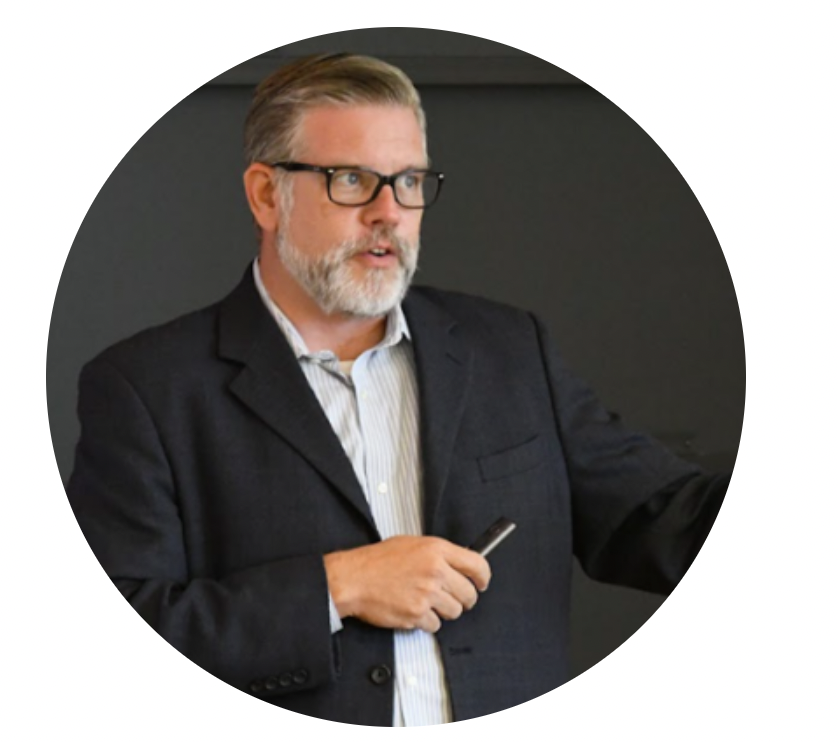
He tell us why libraries are important, what’s at risk, and what we can do to keep freedom of speech in libraries to encourage learning, discovery, and innovation.
In this conversation we talk about:
- Why libraries are crucial for learning, discovery, and innovation.
- How school libraries contribute to the development of students.
- The role of libraries in the digital age.
- Why there might not be books on the shelf.
- Banned books and censorship.
- Funding issues libraries face.
- A vision of libraries in the future.
- Advice for library lovers and how to support libraries in your community.


About the Host
Daniel Stih (danielstih.com) is an aerospace engineer, software engineer, indoor environmental consultant, and author of 12 books. For more than 30 years, he has investigated complex problems spanning engineering, technology, the built environment, and human decision-making. His work explores how evidence, assumptions, and systems shape the conclusions we draw—and whether we're solving the right problem. Learn more about his approach in Why I Think This Way.
Show Notes
Connect with John Chrastka
LinkedIn: https://www.linkedin.com/in/john-chrastka-1163a01
Twitter: https://twitter.com/mrchrastka
EveryLibrary
Helps libraries win funding at the ballot box and ensures access to libraries for generations to come. Support for grassroots groups defending against book banning, political interference, and threats of closure.
Website: http://everylibrary.org
Fight for the First
Support for movements defending the first amendment to stop book banning. Sign up to be alerted when there’s an issue in your community or start a local group and launch a petition.
Website: https://www.fightforthefirst.org
Transcript
My guest today is John Chrastka.
John is the executive director of EveryLibrary, a nonprofit focused on the future of libraries and funding for libraries.
You might ask why we need an action group to support libraries.
I assume libraries would always be free, places everyone can go regardless of politics, where you can go and read what you want without worrying about being charged as a criminal.
Yes, I said criminal.
That's if there's books at your library and books you actually want to read.
When I reached out to John to see if he'd be a guest, it was to discuss the importance of libraries as a means to facilitate learning discovery and innovation.
I have a degree in aerospace engineering.
I recently took my nephew on a field trip to visit the college he was considering, and I was shocked to see the books are gone, replaced with tables to plug in the internet.
Libraries, those with books, are a critical resource for innovation and discovery.
And it's concerning to think that free, uncensored libraries are at risk.
In 2023, publishers weekly recognized Chrastka as notable for his work opposing book bans and censorship.
I'm going to keep this conversation flexible and let John tell us why libraries are important, what's at risk regarding libraries in our future, and what we can do to keep libraries and books free and available to everyone.
Welcome to my show, John.
Daniel, thank you so much for this invitation.
What a wonderful introduction.
I'm glad to be able to be here to talk with your listeners and you about libraries.
And you mentioned public and academic.
School libraries are in the mix as well here.
So tell me if you have the same experience.
I've been to libraries, not every library, but certain ones where I just wander and I get ideas in my head that I wouldn't have got if I wasn't walking through the aisle randomly going, what's that book, the title, the author, and open it.
And I'm not discounting the Internet.
I use AI all the time to help me write a letter faster, cleaner, clearer, to get ideas too.
It's great.
But I don't think there's people that really get that, but can you maybe, I mean, I would try to tell like I just did.
Do you have a similar?
Absolutely.
So I've got statistics and I've got magic.
Okay.
The statistics side of it is about 20 percent of Americans.
Right now, after the pandemic, it was about 14 percent before the pandemic, we're getting their books from libraries.
And it was to read for fun, to read for joy, to read for research, to read because they were interested in a topic.
That discovery, 20 percent, 22 percent, that is largely based on the discovery of it in the stacks.
It's largely based on the discovery of it on an app that is well-built.
It's the wandering around.
It's going after a topic that you think is interesting.
And then the physical geography of the library, the physical geography of that app allows you to have moments of enlightenment.
You trip over yourself on the way to the cookbook section, and you're suddenly down a rabbit hole on the culture.
Exactly.
Where you would never have got, even with AI and Google, because AI is just giving you what you ask for, and it's like a random way of discovery.
Well, AI is funny because it wants to please you.
It's funny when you put in a prompt, it tries to get you as close as it can to the literal interpretation of that prompt.
A library has no such courtesy.
It's a bit chaotic.
If you don't know the Dewey Decimal System or the Library of Congress numbers, like the back of your hand, you're going to trip over yourself on the way to what you're looking for.
Which was actually something my younger brother, I surprised he had this attitude.
He's like, yeah, I don't like libraries because I can't find the book I'm looking for.
I want to go to the catalog.
The system, I don't know how you use it.
Like, that's because you never, I was fortunate to take a class in high school or something that taught me the Dewey Decimal System because I used to be the same way.
This is these numbers, these, I don't get this.
And yet, it's a beautiful system created by people way before they were computers, right?
You just got to learn how to use it.
Yeah.
And the other thing is that the nice thing about a library is it's got librarians in it.
And the human interaction should not be discounted.
There's the individual discovery moments, there's the wandering, there's the appreciative inquiry that one does.
But then there's the opportunity for either coaching or intermediation too.
I think the magic of the library is the humans who work there plus the collection.
It without that, without, without, some people do want to talk to the librarians first.
Some people don't want to talk to librarians ever.
That's cool.
They get it.
That's why they're there.
Yeah.
So tell me about the books being gone.
I was like staggered.
This was a three story beautiful building.
The building is still there and I walk in.
It's the Noble Science Library on campus at Arizona State University.
Okay.
It needs to be packed with all these science books, nothing but three stories.
I walk in and there's literally the racks are still there, the books are gone.
Why are the books gone?
That's a great question.
So I don't know specifically at that particular academic library, but there's a few points of intersection that might be contributing to it.
One is that the physical books have in many places, I'm thinking about the University of Missouri, Mizzou at Columbia, where they've moved the books into a giant warehouse.
Because the times that it's important to have that physical copy from the warehouse, they can retrieve it in a matter of hours.
It's got a robot that goes around.
It's really amazing to see it's like a Doctor Who episode, where these long stacks with a robot coming and grabbing it and bringing it up.
So relocating it to this-
There's like Raiders of the Lost Ark, like where are the books?
Oh, it's a secret place.
It's locked behind a door and you need a password.
No.
No?
Okay.
Well, it's not that they're locked behind the door, it's that they're someplace other than where the campus needs a lot of students to be able to gather together for collaboration work.
The other is that there are a number of different scientific and engineering and medical that have moved away from print.
They've moved away from print and it's all online only.
Nothing's born on paper anymore, it's born in digital.
So just the most recent version of, the most recent edition of might not exist on paper anymore, Daniel.
So there's nothing, there's literally nothing to put on that shelf.
That makes me feel a little bit, I was panicking.
Yeah, just because the resources and no one wants to read books.
I'm like, nobody wants to read books.
Yeah, but you were in a very specialized place.
And maximizing access sometimes is not being dependent on the format.
That being said, there's also a movement though, in certain parts of academia.
And I'm not suggesting it is at the University of Arizona, but there are some community colleges that no longer are required to have a library at all.
And I think that's a real tragedy.
The idea that community college is not a place for scholarship, it's a place for learning the trades only.
I think that we're doing something, a real disservice to our country if we don't have a library in a context where there's professional development going on, as well as personal development, it's higher ed.
And then that would probably trickle down to the high schools.
If they see community college doesn't need a library, what's to stop a high school from not having one?
Well, there's been a problem.
It's a 20, 25 year long, almost a 25 year long problem in this country, where when No Child Left Behind was set up, which is the law that predates the current one, which is called Every Student Succeeds, the No Child Left Behind did not require school libraries.
And we saw significant diminishment of the number of school library programs and school librarians that are out there.
And these aren't just places in the school that have books, reference books, reading books.
They're that faculty member who teaches information literacy, the faculty member who is the librarian who teaches about inquiry.
And that is missing from a lot of states right now.
And that's a real tragedy.
Is that one of the bills the organization works on?
Yeah, we work.
Yeah, right now, our organization, EveryLibrary, is a political action committee for libraries.
We work on law and public policy.
We also have our nonprofit side, which is our public policy tax policy education policy think tank.
It's called EveryLibrary Institute.
We help write good law.
We help oppose bad law that affects the people who use libraries and Americans from all walks of life.
And one of the things that we're working on right now is restoring school librarian jobs and school library collection budgets in these states that are missing it.
It's an uphill battle because it's really hard to prove the negative.
If you've gone through high school and you haven't had it, and everybody's test scores are lower, it doesn't look like it's missing.
And yet we know just empirically, if you compare states with school librarians and school library collections, well, schools with school library collections and school librarians to schools that don't have it, the kids with school librarians score better in English, in reading and writing, they have better acuity on these basics.
I mean, how do we function as individuals if we can't interact with information?
Is that because statistics, is that because the ones with better grades are more affluent communities that have more money?
No, this is very interesting.
We're not controlling, we can control for everything other than the family, like the structure of the family, when you control for almost everything other than like, does the child have a stable home life?
It's not about the zip code lottery, it's not about the funding for that particular school.
You see it across districts, you see it between districts.
Oh, it sounds like you did consider this.
So it comes down to, if you look at all the data, as simple as library or no library grades, good or bad?
It's the presence or absence of a school librarian and a collection that supports the curriculum and individual reading.
And when you think about the experience that you were nervous for your nephew, you said.
I was just blown.
Well, I was real excited.
You've got to see this.
He's in high school, was thinking about engineering.
I'm like, you've got to see this three story like science books everywhere.
Walk in and there's empty racks, literally.
Like if they had just done it last year, they didn't know where to put the racks.
And I didn't think to ask where the books went.
I assume they were, where would they take them?
It's three story building.
Right, right, right, right.
Well, the ones I've seen tend to be underground, or it's like a bunker.
But the difference between voluntarily relocating and forcibly or neglectfully, missing the collection and missing those librarians, there's a very significant difference.
And it's because of budget, that's what kind of like music, they cut band, they cut libraries.
In high school and in K-12, when you see a school with a library and a librarian, it's either an enlightened principal or superintendent, or it's a state requirement.
The same thing goes for music, same thing goes for robust counselors and counseling.
The same thing goes for art.
I mean, the humanities.
I kind of understood cut and ban practice.
The library, didn't see that one coming.
So that's part of what you do.
Well, I was a theater kid in high school.
I mean, if we didn't have a theater program in high school, I don't know who I'd be today, you know?
Yeah.
So let's talk about, sorry, go ahead.
No, I was going to say, the whole life of the child, Daniel.
Some kids are sports kids primarily, great.
They have a good sports program and some kids are theater nerds.
Some kids are band nerds.
Some kids are readers and creators in different ways.
I mean, that's the perfect way to say it.
Creative in different ways.
You're creative in theater.
I've been an engineer, but also do music.
But I think what people understand is the football players are creative too.
Yes, they are.
How are we going to win the game?
How are we going to get stronger and faster?
It's a different type of creativity.
In the key words, creativity and discovery and innovation, new ideas, not just, I'm going to be tough in sports or I'm going to be an actor.
Creativity either way, you're missing part of the creativity for those people that aren't athletes.
That's absolutely right.
So there was this high school I went to, visited recently, and it just happened to be band book month.
Yes.
I didn't know there was such a thing, but what was shocked to see is they had on display some examples of band books.
The giving tree or the tree, the tree that gives, the giving tree, the giving tree.
So for those who aren't aware of this book and it's band, if you know the book, how can that book be banned?
I had to Google it this morning.
Find out it was a public library in Colorado that interpreted as sexist.
How is a tree?
It's a children's picture book.
A tree, a picture of a tree and a child on how they love her.
The relationship is, in the end, the kid cuts down the tree to build a canoe or something, and the tree stump still loves him.
The giving tree.
How is that sexist?
And it came up to be, what's the story?
The readers, some readers believe in Colorado, the young boy continually takes from a female tree.
And as the boy grows up, he always comes back to the female tree when he needs some.
Taking to the tree has nothing left to give him.
Like, how is the tree female?
It's not wearing a dress.
And how does it get banned?
Which, so where I'm going with this, John, is how is that possible?
How can you ban a book?
Well, the specifics of that don't, I mean, it doesn't, it's hard to talk about any one in particular.
But what we see in general is that book banning comes from from a couple of different places.
There are people who are concerned.
You know, they have sincere, they have sincere beliefs about books that might be, that they see as being either inappropriate or harmful.
We're going to protect the young readers.
Yeah.
They come at it, they come at it with a sincere belief, and I have a lot of respect for that.
In fact, the freedom of speech in the First Amendment to the Constitution is, is right alongside the right to petition, which is one of the five freedoms.
And the ability to go to a public library and say, I have a, I have a petition.
I want to, I have a grievance.
I have a redress of grievance.
I'm concerned about this book that those are co-equal rights in the First Amendment.
And I dig that.
Okay.
It's, it's the idea though, that a individual's belief system can override a community's interest or that my perspective on a part of my community can somehow or another criminalize that part of the community.
That's where it gets pernicious, Daniel.
It's, it's where I mentioned the criminal part for listeners because I don't think they understand the gravity, the gravity of the situation.
So by, by law, you know, the, the Constitution says that the Constitution says unconstitutional censorship is you keep it in a library unless it's illegal.
Okay.
It's harmful.
It's obscene.
It's somehow or another illegal.
Then that's a good reason to get rid of it.
Otherwise, keep it because your viewpoint as a government is to be neutral and the viewpoint of the book shouldn't be really relevant to the government, which is the public library, by the way, the schools to begin with.
So in order to ban a book, you have to say that it's illegal.
The book is somehow or another obscene.
It's encouraging criminal behavior.
It is somehow or another harmful.
And it's that charge that the book is criminal that is the most pernicious, because a lot of the attacks are on LGBTQ titles, they're on LGBTQ authors, they're on communities of color.
And then when it becomes criminal, it is a criminal charge.
If you read, if you, how does it work?
If you were found to be reading the book, it would be a criminal charge?
So there's two parts to this.
One is the criminalization of the collection, the book itself, the librarians, the librarians, and the other is the individuals who work at the library.
Okay.
So let me pull those two things apart.
One is to say that the color purple, the Tom Sawyer, the giving tree is somehow or another obscene, is a charge that says the book itself is a criminal action.
Okay.
And so those, so you could take that to a judge.
And there have been cases recently where somebody's tried to sue to remove a book from a bookstore like Barnes and Noble or from a public library to say, those books are obscene.
And the judge says, it doesn't, it's not obscene, it doesn't meet the test of obscenity.
We keep the book.
And public library boards sometimes say, we'll keep the book.
Other times they say, we'll get rid of the book.
Because we agree that this book, this book about a population or particular people, we don't agree that they, they have the same validity as other people do.
On the criminalization of the profession, though, Daniel, that's interesting because since the Kennedy administration, around the country, there's been what's called a defense from prosecution.
The librarians were educators, museum professionals.
Could you imagine if this country had, had criminal charges levied against the people who run museums because they got statues and pictures of naked people from the 1570s?
You know?
Yeah.
So we had something called defense from prosecution, where a local DA, some local sheriff couldn't go in and charge the English teacher, or the history teacher, or the art teacher, the school librarian, our public librarian, or museum professional with a crime for what's on the shelf, or what's on the walls.
That's being eroded around the country.
That's under attack.
Right now, the criminalization of these professions, these institutions.
Who takes the time and goes, I want to erode that?
What's the interest?
Seventeen states last year and the year before, the last session of the state legislature.
How does something like that start?
What's their logic?
You know, it's interesting because when you look at the 17 states that we fought against, there were four states that passed bills to criminalize libraries or librarianship or educators.
Two of them were vetoed by their governors.
That was Idaho and North Dakota.
One of them went to court.
That was Arkansas.
They went to court to say that this law is unconstitutional.
How dare you?
You know, criminalize libraries and education.
And then in Indiana, they passed it.
And now if you're in Indiana as a public library teacher, as a counselor, as a health educator, as a school librarian, a principal, or a school board member, you could have some local DA say that the book on sex ed is obscene and go after you.
Okay.
And it's the same states that are anti-LGBTQ.
It's the same states that are doing anti-CRT bills.
So there's a group behind it.
That's...
Absolutely.
The real objective are those gay and lesbian issues, not the giving tree.
It's another...
It's a back way in.
It's a soft target in a lot of ways.
Yes.
Yep.
The real objective is not literally...
Well, so...
You see it.
You understand it.
Well, we've been in the trenches now for a couple of years on this.
And the idea that you can criminalize a book, you can go after a title and say that book is somehow inappropriate or obscene or criminal, it's easier than going after a population.
In America today, there's a lot of...
I mean, we have gay marriage.
We have transgender individuals can show up to work like they...
It's who they are, you know?
Like we've got interracial marriage, all right?
Like I'm only 53, 54.
I mean, in my early middle ages, interracial marriage was illegal in this country.
I'm from Cleveland.
I grew up in the 70s in Cleveland.
Yes, sir.
I won't even mention what my grandfather used to call colored people.
Yes, no, Daniel.
We live in the same neighborhood.
You know, they wouldn't allow.
I'm like, so they can live a couple streets down.
How's this to a kid?
I'm trying to process how that's logical.
I mean, we are five minutes away from a very different society, and our memories are short.
These protections for individual human beings are easy to erode.
In your line of work, you're basically working with, like you told me, you're two minutes late to the show because you were talking to a senator.
Yeah.
I would have waited longer.
You're very kind.
So you're battling stuff like this.
Is there, seems like you're fighting fires.
Is there a holy grail, one way to really stop what's happening?
A solution for people at home in their own community, listeners?
That's a great question.
So we have a platform that we built about 18 months ago called Fight For The First.
fightforthefirst.org.
It's a little bit like change.org.
It's a little bit like GoFundMe, where we can put up a campaign in five minutes.
If there's a problem someplace, you tell us where the problem is, you tell us about the problem.
We can start activating people in your community locally.
We've had 88,000 people take an action in the last 18 months on 106 different local campaigns.
And that's a zip code level.
There's a problem right now.
We're recording today on October 16th.
There's a problem in Penridge School District in Bucks County, Pennsylvania.
We found out about it yesterday.
We're already up and running on it this morning.
And by saying up and running on it, we are doing calls to action to citizens, to neighbors, to inform them, educate them and activate them.
What's this specific one about?
This one's about the book Perks of Being a Wallflower, which has been out for about a million years and was made into a movie.
Steve Schabosky, he's a good author and a filmmaker.
It's a coming of age story.
They're trying to ban a book.
They're trying to ban the book.
Yeah.
What is the book about if you would ask the author?
So I actually had the pleasure of making your seat the other day.
I was doing some interviews during Ban Books Week.
We had a library, did like a literary festival during Ban Books Week a couple of weeks ago.
And I got to interview him along with a couple other people.
And if you were to ask him why, that's because he talks about what it's like to be a teenager.
What's it like to be a teenager?
How do you feel?
What's going on in your life?
What are relationships like?
It's part of the conversation about growing up.
And there's a lot of people, well, not that many, maybe 5 percent of the American population, maybe 8 percent of the American population, who think that Footloose was a documentary.
That we need to shut down, seriously.
That you and I are in a similar demographic.
I mean, you just have to watch the movie to get that it's not a documentary, even if you don't know who.
I mean, I don't even really know specifically, they recall.
It's a Patrick Swayze, Kenny Loggins.
No, it's Kenny Loggins and not Patrick Swayze, he's that other guy, Kevin Bacon.
It was Kevin Bacon.
Okay.
Yeah.
That being said, like this idea that we should be protecting children from childhood, we should be protecting children from their own identity, we should be protecting children from growing up.
That's a key driver for some of these people who are looking to ban books, and this is the symptom of it.
So it's a negative, not a negative story, it's a real story.
It's a real story.
Well, I mean, it's a fiction story.
A fictional story.
Yeah.
All you got to do is pull up Netflix these days, and it's hard to find a movie that's not violent or drama or sexist.
There's two things here, man.
One is that Americans are always more comfortable with violence than they are with sex.
The Marvel movies, for example, are ridiculously violent.
You know, yeah.
So back to this, um, your action, though, what did this on this book?
What's the title of it again?
Perks of being a wallflower.
What about the childhood do people not?
Think is not they don't want other kids to read about.
Here's the thing.
The if I felt that my own kid shouldn't or couldn't, that's my choice as a parent.
But I'm not going to go next door or down the street or across the alley and say, your kid can't either.
The idea that my own personal comfort or discomfort drives society-wide behavior or access is the problem.
Anybody's individual choices should be empowered.
And in fact, that's what good librarianship does.
It's like your brother should have gone to the card catalog.
Your brother could have gone to the librarians.
You, as somebody who is a user, like the idea that comfort or discomfort is driving public policy and law, I think that we need to scale back a bit.
Let's get back to the core issues around freedom of speech and the Constitution.
Let's get back to the idea that there's a little bit of live and let live going on.
The particulars, I can't say from where I'm sitting, what the particulars are for those people who complained about perks of being a wallflower in the Penrod School District.
I haven't seen the complaint yet.
Okay.
That being said, why take it away from every other kid and every other family?
Well what comes to mind is how then do you take, say you have something as, as serious as child pornography, pornography, you know, playboy and whatnot.
Absolutely.
That is, yep.
How do you decide, okay, that's not acceptable?
Sure.
So mainstream publishers in public libraries and school districts in this country do not collect pornography.
They don't, they don't collect obscenity, they don't publish it.
There's, there are publishing companies, there are, there are places that make movies.
You know, they do podcasts even about, you know, that's not collected by public libraries or schools.
It is not, to suggest that a book on sex ed is pornographic misplaces what pornography is.
So meaning if I, I think what you're saying is, when they publish that stuff, they themselves have labeled it in that classification.
So it makes the library's job easy.
You already, your publisher is categorizing.
So back in January of 2023, the group over at Common Sense Media, Common Sense Media is a big parents' rights kind of organization in the, or parents' information organization.
They want to make sure that parents are well informed about, so they do a voluntary rating system on media, on books, like Rotten Tomatoes, but whether or not they're smoking, drinking, sex, whatever, in a movie, you know?
They do a survey occasionally, and back in January 2023, they did a very big survey of American teenagers.
And they asked a very important question, Daniel, which is, where do you get your pornography?
And dad's dresser under the sock drawer?
Well, 0% of the kids replied the public library or the school library.
Most of them on the phone.
Okay?
Most of them.
Okay?
They got it from friends.
They got it from a website.
The problem of pornography in this country, the problem of sexualization and grooming, the problems that happen socially and emotionally to these kids are not coming from the public library or the schools.
They're coming from different vectors.
They're coming from different sources.
And this country has gotten distracted to the point of harming these kids even more, by not addressing the real source of the problem.
And the real sources of the problem need to be looked at with some alacrity.
If 0% of kids and all, if 0% of them are getting it from the public libraries, the library has come to their phones, why are we paying attention to a place that doesn't affect them?
We should have a fair playing field, do the same thing then with the cellular access.
So what is another big thing you're working on at your organization besides the censorship and...
Yeah, no, that's a great question.
So we got our start 13 years ago, doing public library election days.
And around the country, there's 37 states that have some form of going out to the ballot for funding for libraries.
It might be a local bond measure to build a new building.
Oh, do you realize they would put that on the ballot?
Yeah.
They would put like build a new building.
That's on the ballot.
Okay.
Yeah.
It's on the ballot.
Yeah.
So do we want to issue a bond?
Do we want to issue some debt?
So there's a bunch of states that require local government, like a public library or a school district, to go out and say, yes, we want to raise our taxes.
Okay.
Nobody wants taxes raised.
Well, why are we going to use it?
And then it's the why are we going to, how are we going to use it?
What are we going to use it for question?
And the who's going to spend it question that we started working on 13 years ago as the National Political Action Committee for Libraries.
So we've been very successful.
We work with libraries when they're on the ballot and help them communicate effectively with their voters.
And so we've got six election days coming up in November that are just for public library funding.
Now, what's happened in the last couple of years is that sometimes we get a frustrated book banner or sensor who then wants to go after the library structure.
And those are crisis campaigns.
And we have two of those this November.
But I really like the opportunity campaigns.
You know, the chance to talk to voters and citizens to say, we want to enhance our library services.
Frustrated people about the book bans, they got to understand it's not the library's fault, right?
Well, when I say a frustrated book banner, somebody who can't get the book banned because the library is following the law and the Constitution, will go after the money, okay?
People have something better to do.
Yeah, yeah, yeah.
So, but what I really like doing, and what we've been doing now for 13 years, is helping communities put new ideas for their library to work or put new buildings up.
I mean, this is an idea I have for the book banners.
How's that?
Here's how you make a difference.
Spend your time and energy not banning somebody else's free speech, write your own book.
Right.
And spend your money and your time, get a tour bus, get a million copies printed, drive around the country, hand them out at the downtown coffee shops, give them to libraries.
It's funny because the public library shelf, when you're walking around that public library that we were talking about a little while ago, and you stumble across something, you go to the biography section, okay?
You've got biographies of civil rights pioneers sitting right alongside radio and TV personalities who are very conservative.
You got your Rush Limbaugh right next to your MLKs.
And the idea that there's not both of those things in the library means that they've never come to the library.
They've never really looked at it.
Another thing a lot of those people don't realize, you can't, because I do as an author, when I'm traveling, I go to the library and I take a copy of my book and I give it to them and go, give this to the librarian.
If you like it, put it on yourself.
If you don't pass it on.
Yeah, yeah.
They're open to, they're not going to buy your book.
Again, back to funding.
I mean, they can't put everybody's book on the shelf if you're self-published, but they will put even self-published people's on the shelf if they like.
Absolutely.
Oh, 25 percent of the books on a library shelf in certain genres are indie or indie presses or indie authors.
I would encourage the book banners, instead of infringing on other people's, what they're saying, say what you want to say.
Well, I think it's a uniquely American moment.
You know, the idea that you can, the freedom of expression in America is unparalleled, and I don't want to see it diminished.
And the current censorship moment is putting every perspective in peril.
The slippery slope of censorship, Daniel, is-
Yeah, so tell me about the LGBTQIA, I even can't keep up with these acronyms, because I have a feeling some I don't know behind that.
You know, what is it about these groups?
It sounds like there's some groups in Pacific like that, that are behind the censorship.
Well, so from an LGBTQIA perspective, you have a right to have your story told.
You know, if I'm...
But it's the same thing for religious perspectives and minority race and ethnicity as well.
I mean, the idea that somebody's experience as a Sikh or Muslim or Buddhist or Catholic or whatever should be eliminated from the library because somebody does not like Sikhs or Buddhists or Catholics or...
I mean, it's the same thing, according to civil rights law especially, about who you are.
You know, the who you are, I have to...
I might disagree with...
It's a slippery slope for sure.
That can go...
Yeah.
That can really change ways people think that they think.
Yeah.
One of the things that I look at, on the censorship side of things, we keep books in the library unless they're legal.
You know, the First Amendment unconstitutional censorship is to remove something that's not illegal.
Okay?
It's to remove something based on viewpoint or perspective.
But why do we bring the book in the library in the first place?
A lot of the time, it's because the majority is interested in it.
That's why we got best seller shelves.
You know?
We got the most popular stuff at the front of the building, because the majority, whatever the majority looks like or acts like, says, that's a fun book.
I want to get that book.
Okay?
I want the next one of those books.
But we've got minority perspectives in the library because we're America.
We have minority stories in America, so we should have them on our shelves.
Is libraries are basically curated, right?
Because you can't have space for every single book in the universe.
That's right.
But also libraries are cooperative.
So depending on where you are in the country, you might have what's called interlibrary loan, where if my local library doesn't have it, and somebody in my network does, I can get it.
And I also can tell you that I know there's something called patron-centered collection design, where if you, Daniel, you go to your library and you say, I'd really like to get my hands on this book.
Can you find it somewhere?
And they say no.
And then you can say, can you acquire it?
And they look at it and see, okay, can we circulate this a couple of times to other people besides Daniel?
And if they feel like they can, they'll get it for you.
In fact, there's libraries in the country.
I was thinking about the book banners again, because I think they don't, they're not thinking outside the box.
Or maybe they disagree with what I'm saying.
Say I'm at my hometown, my library, I don't want a certain book there.
The library is curating books to some extent.
Someone could still get your book.
Instead of banning it, what do you want to see in your library, your community go that route?
You know, there's such an abundance to what you're describing.
There's such a positiveness to what you're describing, Daniel, about that.
Like, let's have a more abundant society, as opposed to let's have a society where we diminish the ability of people to access information or ideas, or we diminish the opportunities for people to have their stories told.
I would encourage discussion at that local library with the rest of the community.
I want to, in the book banner, I might learn, you know what?
No, everyone else disagrees with me.
Maybe I should move.
Well, I mean, I'm not suggesting it's easy to be a neighbor.
It's hard to be a neighbor, you know?
We make decisions all the time as neighbors, based on elections, based on public meetings, based on conversations in the public space, in the public forum.
I mean, you know, how do we, some of the biggest fights in my hometown have been over trees?
You know, are we going to trim the trees?
What's wrong with that tree?
That tree should not come out, you know?
It's not like we're banning trees.
It's that we all have some different opinion about what it means to be neighborly and in neighborhood together.
In the book ban doesn't, a book ban fight or an anti-tax movement, you know?
The folks who are like, any tax is a bad tax.
Let's have a conversation about what good taxation looks like.
Like I said, we've been working on it for 13 years now.
How do we have these conversations with each other as opposed to add each other or in spite of each other?
So what is your vision?
We opened with trying to give people a picture if they haven't had the experience of exploring a library, just getting lost and discovering stuff.
Sure.
What's your vision for the perfect library in the future?
And what else are you working on?
What are you working on?
Or what can people do to make that a reality?
That's a great question.
So my own library is not going to be your own library, but our library together, I believe, should have a couple of key things.
One is enough funding to bring in a collection that has some real dynamicism to it and diversity to it.
I want to see those engineering books on the shelf.
I want to see that popular mechanics on the shelf next to the cookbooks, next to the history, mystery, fiction, you know.
I'm not a big fiction reader, by the way.
Daniel, I'm not a good fiction reader.
My wife is.
She's got a stack of books at the bedside that's going to fall over and kill us one night.
You know, I'm more of a non-fiction guy myself.
I want to see that diverse dynamic collection, you know.
And also in formats, because there's a lot of humans out there who still read book books.
I think it's somewhere in the high 70 percent, just read print, and that's great.
I love it.
And then there's a bunch of people who access it through some sort of device.
That's wonderful.
There's a lot of people who listen to books rather than read them because they enjoy it or they need to for different learning styles and listening styles.
I mean, the dynamicism and diversity is the reoccurring theme, you know.
I'd like a spot in the library to go and be quiet.
I'd like a spot in the library to go and hang out with other humans and spend some time.
I want a spot in the library where my kid and other people's kids can be a little noisy from time to time.
These are attributes, I think, of a functional community anchor institution, a functional component of society.
Where can we go to be alone together?
Where can we go together so that we're not alone?
The noise and the quiet one and the kids and the no kids and all that stuff, that's another, those are all important things, yeah.
Yeah, and I'm not just plying the sky in it, you know, it takes money, it takes tax money.
The reason that we've got a public library today in America that's so functional and so robust, and it is.
I mean, the book ban situation is happening.
It's not casual right now.
It's a concern of the attack.
In some states have restrictions on access or restrictions on identity that are pernicious and they're state-sponsored.
Other places though, there's no crisis going on except for the funding.
There's no problem going on.
You know, the ironic thing about the funding is, as a speaker, I'm sick of hearing the word innovation.
And they're like, Daniel, your title, you climb mountains that have never been climbed.
You're an innovator.
Okay, what do I, I'm speaking about innovation.
And yet, we're even having a discussion about not supporting libraries without taxes.
Yeah.
What do you, what are people not understanding?
Walk in the walk, you know, we'd be an innovative society, we're going to go to Mars, and we're not going to have libraries in our high schools.
You know, we were, my wife and I were at the Olympic National Park the other day.
It was our anniversary weekend.
We went out, we lived in suburban Chicago, we took a nice little flight out to Seattle, and we went up to Hurricane Ridge, okay?
I don't know if you've ever been up to that one in particular, but if it wasn't for the WPA, and it wasn't for the CCC back in the day, building trails, okay, you know?
Now, we weren't breaking new trails, we weren't blazing a trail ourselves.
We were on either asphalt or crushed gravel, and a guy like me, who's not much of a climber, could go out there and experience it, okay?
I got to stand on a promontory and look at Puget Sound, okay?
From, I don't know, 3,500 feet up, 4,000 feet up, and I broke a sweat and my glutes, you know?
Like, I mean, I'm not a climber, Daniel.
And yet, because of the infrastructure that America decided to tax ourselves to put together, a guy like me could get up there and have a moment that was quite beautiful, you know?
And I think that the equivalent happens in libraries, it happens in art and museums, it happens in ballparks all around the country.
You know, those different moments of transcendence that happened because we decided to be a decent society.
That's all I'm looking for.
Nice.
You're a busy guy.
Is there anything I haven't asked you that you want to make sure listeners hear about?
The biggest thing here is that the book band situation is really not a progressive situation.
It cuts across conservative and libertarian issues as well.
It's not just about the topics of the book.
We've been talking about things like sexuality and identity and things like that.
But really, why does any libertarian want to see the government say that you can't read something?
Why does any conservative want to have society crumble because we've got this tyranny of a small group?
This is not a progressive issue.
This is an American issue.
And regardless of your political perspective, the live and let live here, the slippery slope issues need to be looked at.
And I would hope that Americans could come together in that constitutional framework, in a civic way about the institution of the library or the framework around public education for the public good and get past this personality.
And the way they can is basically, you mentioned, it's an app or it's a website, I'll put in the show notes, they go to be alerted about local, local legislation.
And what we want to be able to do with our fightforthefirst.org site is alert people who are libertarians, who are like, unconstitutional censorship is a problem.
We want to alert people who are progressives, who say we should not be going after these stories because they're telling true stories about humans.
And we want to alert the conservatives, like, what are they trying to do to your hometown?
Really, what are they trying to do to your hometown?
Why are you going to let those seven people?
That's a great way to put it.
I'm trying to digest the word conservative, which I guess means Republican mostly, definitions.
And what they would like or hate.
I live in Utah now.
Yeah.
The beautiful thing about this state, whether you like the religion or not, these people, they want their rights.
Absolutely.
And they are all for freedom of speech.
All these political things, end of the day, whether you agree with or disagree, it's respectable how what they really want is to be left alone.
You know, that's very, it is a very American story.
You know, just the the Utah's got some some significant anti-book, anti-book.
Oh, do they?
After just I plugged them, really.
I didn't know that.
But it's not it's not coming from from a particular religious perspective.
There are certain political actors, you know, and the state of Utah, though, is fighting for its own rights.
The citizens of Utah have been fighting.
We have an organization that we support called Let Utah Read.
And that is folks from All Walks of Life, Daniel, who are coming together to say, enough is enough with this.
What's what's happening in my own state?
I just moved here last year.
I didn't realize.
Yeah.
There was a particular piece of legislation that allows for book bans to become state-wide book bans in schools, if three school districts ban the book, okay?
So if there's three schools, if Ogden, St.
George, and Nehi get together, and they say we're going to ban this book, then it becomes universal across the state to ban the book.
So contradictory to what my observation was, and what's, why?
You taught folks around Utah from all walks of life are outraged by this.
They are completely outraged.
So the people are the local people.
Yeah.
And your election, your elections coming up in November are really a referendum on, on that civil liberties issue, that civil society issue.
So is it outside, is it outside?
Like they call them carpet baggers.
I just don't understand what carpet bagger means.
Once I read the definition, outsider from out of state comes into your state and sees an opportunity to pounce.
Is that what's happening?
No.
I think this is a uniquely Utah version of it.
It's part of a broader social and political movement though that exists in every state.
I mean, my home state of Illinois is what they call a trifecta where the two houses of the legislature and the governor's office are the same party.
You know, it just happens to be Democrat over here.
There's Republican ones in other places.
They're trifectas.
And so, you know, Illinois had an early bill.
They were one of the early states to put up a bill that would ban book bans.
Okay.
And there's still folks in the state who are trying to advance an anti-person agenda.
They're trying to advance an anti-government agenda, an anti-civil society agenda.
I mean, Illinois is not immune from it.
It's just that in Utah, they happen to be a lot more of them in the state legislature.
I'll have to look into that more.
Yeah, I think it's important.
I'll get on the alert.
Yeah.
What's the website again for your alert?
So our calls to action are at fightforthefirst.org.
Those are the local campaigns, zip code level campaigns for the book, put the books back on the shelf and to stop the shenanigans around book banning.
You can also go to everylibrary.org, which is our main website.
And then in the lead up to the election, we also have a website called Libraries 2024.
Libraries 2024, because it's coming up.
And that covers a lot of the issues as well.
So happy to get that out there to your listeners.
And you know what to, what you're speaking of, the local stuff, the local elections.
I had the League of Women Voters, an executive from League of Women Voters on.
And I was surprised to learn just how much people think.
She was like, most people only go to vote when it's the president, and they make a big deal out of the president.
They don't realize that it's these local, every year, November elections, the local ones where all the real things that really affecting your life matter are taking place.
Well, this is very interesting because in the top of the ticket this year is a particularly stark contrast between the candidates.
But the state legislatures, the governor's races, the statewide initiatives, I mean, in Utah right now, there's a measure on the ballot for a statewide, it's on a statewide ballot.
It's a constitutional amendment.
It's called Amendment 2, I believe, that would allow local school districts to have their money diverted away from public schools and into charters and private schools.
Now, should we be doing that with tax money, or should that be private conversations amongst families to choose to put their kids into a religious school or into a charter school or private school?
That's a big policy issue.
But school districts are on the ballot, and your state and my state's school boards, and then local referendums.
I mean, I agree with your friend over at the Legal Women Voters.
It's exactly why we're paying attention at all levels of government.
Nice.
Any last words, John?
Daniel, I think that the idea that there's an abundant society rather than a negative society that you brought up so eloquently.
The idea that we should be vigilant though, when you walked into that library with your nephew, and you took a look around, the vigilance that we need to make sure that we're living in the kind of society that we all want to live in, that we all have a personal component of that.
I think that's one of my biggest takeaways from this conversation today.
Yes.
I appreciate what you're doing, John.
It's good work.
Keep it up.
Thank you.
Thanks for being on my show.
What a treat.
What a real treat.
Nice conversation today.
Have a great day.
You too.
Bye.
Cheers.