
Solar panels are often seen as a clean energy solution. What if there’s a hidden cost? In this episode, I sit down with Gary Ehlenberger, a retired staff scientist and semiconductor expert, to discuss the little-known side of solar panel manufacturing—including chemicals that made him sick and the industry’s ongoing recycling dilemma.
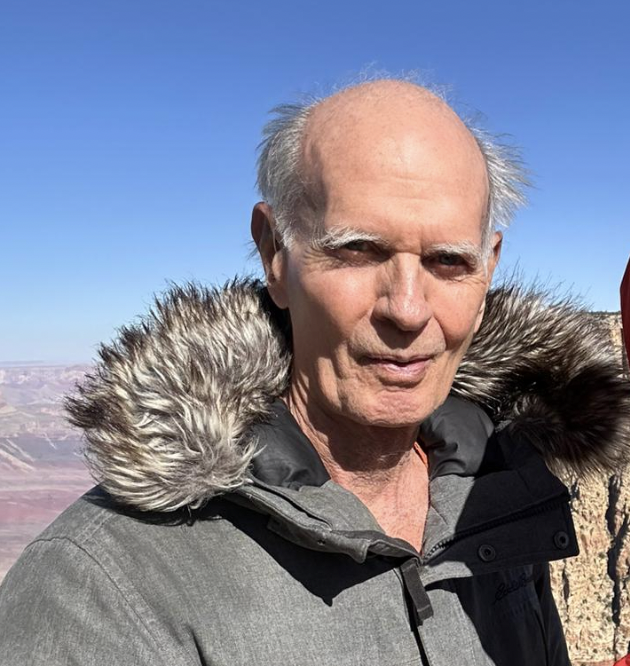
We explore potential future solutions for making solar more sustainable, along with fascinating discussions on unconventional physics, cutting-edge math, and environmental challenges. Join us for a thought-provoking conversation that sheds light on both the promise and pitfalls of green energy.



About the Host
Daniel Stih (danielstih.com) is an aerospace engineer, software engineer, indoor environmental consultant, and author of 12 books. For more than 30 years, he has investigated complex problems spanning engineering, technology, the built environment, and human decision-making. His work explores how evidence, assumptions, and systems shape the conclusions we draw—and whether we're solving the right problem. Learn more about his approach in Why I Think This Way.
Show Notes
Connect and follow Gary Ehlenberger:
Facebook: https://www.facebook.com/gary.ehlenberger
Sound Cloud: https://soundcloud.com/didgmaster
All There Is (blog): https://infinite-now.blogspot.com
Notes from Gary Ehlenberger
Solar Panel Energy Cost: https://blog.ucs.org/charlie-hoffs/how-are-solar-panels-made/#:~:text=This%20process%20uses%20a%20lot,hour%20than%20coal%2Dpowered%20electricity
Solar panels can contain toxic materials like lead in solder, cadmium in some thin-film panels, and potentially other heavy metals like arsenic, selenium, and copper, depending on the type of panel. Here's a more detailed breakdown:
Lead-based solder is used to connect the individual cells within the panel, and while the amount is relatively small, it's a concern due to the toxicity of lead.
Cadmium:
Some thin-film solar panels, like those using cadmium telluride (CdTe), contain cadmium, which is a toxic metal.
Depending on the type of solar panel, other heavy metals like arsenic, selenium, copper, and silver may also be present.
Older PV modules may contain hexavalent chromium in coatings, which is also a substance of concern.
PFAS chemicals are used in coatings for solar panels and wind turbines.
Gallium arsenide (GaAs) modules could have hazardous characteristic of toxicity due to the arsenic.
Volcanic lava flows may be good dumping sites for some products like solar panels.