
This article helps you think clearly in a noisy world, cut through misinformation as applied to the idea the earth is flat.
I had David Weiss, Flat Earth Dave, as a guest on my podcast. Dave's a famous advocate for the idea that the earth is flat. As wild and crazy as the idea is, I was fascinated about why people think that - why do they believe it (other than they think we are not being told the truth about everything, which is of course true!)
There are brain teasers in this discussion. We can do better than simply saying an idea is nonsense. I’m going to give Dave logical or scientific explanations as to why the Earth is round. It makes you think. And sometimes you think about stuff you wouldn't have thought otherwise, outside the box, innovative, creative. Above all, it’s helpful to have polite discussions with those you might disagree with.
The idea has been around a long time. (See Wikipedia). When Dave first heard about it, he says he didn’t believe it. He bought a $1,000 zoom camera tripod, went to the beach, and set the camera up two feet above the water. It was a clear, calm day. He says he zoomed in on a buoy 10 miles away and considered how much curvature in the earth there would be at 10 miles. He calculated that to be 66 feet, meaning at that distance, if the earth were round, the buoy should be 66 feet lower in the horizon, and therefore not visible. With his high powered zoom camera, however, he could see the buoy and he says the surface of the water beyond the buoy. That experience made him a believer that the earth must not be as round as we are told.
The following are excerpts from my conversation with Dave, and the details of explanations I came upon with after I’d had time to think more about his arguments for why the earth has to be flat.
On what the show…
Myth #1 : Dave says, “Large bodies of water at rest need containment.”
Dave talks about an experience he did with a camera on a frozen lake."Water at rest,” Dave says, “lies flat, testably, measurably provably flat. Water, when it gets cold at rest freezes flat.”
He believes “Water needs containment” - a lake or pond only exists because the land around it is higher.
He believes the shoreline of our word is the Antarctica and that Antarctica is not a continent at the bottom of a ball, rather the shoreline that surrounds our world pond. He believes that since Antarctica is the highest land on Earth, it is its high walls of the ice that contain the water on earth.
Truth:
1 Water doesn't need “containment” in the form of higher land to contain it, rather water, or anything for that matter, requires a force to contain it. The force containing water in a lake, pond, or ocean depends on the strength of the land - how much land, dirt, concrete are pushing on it - that’s a force. And it’s pushing sideways on the water. If that force is not big enough, the land will break, the levy will bust, and water will flood out. To understand this better it helps to draw a free-body diagram of the forces acting on the water.
2 Water at rest does not lie flat. Water at rest is measurably flat, as you might demonstrate with a level - the same instrument used to hang a picture on the wall. Pretend we have a huge glass of water, a few miles big and wide. Th level of the water in the glass will be straight relative to the tangent point of the glass on the earth, as seen and measured with a level tool.
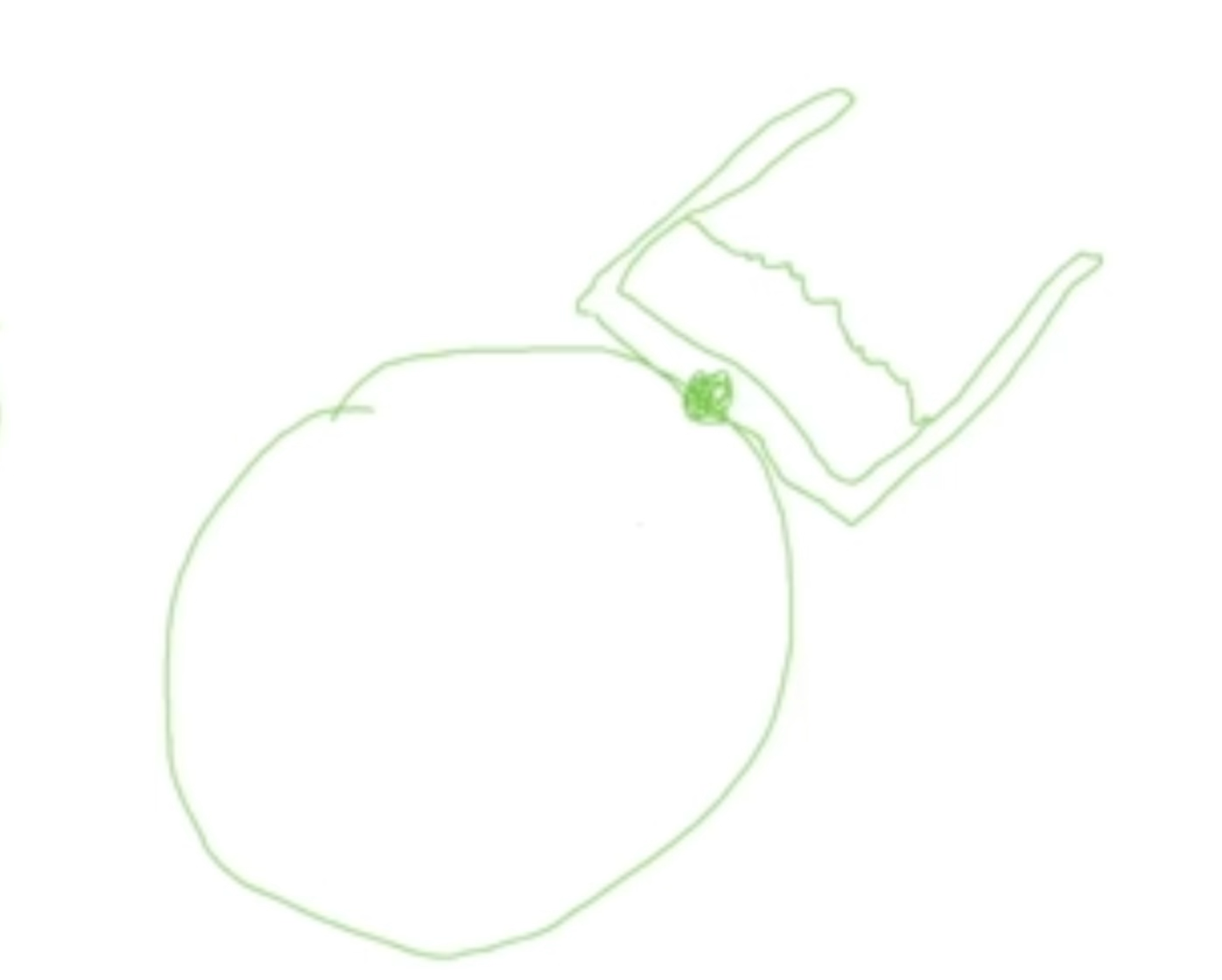
An old fashioned level works on the same principles as glass of water - a level has a bubble which will only stay in the middle level when the force of gravity is balanced such that the force on each side of the bubble is the same. The yardstick (level) is straight; the Earth is curved.
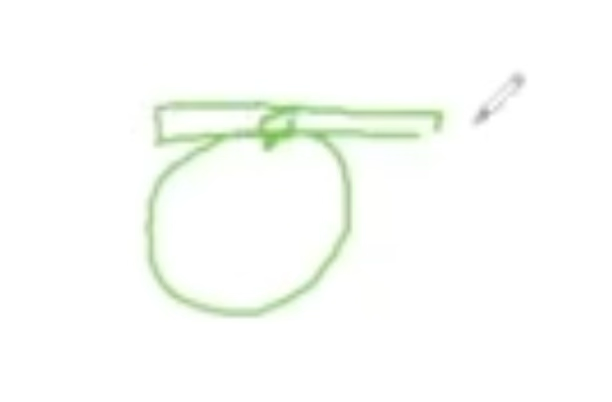
Dave assumes his lake is such a glass water. It is not. His lake is part of the globe, which has curvature. Where the lake touches land, land is containing the water with a sideways force. The water in between is puled down due to gravity. The water in the lake follows the curvature of the earth. He's performing his lake experiment on a curved Earth, not inside a flat glass.
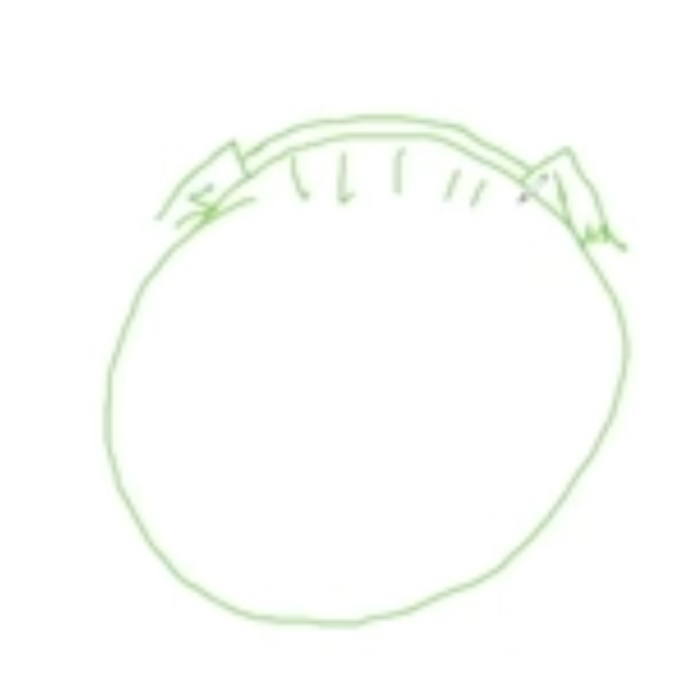
Dave could argue that his model still works. Except he doesn’t believe in gravity and has not presented a model on what forces, if gravity does not exist, are pulling the water down (there has to be a force pulling the water down otherwise it would evaporate.) If the earth is flat, that downward force might introduce a new force - torque. He hasn’t presented a model, has not show us, a free body diagram of his forces acting on the water per his model. Love to see one.
———————-
Myth #2 : Dave says, “The Knickebein World War II German radio guidance system used microwaves and microwaves need line of sight.”
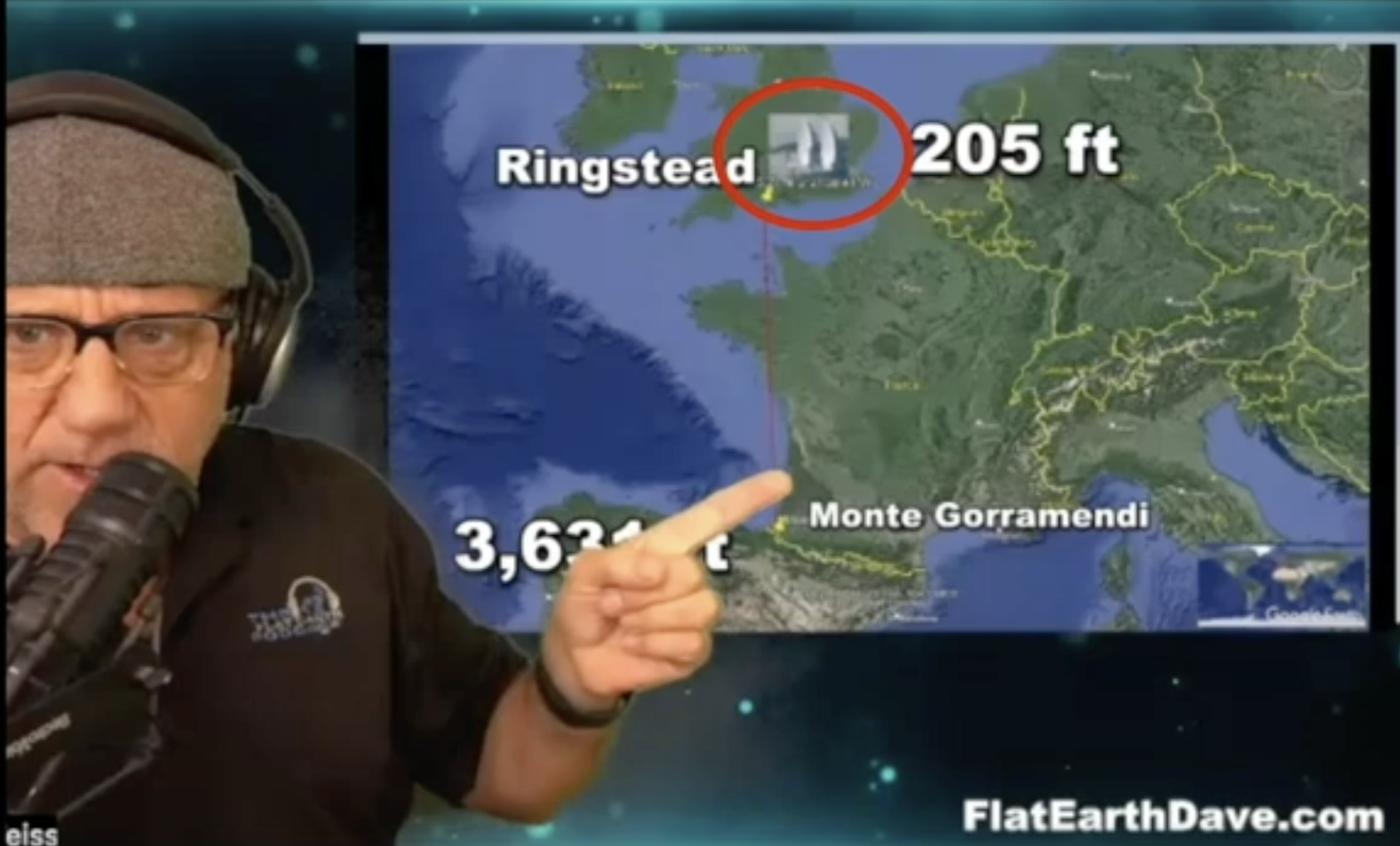
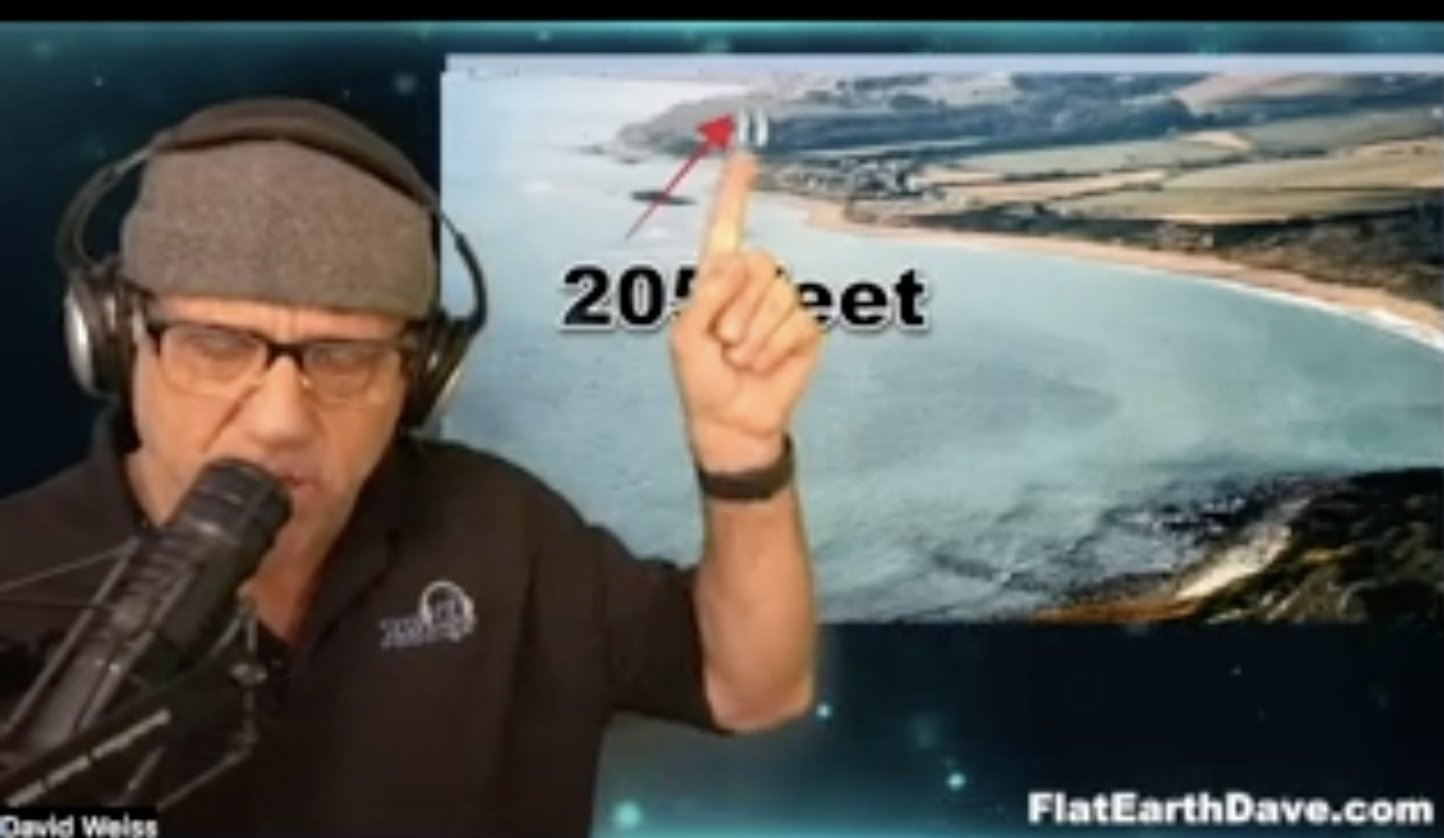
One of the ideas Dave uses to prove the earth is flat is that microwave towers need line of sight to communicate. He presented a map of Europe and told me of how in WWII, microwave towers were used to communicate with bombers to alert them when they were on target to drop bombs.
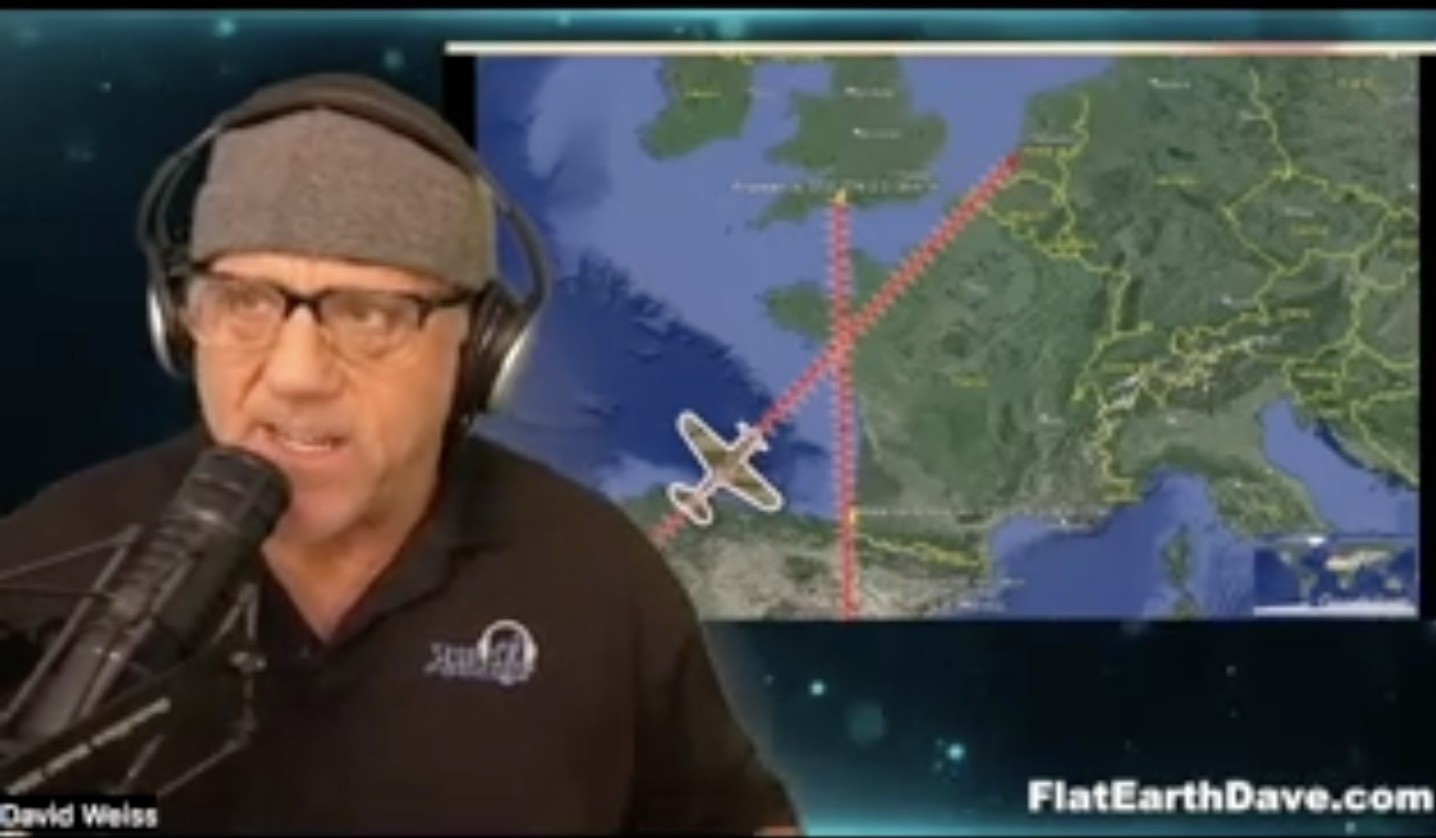
Dave's point is that microwaves can only work line of sight, and the amount of curvature in the distance the bombers traveled was such that there was no straight line of sight. Dave argues that if the earth were round, the Knickebein system could not have worked, as microwave communication needs line of sight. He presents that as a fact.
Truth: Dave made an honest mistake or lied - The Knickebein system did not operate at a microwave frequency.
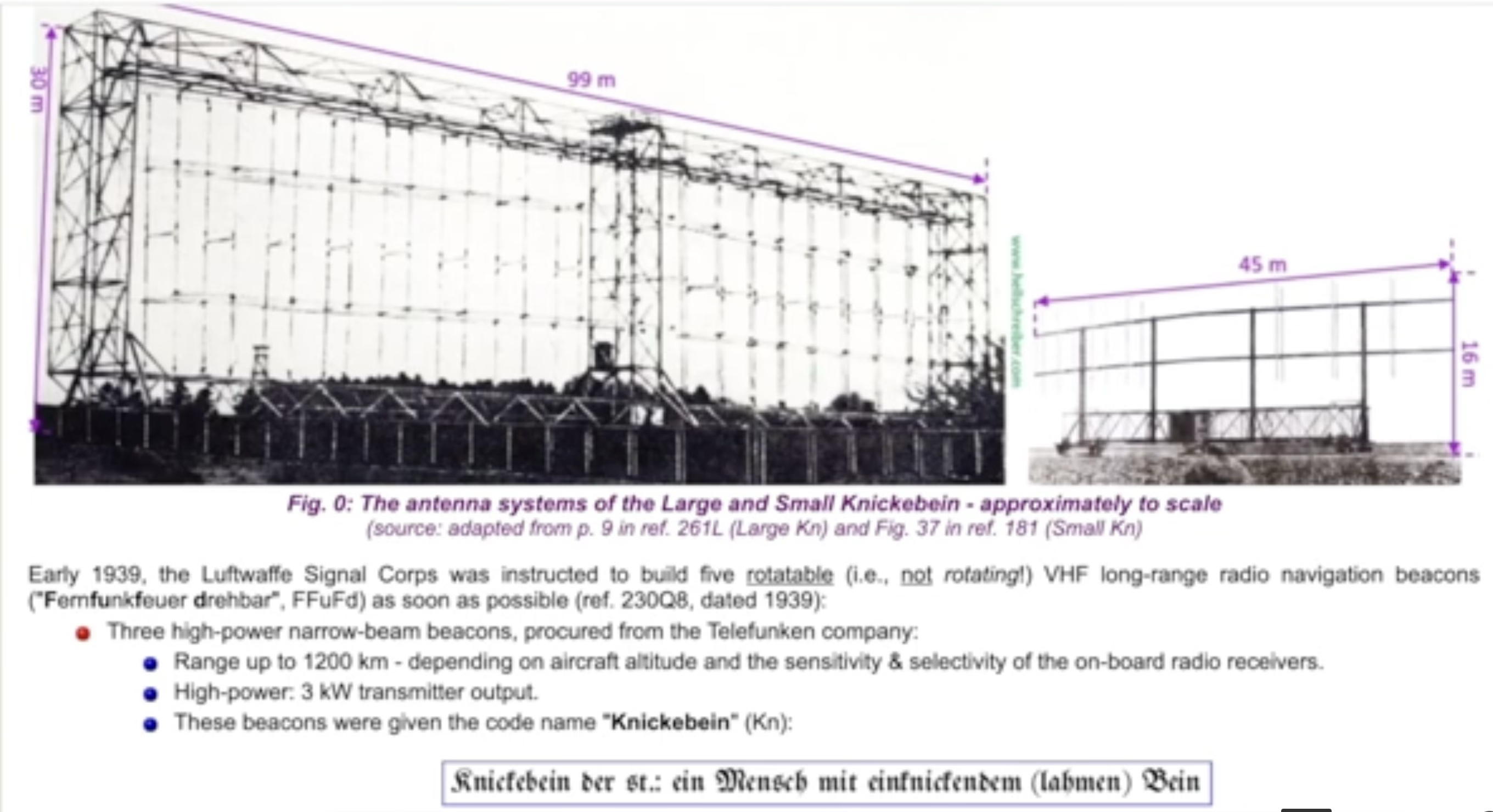
Dave's has picture of a microwave dish on his slide which he appears to have copied and pasted to describe Knickebein. In fact, the Knickebei was dog-legged and operated at VHF radio frequencies - not even close to that of a microwave.
How I Discovered This - What’s the frequency Kenith?
As I searched for an explanation to this puzzling fact Dave put forth, I spoke with a ham radio operator, an expert in radio transmissions. The ham operator got frustrated with me, not because he thought flat earth theory was silly, rather I wasn’t being clear. The response was, “When you say microwaves - what frequency !! ?”
The flat earth argument and debate as to whether the Knickebein. system could have worked is based on Dave saying it operated at a microwave frequency. It did not operate at a microwave frequency, not even close. The Knickebein operated between 30 and 33 megahertz. For something to be considered microwave the frequency must be 300 megahertz to 300 gigahertz. The low end of what is considered microwave is ten times higher than what Dave is calling a microwave.
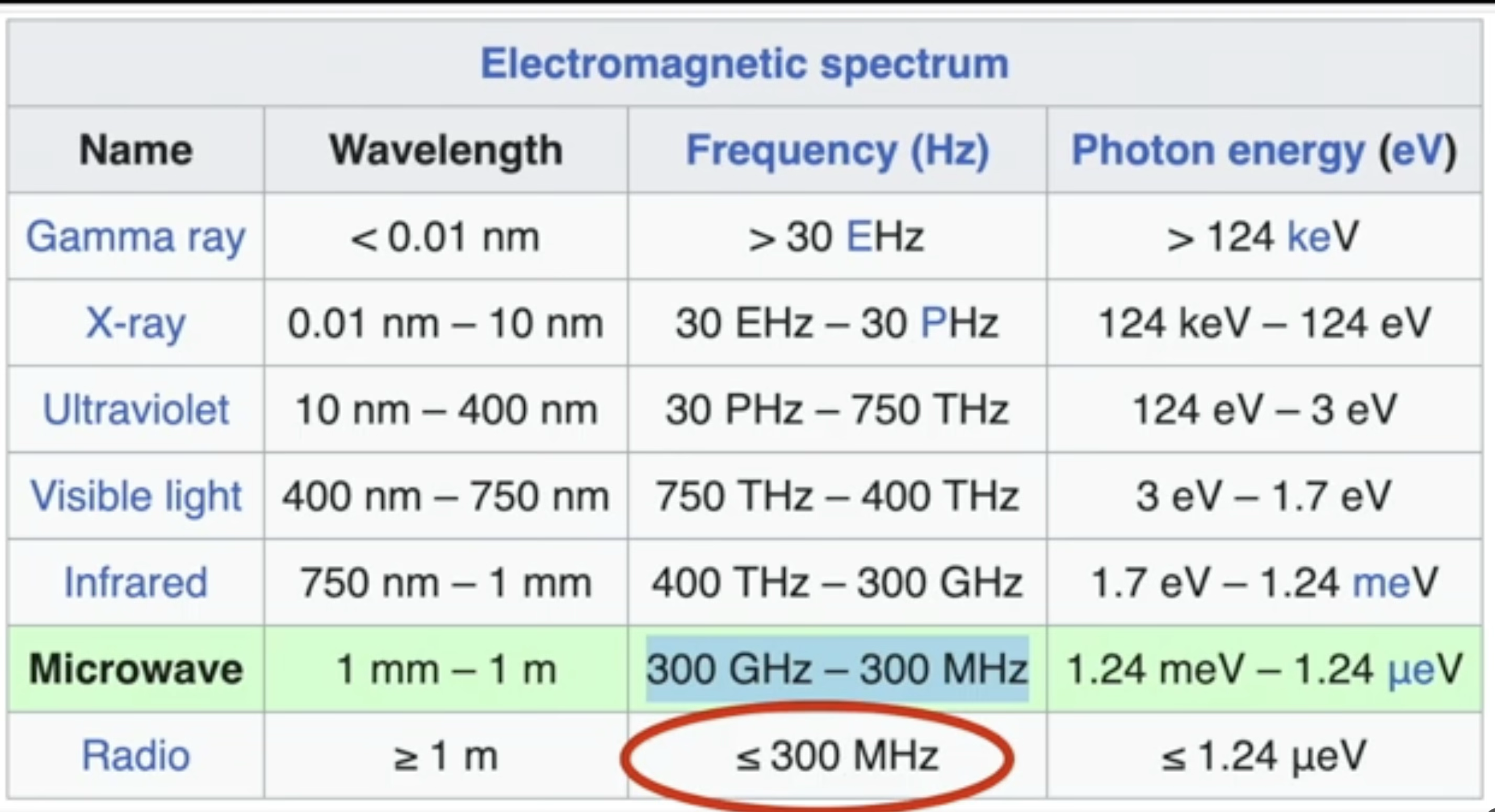
Another thought that helped me crack this puzzle - realize Dave was incorrect - I recalled the early days of cordless phones. The frequency of the early cord cordless phones was 900 megahertz - 30 times higher than what Dave calls microwave. If what Dave's said were true, these phones should have required line of sight between the received and base station. That wasn't the case. The base station could be in the kitchen; I could take my phone upstairs or outside and keep talking. It was the number 900 megahertz that made me realize this. I have some clients who are sensitive to electromagnetic fields. They don't like cordless phones that operate at higher frequencies, so they look for these old phones that at work at 900 megahertz.
Why didn't I realize Dave’s mistake sooner? The slide in Dave's presentation has the Knickebein line of sight. As he's pointing he's saying, "These are microwave towers and it's known that microwaves need line of sight.” Whoever told them the Knickebein used microwaves was wrong. Or maybe he made the assumption himself and didn’t do the research to check it. All he had to do was see an image of it. It looks nothing like the microwave dish he copies and pasted into his slide.
An incorrect association has been made in Dave's presentation between the phrase “line of sight” and this results in those seeing that slide to assume that the system operated at a microwave frequency. It was not a microwave frequency. It was a radio frequency.
Look at Dave's slide, where I have it circled. That is not what the nicker bind antennas look like.
You can go online and Google what the antennas look like. Knickebein translates as bent leg. These are basically long range VHF antennas. If you had a TV back in the day, and you wanted TV reception, you had to use an antenna.
I think Dave had good intentions. In the end it’s disinformation. It led many investigators down the wrong rabbit hole as they tried unsuccessfully to debunk Dave’s “facts” and explain how it’s possible if microwaves need line of sigh to work (They do. But those were not microwave towers).
——————-
Myth: Dave says, “Aircraft flight manuals say to treat the earth as a flat, non rotating plane for all calculations. Therefore the earth must be flat. If a non-flat (round) map were used, a plane would be too high and overshoot the run way when it tries to land.”
Dave tells the story, “I was on a flight the other day, and the pilot says we're going to be descending.”. Dave showed me a picture, a drawing with an airplane above the ground with an arrow pointing from the nose of the airplane going forward to the ground in the direction of the flight path - the path the airplane is going to take to get to the ground. “And we’re x distance from the airport and I calculated, if the plane is going 500 miles an hour when it start descending it’s 125 miles from the airport. So the pilot has to calculate how many feet per minute he needs to drop to get to the runway. If you're 100 miles away and you were 100 feet in the air, you have to drop one foot per mile to get to the runway, right? The pilot does this calculation and the plane will get to the runway. However, it's a flat earth calculation. At 125 miles out, he would be over two miles too high, because the earth drops two miles in125 miles. But they never calculate for that drop. They only calculate based on flat Earth. So the flight data is measuring the distance of how much they need to drop to get to the runway, based on a flat earth. And it works. If it wasn't, they'd be two miles too high.”
Truth: Distances on “flat” maps are based on curvature.
Dave is assuming the distance used in the calculation is based literally on a line of sight to the destination. It’’s not. The distance is based on curvature. Distances on “flat” maps are based on curvature.
If you were to ask the highway workers to install a sign that tell you how many miles it is from one city to the next. They would drive from once city to the next to calculate that. The distance is based on the real distance - based on the curved Earth.
Airplanes follow a curved path as they go around the Earth. They don't just skate off towards the moon. An airplane follows the curvature the earth as it's flying, just like your car. When Dave says, “An airplane 125 miles out,” that’s 125 miles based on if you drove your car 125 miles. It’s the not distance from the nose of the plane to the designation; it’s the distance from where the plane is above the ground at that moment to where on the ground the plane intends to land.
Dave imagines that planes come in at a straight line relative to an observer in outer space , and that therefore It’s going to be too high. The plane is actually following the curvature of the earth as it’s flying. As it descends, it’s dropping altitude. As it does, it is following the curvature of the earth, similar to how the car you drive around, the street looks flat, but there's curvature, and you still know, you drove 125 miles - miles around the curve. It's same thing with the airplanes.
As the plane is flying, there's a force of gravity pulling it down. That force that has to be compensated, has to be balanced with lift by the speed of the airplane. The speed of the airplane is enough such that it gets just enough lift on the wings to compensate against gravity, to keep it at the altitude it wants to stay at. It's constantly fighting gravity to stay at a certain height, and that's what causes the curvature path while it appears to be flying straight relative to those on the ground.
If what Dave is says were to be true, then the plane wouldn’t need to be fighting gravity - it would kept going, as Dave says, and yes - it would skate off into outer space. It would go higher and higher and higher and leave the planet, something you can't do with the normal aircraft.
I asked Dave, “Have you asked someone who wrote the flight book you're speaking of on the aviation, their thoughts on this?"
He replied, “No, but I speak to pilots from Qantas, Delta, American perfect, tons of pilots that are all very awake and aware of this.
“And what do they have to say? Earth is flat?”
“They know it's flat."
“My buddy's a pilot,” I said. "and he disagress. He flies l big planes to Russia and China.”
“Ask him how he adjusts for curvature. Because, you know how planes maintain their level. They have a gyro, right? So on the runway, they spin the gyro up. Everyone remembers playing with the gyro, and it spins up and it holds rigidity in space. It doesn't matter how the plane turns or up or down, left or right, it'll always be level to that runway. Let me run you through a thought experiment here.
This leads us to Dave’s next myth - that a plane can’t go too fast, otherwise the G force would kill the pilot - that the earth must be flat for a fighter aircraft can not keep turning around the earth at supersonic speed without the pilot passing out and dying from the G force.
———---------------
Myth: Dave say, “A plane can’t go too fast otherwise the G forces would kill the pilot.”
Dave says if the earth were curved, the nose of a plane would have to be pointed downward as it goes around the globe. And that the earth must be flat for a fighter aircraft to keep turning around the earth at supersonic speeds, otherwise the pilot would pass out from the G forces required to keep turning the plane downward as it goes around the curve.
Dave said, “There are planes now, military planes that go 4000 plus miles per hour. The SR 72 goes over 4000 miles an hour. I'm talking about G forces. A plane going 4000 miles per hour, it would have to do a downward parabolic arc through free space at a mile per second, faster than free fall, or that plane will fly off into space. It needs to nose down at a mile per second just to follow the curve of the earth. At 4,000 miles per hour in 4,000 miles the curvature of the Earth is going to drop 6,000 miles. The pilot would get thrown to the ceiling at 4,000 miles per hour the gForce would be like 160 G's which is just nothing can survive that.”
Truth: An airplane can be designed to be fly as fast as possible with zero net G force on its pilots and its passengers.
The Concord is an example of a supersonic aircraft that flew twice the speed of sound, over 1300 mph, yet was a luxury experience for passengers who could afford it. This wouldn’t have been possible if gForces were extreme such that it was an uncomfortable experience. The Concord could fly at a high speeds and cruise at an altitude 55,000 to 60,000 feet. Its passengers are said to have been able to see the Earth's curvature when they were at the maximum altitude. Passengers on the Concord, however, did not experience high G forces.
The plane was able to do this due to its design and, just as important, its flight profile. Let’s say we want to design a plane to go super fast but we don't want to scare our passengers or have them exposed to a GForce. To accomplish this they designed the Concord with both types of engines (normal and hypersonic) and a supersonic wing. The reason the Concord lands at such a high angle of attack it its supersonic wings are thinner than normal airplane's wings which are thicker to provide lift. So when it's landing, in order to maintain lift and stay in the air, the craft has to be at a huge angle of attack, like a bird coming into land. The plane comes down at such a high angle of attack the pilots wouldn't be able to see the runway which is why the nose on the Concord’s nose tilts downward as it lands. This allows the pilots to see the runway.
The flight profile prioritized a smooth acceleration. In other words, we're going to get up speed at a really slow rate, and then maintain a constant speed throughout the flight. To do this the plane has minimum changes in direction and altitude - things which generate the G forces. To go fast does not mean a passenger must be exposed to a gForce that no human can tolerate. Speed is not a factor. Speed is not a force. Speed, in Physics, is velocity and direction an object is traveling. There is no acceleration in the final speed of an object. The final speed, let say 4,000 mph, is the planes initial velocity (zero) at rest before it takes off plus its acceleration times the amount of time it has that acceleration applied:
Final speed (Velocity) = initial speed + (acceleration X time)
Consider how you put your foot on the gas when you are late for work and put the pedal down when a stop light turns green. If you have a Dodge you feel the acceleration for a few seconds before you get up to speed. Once you’re going fast, as long as you don’t make a sudden move you can go really fast without feeling any further force from accelerating. The physical equation is: force is equal to the mass of an object times its acceleration. F= MA.
No force means no acceleration. This has nothing to do with speed. Speed is not in F=MA. In the absence of other forces acting on an object, say am airplane, an object will continue to travel at that speed indefinitely. This doesn't happen in real life because there are forces acting on the plane in addition to the thrust from the engines. If you cut thrust you still have drag which is going to slow you down. You have gravity which is pulling you down. At a cruising speed, a passenger is not going to feel gForces, as the pilot only needs to apply enough power to keep the plane balancing the forces of drag and gravity. Passengers will only feel a difference when the plane is accelerating, which occurs at take off and the moment you hear the pilot announce take your seats as we prepare for landing.
If a plane is designed properly you're only going to feel a gForce between when the plane takes off, accelerates, and when you hear the pilot announce on the intercom we've now reached our cruising altitude you may now feel free to move about the cabin and then you're going to be allowed to move about the cabin unless the captain announces that you just you should take your seats either because of turbulence.
Turbulence is a new force acting on the plane. It has to be balanced out by some reaction by the pilot which is going to cause a momentary change in the force on the plane.
The passengers on the Concord only experienced an increased gForce takeoff and landing and those forces were still considered minimal compared to what passengers on other aircraft experienced due to the design of the Concord - its wings, engines, and flight profile - designed to provide a gradual acceleration and a controlled descent.
Imagine you're pushing someone on a swing or merry ground. You could apply a sudden large force to get them moving super fast super quick. Or you could get them to the same speed by gradually and slowly pushing on the merry ground or the swing. Giving little pushes you can get them going as fast as if you applied a sudden large push force.
When we get in discussions like this it's best to draw a free body diagram. Draw a picture of the object by itself. Then draw the forces acting on it. If there's no force there can be no acceleration and no change in velocity.
——-------—————
Myth: Dave says, “You can't have high pressure next to no pressure without a container.”
Dave says everything they tell us about space is fake because space is fake because you can't have high pressure next to no pressure without a container. (It sounds like in Dave’s Flat Earth model, the earth has a cover, perhaps a dome to contain air.) I think what Dave means is to imagine there’s the earth and there's air pressure. The air in space has no pressure, meaning you can't have pressure in the atmosphere with no pressure.. Without a container, a lid over the Flat Earth, all the air would escape.
Truth: Gravity keeps air from escaping.
This is another situation where drawing a free-body diagram is helpful to think about it.
Draw an oxygen molecule. Then add to the force of pressure pushing it outwards. Now add the force of gravity pulling it downwards. The air molecule will go high in the atmosphere up to the point where the pressure force on it is equals the force of gravity on it at a given altitude. As you go higher, the force of gravity will be less, as will the pressure from other air molecules, as there’s less air up higher.
About the Author
Daniel Stih (danielstih.com) is an aerospace engineer, software engineer, indoor environmental consultant, and author of 12 books. For more 30 years, he has investigated complex problems spanning engineering, technology, the built environment, and human decision-making. His work explores how evidence, assumptions, and systems shape the conclusions we draw—and whether we're solving the right problem. Learn more about his approach in Why I Think This Way.