
How can creative expression help us process emotions before they become a crisis?
About This Episode
Author / Host: Daniel Stih is an aerospace engineer, senior iOS software engineer, first-ascent mountaineer, and author of 12 books. For more than 20 years, he has investigated complex problems spanning engineering, environmental health, technology, and human decision-making. Through conversations with experts from diverse fields, he explores how people think, communicate, and solve difficult problems.
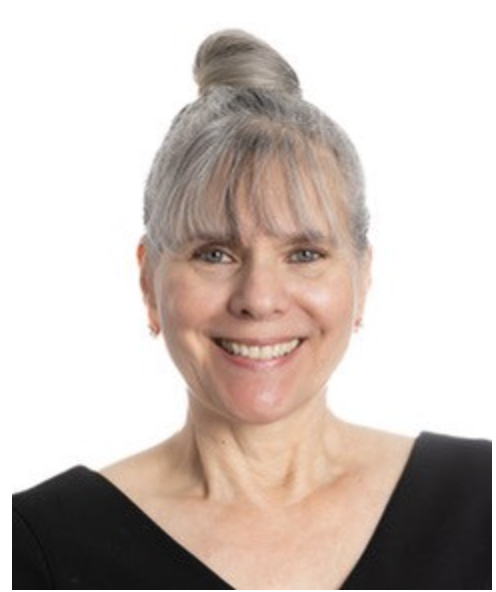
Guest: Dr. Diane Kaufman is a child psychiatrist, poet, artist, and founder of the Hold On Campaign for Suicide Prevention. A suicide attempt survivor who lives with Bipolar II disorder, she combines professional expertise with lived experience to help people use creative expression—including poetry, songwriting, visual art, and storytelling—to improve mental health and build emotional resilience.
Central Question: Can creative expression help us understand—and even change—how we experience emotional pain?.
Many people struggle to describe what they're feeling. Sometimes those emotions remain hidden until they become overwhelming.
In this conversation, Dr. Diane Kaufman explains how expressive communication through writing, poetry, music, storytelling, and visual art can help people process emotions, recognize unhealthy thought patterns, and reach out for help before a crisis develops. Drawing from both her own experience surviving a suicide attempt and decades of work as a psychiatrist, she explores how creativity can become a practical tool for resilience, healing, and connection.



Questions Explored in This Conversation
- How can creative expression improve mental health?
- Can writing poetry or journaling help process difficult emotions?
- What is expressive arts therapy?
- Why is it often difficult to talk openly about emotional pain?
- How can creativity become part of suicide prevention?
- What are simple ways to begin expressing emotions through art or writing?
- Why do many people hide their emotional struggles?
- How can family members better support someone experiencing a mental health crisis?
Editorial Summary
When Thoughts Become Our Worst Enemy
Dr. Kaufman openly shares her own experience with Bipolar II disorder, depression, and surviving a suicide attempt while in medical school. Looking back at poems she wrote before that experience, she realized they revealed warning signs she herself didn't yet recognize. The conversation explores how mental illness can distort thinking and why emotional pain often feels impossible to communicate.
“None of that was true.”
Why Creativity Can Reveal What Conversation Cannot
Rather than viewing poetry, songwriting, or art as artistic talent, Dr. Kaufman presents them as forms of communication. Creative expression can give shape to emotions that are difficult to describe directly, allowing people to recognize what they are feeling and sometimes share those feelings with others before they become overwhelming.
Expressive Arts as a Tool for Resilience
The discussion includes practical exercises anyone can try—from writing without worrying about perfect poetry to using simple drawing prompts and storytelling exercises. The goal is not creating great art but creating space to explore thoughts and emotions in a safe way. Creativity becomes less about performance and more about self-understanding.
Building a Community Around Hope
After writing a poem that eventually became the award-winning song Hold On, Dr. Kaufman founded the Hold On Campaign for Suicide Prevention. The organization combines music, poetry, workshops, artwork, and educational resources to encourage people to express themselves, support one another, and seek help when they need it.
Creativity Doesn't Replace Help—It Can Lead You Toward It
One of the most important themes of the conversation is that creativity is not a substitute for professional care. Art, writing, and music can help people better understand and express what they're experiencing, but reaching out—to a friend, therapist, physician, or crisis service—remains an essential part of recovery when someone is in crisis.
Read the article based on this conversation.
Show Notes
Hold On Campaign for Suicide Prevention
Community outreach on on suicide prevention and mental health using arts & healing workshops and song & film creations.
Website: https:\\www.holdoncampaign.org
The Book: Bird That Wants to Fly
On Amazon: https://www.amazon.com/Bird-Wants-Diane-Leslie-Kaufman/dp/1490320970
Audio Edition Narrated by: Danny Glover, Melvinna Melrose Johnson, Kevin Maynor:
https://www.audible.com/pd/Bird-That-Wants-to-Fly-Audiobook/B0193PKJD0
Transcript
My guest today is Dr. Diane Kaufman.
Dr. Kaufman is a child psychiatrist, poet, artist, and the founder and director of the Hold On Campaign for Suicide Prevention, an organization which helps people improve their mental health and well-being by showing them how to communicate expressively by making art, writing songs, making movies, and other creative things.
She recently presented Love, Grief, and Suicide, and Expressive Arts Approach at the Mental Health Academy's North American Suicide Prevention Summit.
As a songwriter, she's won awards for Best Original Song and Best Lyric.
As an author, her book Bird That Wants to Fly inspired a children's opera narrated by actor Danny Glover.
Dr. Kaufman understands mental health from both a personal and a professional perspective.
She has bipolar 2, survived attempting suicide, and has lost someone to suicide.
Welcome to my show, Dr. Kaufman.
Thank you.
I'm very glad to be here.
So to start, your bio is quite honest and forthcoming.
I would imagine the intention of admitting that you, did I get this correct?
You tried to commit suicide and survived?
Yes.
Your intention is, hey, I know what I'm talking about.
So tell me your story including that and then from there, how you founded the Hold On Campaign for Suicide Prevention.
Sure.
So I'll start with the quote story.
Okay.
Yeah.
The suicide attempt.
Yeah.
So of course, things lead up, right?
So I'm going to start at a certain point, but there's the back story as well.
But when I was in medical school, I was at Downstate Medical Center in Brooklyn, and I was not yet diagnosed as having bipolar 2 disorder, which ultimately I was diagnosed with.
Bipolar 2, Roman numeral 2, stands for having episodes of depression, as well as at least one episode, if not more, but at least one of hypomania.
So most people or a lot of people know what mania is.
So let me just say something about mania.
So mania is when a person, because of an illness, a psychiatric illness, all of a sudden feels as if they have tremendous energy.
So they have a lot of energy.
They are not sleeping because they feel they don't need sleep.
So they may be up for days at a time, have so many thoughts in their head.
So there's like a rapid fire of thoughts in their head.
Sometimes, and their speech is increased.
So the rate of speech becomes rapid.
Sometimes, because of so many ideas in your head, your thought might be jumping from topic to topic.
A person...
One of the things that just crossed my mind is, if you're doing this for four days, don't people see you on the street or see you at work, see you in the office and wonder about you?
So again, I want to say that I have not experienced mania.
I've experienced hypomania, but I'm going to answer what you just said, which is what's so...
I'm sort of...
And what's the right word?
Sort of amazing and sort of awful is that anyone, I think, in seeing a person who's manic, they're going to know there's something terribly wrong with that person.
They may not know that this is a psychiatric illness, but they're going to see someone that is so revved up, extremely talkative, may have grandiose ideas.
Like, I'll put this in quotation marks.
They think they're crazy.
Well, they basically think they're not.
Yeah, I was going to say, quote, crazy ideas, even though they're not crazy.
But I have the cure for cancer, I can quit my job, you know, it's just...
Oh, that's a good one.
That's a good way to diagnose it, what I've observed.
Literally when you wonder, is that person a genius?
Do they really have a cure for it?
And then they say something else, no, that's what Dr.
Kaufman's speaking of.
So there's very, very big ideas.
The person also in a state of mania, their mood could be euphoric.
So, so high.
Their mood could also become irritable.
They can become extremely impulsive.
And this is totally out of character.
So, the person may be, you know, just a regular, relatively modest in their spending habits because they want to save money and live within their means.
But when they become manic, all of a sudden they're spending money like there's no tomorrow and they are at risk.
And I have met adults who this happened to, they are at risk of bankrupting themselves because they are so impulsive without any break on their behavior.
So, you are going through this.
Yeah.
So, let me say a few other things about hypomania.
So, sometimes in hypomania, not hypomania, the mania that we're talking about.
In mania, there could be rapid shifts in the mood, right?
So, in bipolar Roman numeral one disorder, which is manic-depressive, the person could be going from the high to the low very quickly, or they could have a mixed state where they're sort of laughing and crying, and their mood is shifting back and forth.
The person, going back to what you asked before, Daniel, is that the person themselves does not recognize that there is something wrong.
But everybody else knows there's something terribly wrong.
Also, with a person who's having a bipolar, Roman numeral one disorder, there could even be psychotic symptoms, meaning the person is hallucinating as well.
I can remember a patient of mine, a lovely woman who happened to have bipolar disorder, she described for me an experience where in that manic state, she was taking a shower, and she experienced like the water being like the rays of Jesus coming to her.
But it wasn't like, oh, this is spiritual and it's beautiful, there's water.
No, it was more like she was almost delusional, or she was delusional in what she was experiencing.
In hypomania, it's not the same as that manic state.
In hypomania, the person's mood and behavior and sleep, and another part I want to talk about is their sexual drive.
Right?
So you were a doctor before this happened or?
Yeah, so I was in medical school.
So you must have recognized it because this is your expertise as well.
Well, I think the answer is no.
Oh, because like you were saying, you thought you were normal.
You thought you were acting normal.
Yes.
So with the idea of hypomania, it's an upswing in your mood.
So you're sleeping maybe a little bit less, but nothing dangerous.
You're more talkative.
You're more creative.
You have more ideas.
Maybe you're spending a little more money.
You're funnier.
What were you doing?
I experienced, and this is jumping ahead from the suicide attempt that I had, but I can remember a time when I was a pretty-
You were still manic.
Sorry to interrupt, but you were still manic after your suicide attempt.
So maybe I'm going to go back and complete the story about the suicide attempt.
Yeah.
Yes.
There I am in medical school.
Yeah.
So there I am in medical school, and I decided that I wanted to kill myself.
You were not feeling good or this?
I was experiencing depression.
I was in an unhealthy relationship.
That'll be a tear.
I was doing some things out of character in terms of my behavior.
I felt ashamed of myself.
I was also angry at myself.
And you're in school.
Yeah.
When I was in my medical school.
So you've graduated the four-year, like undergraduate.
Yeah.
So I was still in the medical school.
And what's interesting, Daniel, looking back, is that I have a diary that I kept of poetry that I wrote when I was in medical school.
And it's all in my own handwriting and it's dated, you know, the day and the year.
Nice.
And I have poems before I attempted suicide.
I have a poem that I wrote.
It starts off on my birthday.
So it was my birthday, March the 23rd.
It was my birthday.
On my birthday, they gave a talk about depression.
And I wondered what it would be like to be or be not.
And then I'm describing feeling depressed.
And in the bottom right corner, it says, suicidal ideations from life's frustration.
Then there's another poem maybe a month later, and I'm describing feeling like, quote, flotsam, floating away from shipwreck.
Then there's another poem where I'm more in an upbeat kind of mood.
And I don't know whether I just was being fanciful in what I wrote, or whether I was getting to be what I would learn was hypomanic, because that poem is about, I'm describing the MAD., the mad leaves falling from the sky.
And in the poem, I'm asking the leaves to teach me how to fly.
Nice.
I like them both.
On one hand, you could teach them, that sounds like a Tom Petty learning to fly.
And then the flotsam floating away from the shipwreck sounds like you could help co-write with the rock band tool, or maybe Metallica or something dark.
These guys pull it off because they're so angst.
But it's good imagery.
So the poems were describing my mood.
However, I was not sharing with anyone what I was feeling.
Right?
This was all secret.
And then there's a poem that I wrote that I believe was shortly before I attempted suicide.
And the poem is really, when I look back on it, it's really terrible what I'm writing about.
Oh, do you have it?
Do you want to share it?
I have to, I may be able to share it by pulling something else up.
But basically, it's about, I'm describing that I'm, and it's declarative statements.
I am nothing.
I am worthless.
No one has ever loved me.
No one will ever love me.
And then the end of the poem talks about, like, if I tell someone, like, how I'm feeling, if I tell someone, then, like, I'll have to kill myself, because that will be the only way I can hide once more.
I like that line.
But, you know, what I noticed different is, the other ones were more, whether they're dark or light, they're more creative.
This one was just black and white, like there's nothing.
Oh, yes, you're right.
It was black and white.
It was, and it was all statements of hating myself, hating that I'm alive.
I can't tell anybody.
And shortly after that, I attempted suicide.
And when, and none of what that poem said, because I, I, I was, this wasn't a creative exercise.
I was writing what I was thinking.
Right?
And none of that was true.
And it's also, it includes my, it includes also I'm ugly.
I think it starts off, I'm ugly.
You nailed it when you said, when you said none of that is true.
You nailed the why the creative stuff, whether it's good, high or low, it was kind of made me think, that's kind of a cool thing.
Even though you're in this manic state, which is not okay.
Versus these statements, where there's no creativity, that's the point, they're not true.
That's how you could tell that's not true.
Like if I was to read that back to myself, I wrote it, that's how I would know.
Let me see what's true or not in these.
Well, you know, yeah, flying with the trees, that's kind of not really true, but it's kind of creative, which is true.
I have created the other stuff flat out, not true, because it's not creative.
I'm not expressing that maybe the best way, but I'm analyzing the, if I was at GBT or analyzing data sets, I'm like, that's not true.
And why is it not true?
Because it's how it's written and any of them.
But as I wrote it, I didn't have the mental health to be able to say, wait a minute, what did I just write?
None of that is true.
And also, I just wrote that, I think I ought to speak to somebody that I'm not feeling okay.
For me, I believed what I was writing.
I believe what I was writing.
And out of that, I ended up alone in my dorm room.
So purposefully, I had a roommate.
So alone in my dorm room.
And I don't know the exact date that I did it, but I would imagine I did it on a weekend or maybe it was the start of a holiday.
That I didn't want her to be there, you know, to find me.
Although eventually somebody would have found me.
I didn't think that far ahead.
But I was purposefully alone.
She was not going to be there.
And I took an overdose of prescribed medication.
And the medication was the kind of medication that you take enough of it, it could kill you, because it can affect your heart.
And my fantasy was that I was going to fall asleep.
It was like going to be like an easy death.
I take the pills, somehow I would fall asleep, and then I just wouldn't wake up.
And that would be that.
Thinking about my family, my friends, my roommate, I wasn't thinking about anyone.
I was only thinking about being in such emotional pain and such a strong feeling that I did not want to be alive.
And that was the only thing that I was thinking about.
Well, you know, there are people, when I talk about suicide, they get immediately, not a lot of people, but quite a few, immediately defensive.
Like, how could you?
What's the matter with you?
I'm like, how could you be angry at me?
That's why that's why I feel hopeless.
So what you're speaking of is you didn't really think about them.
I to me, you have more compassion and foresight into that than some of the people you actually worried about harming.
I didn't really get some of the people's perspectives on this.
There are some people that do not understand.
You cannot just pull your bootstraps up and snap out of it.
Yeah, it can be, or those feelings and thoughts are so consuming that it's like you have blinders on, right?
And part of that is also related to, now that we have knowledge of this, that in terms of one's brain functioning during that time, that our prefrontal lobe, in terms of problem solving, that it's like offline.
You don't even have access to that part of your thinking when you're in that state of mind.
So, as I said, my thought was, I don't want to live.
I had a means.
I want to say this.
I am grateful that I don't own a gun because if I had had a weapon, I would not be here talking to you today.
I would have shot myself.
Somebody found you or did you come to or did someone find you?
Yes.
What happened was, instead of dying, the medicine made me, I didn't fall asleep and I started to feel very sick.
I started to feel, yeah, I was vomiting.
I started to feel extremely nauseous.
I'm vomiting and I'm really sick.
I realized, hey, I'm not going to die.
Right?
That I'm alive now and I'm not going to die and I'm super sick and I cannot be alone.
Right?
And I contacted my sister.
I have a sister who's seven years older than me and she's relatively nearby.
But back then, I didn't drive and I took a taxi to get to her home.
And I don't know if I told her immediately what I had done.
I might have.
But when I was over her home, her apartment, I started to vomit blood.
And at that point, she took me to Mount Sinai Hospital in New York City.
And of course, I'm saying of course, but not always does a person tell the truth for various reasons.
But I told them the truth.
This is the medicine I took.
And I wanted to kill myself.
And quickly, they, I'm sure they gave me an NG tube, right?
I was on IV fluids.
I don't remember if they gave me Ipacac or not, which would have also been for a while.
Oh, they gave me charcoal, you know, charcoal.
Were they nice to you?
Because one thing I'd be afraid of is if I tell them the truth, you're going to put me in a straight jacket and haul me away to the mental hospital.
And that's not the kind of care I was looking for.
I don't have any visual memory of actually of being in the ER, although I know like factually what they did.
I don't have any memory of anybody being mean to me.
I think I would have remembered it if somebody was mean.
I was admitted to a medical unit to be monitored, to be stabilized.
I was there a couple of days.
I remember though, I think there were at least two other young people in the, I don't know what you call it, the suite, or the room that I was in.
And I do remember there was a young girl, I don't know, maybe she was in her 20s.
She had a physical illness.
I remember her crying throughout the night.
I do remember there was a psychiatrist who came to speak with me.
That was after I had been on the unit, the floor a day or two.
And he asked me if I wanted to be transferred to the psychiatric unit, because I was then on the medical unit.
At that point, I no longer was having any suicidal thoughts.
In fact, I was sort of on the other side of the spectrum.
It was like, I want to forget this happened.
I want to leave the hospital as soon as possible, and I want to go back to being a medical student, right?
And so I was not having suicidal thoughts.
Reminds me of something that I learned from someone else who's an expert on this topic.
They told me, Daniel, most people that try to commit suicide or think about it, they don't want to die.
Yeah.
They just want the pain to stop.
Yeah.
That's part of the issue of thinking, is there another way for the pain to stop?
And in the suicidal mind, it's like there is, there are ways, but in the suicidal mind, it's like the only way is for me to kill myself.
So I, so there the doctor is asking, do I want to be on the psych unit?
And I ended up telling him, no, I was not, because I was no longer actively suicidal, they couldn't commit me against my will.
It would have needed to be voluntary.
I also was thinking, how on earth can I become a psychiatrist?
I was about to ask you, then you finished bed school, you went on to finish, cool.
Yeah, if I, if somebody knew I attempted suicide and I was on a psych unit, like my thought was, I can't become a psychiatrist if I had a mental health crisis.
That'd be like saying, I can't be a doctor if I broke my leg once or ever got sick.
Then how am I going to?
So there was that level of shame and stigma.
But I want to say that I believe if I had said to that psychiatrist, I wanted to be transferred to the psych unit, I really believe that would have happened.
The reason is because as a psychiatrist now, although I'm now a retired psychiatrist, but as a psychiatrist, I think I would have phrased the question differently to a patient.
Because why ask somebody, do you want to be in the psych unit if you're not going to admit them?
If I answered to him, yes, I want to be in the psych unit, if he's not going to voluntarily admit me, what is he or she going to say to me?
Well, I'm sorry, you want to be in the psych unit, but we can't admit you to the psych unit.
You would be voluntarily.
Yeah, it would have had to be a voluntary admission because he couldn't commit me against my will because I was no longer suicidal.
So my thought is that if I had said yes, I really would feel more comfortable if I could spend a few more days in the psych unit, but I think I would have been admitted to the psych unit.
As it was, I ended up discharged, and I started in treatment seeing a psychiatrist for mental health treatment.
My job, as it were, was to be a medical student.
I didn't have another job with being a medical student.
I was dependent on my parents financially, and was, I guess, on their health insurance.
I can remember, I think I met my dad for dinner, a city, New York City, Manhattan, and my psychiatrist, I think his office was in the West Village.
My dad, we had dinner together, or lunch together, and my dad was driving me to the appointment.
And I very much can recall my dad humiliating me, or trying to humiliate me, because he was giving me the check to give to the psychiatrist.
He was paying for this.
And I can remember my father holding up the check way above his head for me to have to grab the check out of his hand, right?
And because why didn't my father just hand me the check?
Like, here, sweetie, here's the check for the doctor.
Why was that?
Yeah.
Because my father was angry that I had tried to hurt myself.
Back to that part where, why is everybody angry at you?
It's like you just had some other, like you broke your leg and someone goes, well, who are you thinking of?
Were you not thinking of us when you crossed the street without looking?
How dare you break your leg?
I'm like, you know, it's not my fault.
Yeah.
Yeah.
I don't wrap my head around that.
Can't wrap my head around it.
Well, wait for this story.
This is real.
Many years later.
So we're talking about maybe 20 years later when.
So it's approximate.
This happened when I was about 40 years old, and now I happen to be 71.
So this is when I was about 40.
My father told me he wanted to apologize to me.
So this came out of the blue, and my dad was not someone who was apologizing ever.
So he said he wanted to apologize to me, and I said, oh, okay, like, what for?
And my dad told me that after I had attempted suicide, that he had told me, none of which I had any memory of, that he had told me, Diane, the next time you want to kill yourself, tell me, because I'll tell you the right way to do it.
Wow.
And he had been carrying that around with him for around 20 years and then felt that he ought to apologize.
And meanwhile, that maybe, thank goodness for defense mechanisms, I had totally blocked out what he had said to me, because I had no memory then.
And even after he told me, I had no memory that he had ever said that to me.
But obviously, he had said that to me.
He had survival.
And knew how.
I would call them survival skills.
Ironically, again, you really, no one really wants to end the life.
They want the pain to end.
You would just follow the same set of survival skills.
I can't listen to that right now.
I've got to get my act together, because I don't want to kill myself, but I don't also know how to stop the pain.
So I'm gonna block that comment out, dad, because I got other things to process.
Exactly.
No, I think it was actually a very good thing that I blocked it out.
Also another thing, not as important on my list, they're not really helping us, but to understand maybe what your dad's, why they say that.
Let me ask you, do you think maybe it's just because they're afraid, they don't know how to cope with this, they have no skills on what to respond.
So just say, you know what, that's not true.
How dare you?
I know.
Because they're afraid, they're afraid, they don't have the skills, right?
To respond is.
I think that my father, my father had a hard time in that emotional connection.
Especially men.
Yeah.
And he once told me, oh, my dad was so interesting.
He didn't understand psychiatry.
He didn't even think that being a psychiatrist was a doctor.
He also once told me that if he started to maybe either talk about himself or unwind himself as it were in terms of his own history, that that would be really bad for him to do.
So he didn't want to do that.
Now, his own brother had a mental breakdown.
So my dad had an older brother and a younger sister.
And my uncle, whose name was my uncle Freddy, my uncle Freddy became a lawyer.
And he was a very flamboyant man.
I mean, maybe I'll tell you what I mean by flamboyant.
In comparison, sort of-
How'd you get to starting the Hold On Suicide Prevention?
Oh, yeah, yeah.
Let me just sort of finish the thing about my uncle Freddy, then I'll go to the Hold On thing.
So he was a very dapper dresser.
He had like a handkerchief in his pocket all the time, artwork on the walls.
He was married about five times.
And he ended up depressed, hallucinating, violent, nervous breakdown in Bellevue Hospital, had ECT treatment, electroconvulsive shock.
And then amazingly, eventually came back to fully functioning.
And my thought is that he probably was having some kind of a bipolar episode.
But going to the Hold On Campaign, so and also linking back to that hypomania and symptoms.
And also graduated school, because then you did go back and you finished.
Yeah.
So I'm there.
Yeah, I'm in medical school.
I graduated.
I ended up doing six and a half years of post-medical school.
I was initially trained as a pediatrician, and then I immediately continued in psychiatry and then child psychiatry.
But the Hold On Campaign is really an outgrowth of my life experiences.
I was writing poetry.
I'm very good at it too, based on just what I heard in your introduction.
Oh, thank you.
Thanks.
The Hold On song that's on the website that the songwriter is performing.
You wrote that poem and his name is Shan.
Shan.
Shan Carvalho.
Yeah.
Do an acoustic guitar version of your song.
Well, he helped you finish a song that he took from your poem, Heartbreak.
Exactly.
Yeah.
I'd love to see the lyrics.
They weren't on the YouTube channel.
You know, if you go to the website on the Create Resilience menu item, the first one, I think the first one says Gifts of Hope and then it's the Healing Songs and Opera, there's a lyric video of it.
So the about page has him performing it.
The Create Resilience drop down has a lyric video which has all the lyrics.
So the Hold On Campaign was really an outgrowth of that particular song, which I'll explain, linked with all these other personal and professional experiences that I've had around mental health illness as well as suicidality.
You get this idea, this inspiration that it helps you to write poetry.
It can help others and not just poetry, songwriting, making movies, painting a picture of your face, writing a poem, these expressive ways, the way to express how you're feeling and in the moment, what you're thinking, what you're needing, what you're wanting.
You somehow realize that this could be a way of other people who are about to want to end the pain just, hey, this is how I'm feeling, because they don't have tools to express that.
Yes.
It's a great organization.
I don't know why there's not more of them that you're doing.
Tell me how you made it an organization.
Was it small to start with, just you and a few other people, you had an outreach on people helped me organize this?
Yeah.
Getting back to that Hold On song, which I originally wrote a poem called Heartbreak Times Infinity.
I think that was December 2022, when I read of the death of Stephen Boss, aka Twitch, whom I had not followed, but I read of his death.
He was a dancer, a celebrity.
He worked with Ellen DeGeneres.
He was on Dancing with the Stars with his wife, Alison Holker.
He was larger than life person.
When I read of his death, by suicide, it seems as if this was a total shock to people that he took his life.
Just shocked me a little because I don't know who the individual is, but he sounds what we would call successful in living a happy dream life.
Yes.
The poem Heartbreak Times Infinity was around layers of heartbreak.
The first heartbreak is that your very own mind is trying to kill you by what it's telling you, right?
You know what?
That's actually a good way to say it because there's the mind and the heart.
Listen to the heart.
Yeah.
Use the mind for reading a book or some science experiment, but follow the heart.
The way you said it's perfect.
What did you just say?
Yeah.
The mind is trying to kill you.
It's interesting because in the lyric, it also references what you just said because in the lyric, which is a component of the poem that I wrote, because in the poem, there's a refrain that goes, but hold on, hold on.
Your thoughts are all mixed up.
Then it talks about feelings coming and going and the pain is going to pass.
Hold on.
That's like my computer is my mind.
Hold on, my computer is on the fritz.
That doesn't mean we need to totally end our life.
Yeah.
Yeah.
It's just a computer.
We'll fix it.
Hold on a moment.
In the poem, there's also a part that goes, only silence now.
That line had to do with your silent with that one thought, I want to kill myself.
When Shannon and I were working on the song, and he is the singer-songwriter, and with all the other songs, I'm the lyricist, I have written the song.
That he repeated the line, only silence now, only silence now, only silence now.
Meditation comes to mind, for me, it was like, maybe it's a moment to take a break, take five seconds.
And yeah.
And then I said to him, Daniel, I said, let's add another line.
So it's only silence now, only silence now, but how can love be known?
And that reference is the heart.
Like if you start thinking, but what would the loving thing be?
Maybe you're not going to kill yourself that moment.
So you're going to hold on.
So it became the song Hold On.
And it started to win awards for lyric and original song.
Eventually it won a whole bunch of awards.
But what happened was it won an award in Paris.
I think it might have been a gold award, right?
So not the best, but a gold, a significant award.
And I'm feeling super excited about, oh my God, in Paris, France, my song is one of the gold award.
Yeah, I agree.
But then I was feeling at the same split screen moment, awful because the purpose of the song, especially the music video, which is free of charge, includes the 988 number.
So the purpose of the song and the video is to be listened to, to because the lyric.
988 for listeners who don't know, that's the suicide hotline, right?
Yes.
Yeah.
988, you're right.
Yes.
988 means I need help now.
Yeah.
And it could be for suicide or also for another kind of emotional crisis.
So on the one hand, the song was winning an award, but the real purpose of the song to be shared, to be put on websites, to be played at mental health conferences, that was not happening.
They put the 988 in there, you said, right?
Yeah, so I have the 988 number on the music video, and the music video can be shared on mental health websites, or on a domestic violence program, or wherever, because my thought is that one, not everybody knows the 988 number, and two, the music lyric is therapeutic, and also in listening to the song or watching the video, you may be more likely to call 988, having just listened to the song.
Perfect.
Yeah.
So here I am thinking, wonderful that won an award, horrible that I can't get anybody to use it for its purpose.
So I'm confused.
Yeah.
Clarity again.
They can use it for its purpose.
Yeah.
So I'm saying, yes.
Yeah.
So it's all available to be used.
But then you have to reach out to the organizations and have the organizations say, yes, we want to upload the video, which is for free.
We want to do this.
So I went to sleep that night, just feeling so despondent.
The very next morning, I woke up and I thought, well, I'm starting the Hold On Campaign for Suicide Prevention, right?
I see where it got its name from now too.
Yes, that's where it came from.
With the idea, initially, I was saying the Hold On Campaign uses the power of art to connect, express and heal.
But now I've also added something else, which actually has been part of what I've been doing, but I haven't added it to that phrase.
So it uses the power of art to educate, connect, express and heal.
The people that need to recognize signs of suicide or help people.
So the songs, and now there are about five internationally award-winning songs that I have.
Some of these songs, I think there was the song For You, My Lovely, which is a post-vention song.
So it's around suicide loss.
Something you mentioned came into my mind.
There's you back to when you're telling me about your manic story.
I'm feeling high.
I'm feeling like the leaves can fly.
I'm feeling like the fledged come from a ship.
I need some help.
Help, help, help me.
Yeah.
Sounds good.
We should collaborate.
So the music and the lyric and artwork, as well as I'm here, I'm wearing something.
I'm going to take it off.
I have a bracelet that I had made and it says, Hold On.
It says, Hold On, Don't Give Up, which is what we need to do, but those are also the names of two of the songs.
Hold On, Don't Give Up, and then it says, Call 988, Save Your Life.
Inside the bracelet, you can't really see it, but it's in here.
It says, Every Day is Suicide Prevention Day.
So this is a bracelet that I had made, and it's part of our Gifts of Hope that I want to, and fortunately, I have had some donations.
Of course, I need more.
It will be in the show notes.
I was going to mention in the episode that you can go to the website and not only listen to the song and get some tools, like how do I write a song or where are your workshops, which I want to talk about next, the workshops you provide on how to write poetry and songs that people can also go there to donate.
I noticed the donation when I went to the website to donate now.
So for example, these bracelets, the idea for gifts of it is this should be in psychiatric emergency rooms.
And given to people-
It's just like the thing they give you when you check into the hospital.
That's true.
Save your life.
Call 988.
Yes.
And it could be in emergency rooms, inpatient psych units, dual diagnosis programs, residential treatment.
The cost of this is minimal.
It's really inexpensive to make it.
And nothing like this is being made available.
I'd like it to be through donations.
What I would do is donate it free of charge to different programs.
From your donations, sure.
So let's talk about the preventive measures.
The ways.
So tell people why, because I believe it, but I don't think people have thought of why.
Expressive communication like this helps prevent suicide because it gives people, it teaches people ways of saying how they feel.
Yeah.
And what they need.
Like I'm feeling like in your poem that wasn't true.
I'm feeling like I'm feeling worthless.
Can you help me?
Tell people how to write a poem real quick, is what I'm getting at.
And you know, your workshops, they're great, they're on your website, and we'll have links to that.
But tell listeners, listening right now.
Quick tips.
You want to write a poem?
Because to me, it's like complex, like, oh, I'm not Robert Frost.
I can't do that.
I, nothing coming into my head right now.
What, how do you start writing the poem?
I start by, for me, it's really expressing my, the thought, the feeling.
And I also, and maybe everybody is different, but language can be musical, right?
There's a musicality of like having repetition of sounds or repetitions of a beat that's going on with what you're writing.
I'm not a poetry teacher, but I would say that I would encourage people to start writing down their thoughts and feelings, right?
And also, John Fox, who's a poetic medicine practitioner, he's the former head of the National Association of Poetry Therapy.
John's a friend of mine.
He's in California, and he's written some tremendous books about poetry for healing.
And you can just go on Amazon.
One of his books is called Poetic Medicine.
And in fact, I wrote a poem from his Poetic Medicine book.
There was a writing prompt about writing like a magic spell, like a potion, right?
And my poem, which I also called Poetic Medicine, which is actually the title of his book, but it talks about like a metaphor of almost like a cauldron, right?
Almost stirring a cauldron of troubles.
And it starts off like there's always a big black pot, you know?
And it's being filled up with troubles, right?
And you can't release your grip from stirring it, right?
And what's interesting about writing a poem is that you don't know where the poem is going to take you.
So you're not the same person, right?
From when you started writing it to when you finished writing it.
And in writing or in painting or in sculpting, that these are safe ways to express yourself, right?
That the page is very accepting.
You can do anything you want on the page.
You could even, you could save it, right?
You could rip it up, right?
You can not show anybody.
You can decide to share it with someone.
So sometimes we need a release, right?
We need to get that.
Well, what I'm getting at is, I think people make it more complex.
There are those great poets like you and your friends who wrote the book and then there's the rest of us.
And I think what would be helpful if people just don't think about it so much.
Don't overthink it.
Just say where you are, how you're feeling, what you're afraid of, what you don't want to happen next, what you'd like to happen next.
And like, I hope there's a tomorrow or whatever's happening.
I mean, because otherwise what happens to me as I get to, oh, how am I feeling?
I'm feeling sad.
Boring and not true.
I'm feeling like I'm about to want to throw the glass or the dish at the wall or scream and holler, but I'm afraid the neighbors will hear me.
And that's what you need to put in your poem.
Yeah.
I want to scream.
I'm afraid the neighbors, I'm afraid the dog will bark.
And then the neighbor will see me.
And then Diane will teach you these tricks like a better poet or songwriter.
You repeat a real cool line.
And then I'm thinking about it.
Yeah.
Now I'm thinking too, almost you could potentially, you could add, I'll have to swallow my scream.
Now you see, she's really good too.
You partner with her, you write a hit song, a hit poem.
But for starters, you need to get the basics on paper.
You'll feel better.
It will be a release.
And it's the starting point, even the best songwriters, The Beatles, John and Paul, they would put stuff on paper.
Diane can probably tell you for a Shannon finished her song.
He did it quickly, but there's always a rewrite.
This sentence could sound better than that.
Or Diane will come up with, what was the line you just said?
Let's swallow the scram.
Swallow the scram.
There's people like that in the background.
If you get to the point when you want to make your poem into a song, which is cool.
It's awesome when then another thought came to my mind, Diane.
If I was in Portland, I would volunteer for this, is then you group up with people.
Some people are good poem writers and other people like you did with Shan Arbalo, is that how he says it?
Yeah.
He's a guitar player, but also he knows how to phrase stuff and do beats and rhythms.
There's always a team back to the Beatles or any band.
Emmy, if you want to go that route.
Yeah.
I used Upwork, so I'm not myself a songwriter or a singer, although I think.
Quick.
Do not write poem.
Do not prevent yourself from writing a poem because you try to sit down, pen and paper and go, I can't think of the line as good as swallow scream.
I'm no good at poetry.
I can't do this.
That's not true.
Yeah.
Just write what you hear, write what you see, write how you feel.
If you want something, what I want, but I'm not getting it or am I getting it, just spit it out.
Yes.
I collaborated by going on Upwork, which is a freelance site, and I would describe the project, looking for a songwriter for a suicide bereavement song.
Or a suicide prevention song.
Then I would get people from across the United States, so potentially if you want to make it an international base, you could look for anyone across the world who's going to submit their ideas.
I've had really great success.
I had a talent that I didn't know that I had.
It's interesting because I may not be able to have the vocabulary to say I'm looking for this, that, and the other in the song.
But when I hear it, I know that's it, right?
Also, I've also at times helped with a little bit of the shaping of the song.
There's one song that's called Holding the Heart When It Breaks, which is singer-songwriter Annabelle Hodges.
I had written that after I had attended, it was July the 26th, I think it was 2023.
It was the day that Sinead O'Connor died.
I had attended a suicide prevention conference that day.
When I got home, I read of her death, and then I read that her son had died by suicide.
Initially, I wondered if she had died by suicide, which I think many people wondered.
It ended up she had not died by suicide.
But the very next morning, I wrote that poem, Holding the Heart When It Breaks, and Annabel created it as the song.
I remember saying to Annabel that, I want there to be a swell in the music, the way you're phrasing it, let there be a swell in it.
You have a natural gift as a poet or songwriter as your second career.
Yeah.
So I was on your website and the Hold On Campaign for Suicide Prevention, her organization.
There's other stuff besides poetry and songwriting, if that's not your thing, like drawing.
You have one on there called Draw Your Face Self Portrait.
Yes.
So I have a what I call Arts and Healing Resiliency Center workshops.
This had started before the Hold On Campaign.
So the Hold On Campaign began with my display table at that Oregon Prevention Conference, July 26, 2023.
And I think in August I had the LLC papers.
And I want to say that it is a fiscally sponsored nonprofit, and it's fiscally sponsored through an organization called From the Heart Productions.
This was going to be in the show notes also, because I did notice just like the donate link, that you have, if you want to partner with Diane's organization, you can click a link, which I'd imagine it probably jumps through some hoops, but then you get to sponsor or do one of these events or something like that you can help out.
Yeah, you're right.
On the workshops.
So, but how do you this?
So real quick for listeners who hopefully they're not on the verge of needing 988 or just maybe they want expressive communication.
It's good for your mental health.
I poetry is not my thing.
Kudos to Diane and Daniel for trying to help me.
It does draw on my face.
How would that help me?
This is my question to you, Dr.
Kaufman.
Tell me how you would do that if I was at your shop.
I think that you're referring to a workshop that was done with Manza Musa, who was an artist and a photographer and a dancer.
The Arts and Healing Resiliency Center offers monthly special events which are free.
In fact, there's going to be one happening this Sunday with a singer-songwriter.
If you go on the Hold On Campaign, I'm sure we're going to have a link to how to register for that.
The workshops are an opportunity for a person to draw or write, depending on the purpose of the workshop, and forms a community, really a community of sharing.
And what if I'm at home in my bedroom?
Can it help me there if I just try to draw a picture of my face?
I'm thinking of the listener at home, and especially, you know, not one in Portland.
Yeah.
Does this help, is my question to you, or did I just find this on the website, and it's kind of tangent thing?
Well, I would say that if we're...
I think there's different ways to respond to what you just asked.
One thing is that if, let's say, a person is in an acutely distressed state, if there's a way to help ourselves to get distracted into something positive, that's not hurting ourself, right?
We'll get to crayons, the pencils, and the paper instead of the pills.
Yeah.
So if I can find some enjoyment in either drawing my face or being part of the group, maybe not participating, but watch other people share what they're doing, or sometimes in the workshop, people in the chat are commenting on other people's creations, what they've done, or sometimes a person.
These workshops are not at all specifically for, you need to be suicidal to be in this workshop.
These are workshops for anyone to participate in.
The point is to express yourself how you're feeling creatively before you get in a mental state so bad you do want to end your life.
And also I would say that using myself as an example, that here I was writing poetry in my 20s, but that was good that I was writing the poetry, but I also needed to reach out for help, right?
So doing the art for me was not enough.
I needed to, and I think we can all think of musicians and artists who ended their life by suicide, and they were amazingly creative people.
So perhaps during the moment of creating the art, you're not actually killing yourself, you're creating, but in those off moments, you may need to reach out for help, whether that's calling 9-8-A, seeing a therapist, emergency room, medication, whatever you need to help yourself, because you can't feel better, and the pain can go away without you're having to kill yourself.
Yeah, I like songwriting and poems, I think maybe because you can hide, like you were saying, behind the performance.
You write the words and people don't really understand how serious you are about them.
You know what?
That's me in that song.
But nonetheless, I think it helps people.
Take your father, for example.
We just didn't have the skills to communicate at all how we felt.
That's why he apologized, right?
It was out of love that he apologized.
If he had gone take in your poem class and look, Diane, I wrote this.
Here, I can't tell it to you in person, I'll mail it to you.
In some effort, don't overthink it.
It's my advice.
Say what you mean and don't try to make it rhyme until you've written a few poems.
Does your organization help people on the same?
So I tried to do my research, explore site.
Do you also help people write books?
Because next I'm going to talk about your book, Bird That Wants to Fly.
I also wanted to ask you, do you help other people write books as part of your expressive communication stuff you do at the organization?
I'm not to write a book.
However, in terms of writing prompts, that potentially could lead, I'm going to give an example of this.
How did Bird That Wants to Fly happen?
I was at a workshop.
Which is Diane's book.
I'll introduce you first.
She won an award for this book.
It says, My Story, Bird That Wants to Fly, and then actually was turned into an opera narrated by Danny Glover.
It's a book.
Yeah.
It's an illustrated, self-published book, and I went to a workshop.
When I say that, I'm talking about the Arts and Healing Resiliency Center and Hold On Campaign having workshops and people coming to the workshop.
Well, I myself went to a workshop.
I went to a workshop.
I went to New York City a while ago.
Maybe it was like 15 years ago or something.
And it was for my own healing.
And it was sponsored through something called the Therapeutic Arts Alliance of Manhattan.
And in the workshop, they gave us three pieces of paper.
So here's the writing prompt.
Three pieces of paper.
Imagine that that three pieces of paper represented three parts of yourself.
Whatever that might be.
With your non-dominant hand, which is my left hand, scribble on the paper.
Don't intentionally draw something.
All three pages?
Yeah.
Scribble on each page.
Oh, okay.
So one page is, there's three pages.
Yeah.
So it's three pages and you're imagining three parts of yourself.
Whatever that might.
Past, future, present, good, bad, neutral, bad boy, good boy.
Or it could be work, personal, spiritual.
Okay.
Something divided in three.
Or who I am, who I want to be.
Yeah.
Something like that.
You're on a roll.
That's good, right?
I'm just, I'm trying to paint a picture for myself.
Yeah.
I love this.
So three pieces of paper, scribble, look at your scribble and see if there is something there, some kind of image, you see something.
And then, and it's like a double entendre, draw it out, you know, pull it out, draw it out.
You're not really thinking about it really hard when you say scribble, and it's non-dominant, so you don't think too much.
Who knows what will come out?
I just, you're seeing something is going to emerge in that.
Oh, it's random, just move the hand.
Don't think, just move the hands.
Just go like this.
So you're not in any way forcing that you're drawing something.
You're just going like this.
And then you're looking at it and-
She's scribbling.
For people who can't see the video, she's just waving her hand on the paper like random scribble.
Just scribble on the page.
Literally scribble.
See if there's something there.
And I thought or I saw a bird in the first one.
So I added color to it and more pencil, and I made it into a bird.
And I called it and then you had to title it, give it a name, a title.
So each page is going to have.
Bird That Wants to Fly, which signified me.
I wanted to fly, right?
And whatever metaphor that that stood for.
Each page has one scribble and then one title on each page?
Uh-huh.
And then the next one, in the scribble, I thought I saw a horse.
So I made it into a horse.
And then I initially titled it Beautiful Animal That You Are.
And then I changed it to Beautiful Animal That I Am.
Then the third one was like a scribble.
And I made it into like a loop-de-loop roller coaster with a Please Enter sign and arrows pointing in to go the carnival or where the roller coaster was.
And the title for that one was Roller Coasting is Fun, True, False, or Both.
So then, so this was all, although they didn't tell us this directly, this is sort of like Carl Jung's act of imagination going on.
I have no idea what that means.
Carl Jung's a psychiatrist, I think.
Yeah.
So in a way, you're communing with archetypes, or they're communing with you.
Then, so we started off with three blank pieces of paper, scribble, draw out the image, name, title the image, and then we were asked to stand in the center of a circle, because this is a workshop with different people in the workshop, I'd never met any of these other people, and you're stood in the center of a circle, and then you spoke for the image, you became the image.
You pretended you were a bird, and then of course.
Yeah, so I became the bird, and so I'm moving, I'm speaking, and I'm explaining maybe why I wanna fly and why I can't fly, and then I'm...
Hold that thought, for people listening who wanna try this at home, my suggestion would be to turn on your phone and record and pretend you are presenting to other people.
Like she's doing, I'm the bird.
You're pretending to be a bird.
I would record that on my phone.
Who knows what good stuff's gonna come out on what you're thinking and feeling.
So then I became the bird, I became beautiful animal that I am, the horse, and then I became life in terms of do I want to be in life.
This is the third one, third image.
What's the third image of again?
It was the roller coaster.
The title was Roller Coaster is Fun, True, False or Both.
So for me, the answer was both.
It's fun, but it's scary.
Maybe you don't want to be on the roller coaster, which also was related to not wanting to be a line.
So yeah, and then after doing all that, we were encouraged to write.
I have to say, that series of warmups and writing prompts and doing like almost like drama with embodying the image, the entire story flew out of me.
First one.
Well, you got out of your head.
Yeah, it started with you completely getting out of your head with the non-dominant hand and the scribble.
So you pulled it out of the subconscious or the ethos or God or from wherever you pull stuff out.
It gave you the starting point.
Yes.
And so the story called Bird That Wants to Fly.
And it starts off that the bird is walking by the winter carnival.
Tail feathers neatly tucked between its legs.
Oh my, she sighed.
Life is so long and dreary.
That's the first part of the story.
You're writing this down now.
In the workshop, this is where they gave you pen and paper and they said, write the story now, write the story.
And there was not one edit in the story.
The entire story came out whole.
And the story is about the bird can't change direction because this is like the subtext.
The bird is so depressed, it can't change direction and its head is down.
And it's about to step into a puddle because it can't change direction.
So it's going to step in the puddle and it looks in the water.
But instead of seeing its outer reflection, it sees its inner reflection.
And in the water, it says beautiful animal that I am.
And the bird looks up and it sees this beautiful horse.
And then it ends up that the horse is asking the bird, why are you walking, not flying?
Doesn't it take longer that way?
Okay.
And then, and then this is why I would use the tape recorder when I'm doing that, because then I could listen to what I said on tape, to the group or to myself.
Yeah.
And I could write down, just translate.
It would help me out anyhow.
Like when I was pretending I was the bird, what was I telling people?
I can't remember now.
I was just listening to myself back on what I was saying in the tape recorder, looking at my scribbles.
Yes.
And then the story goes on that the horse is saying, that I want to hear your story, but if you're tired, you can rest on my back.
And you see the bird, because it can't fly, it's like hopping up on the bird, on the horse to get, and it rests in the mane of the horse.
And then the bird is not even aware of how tired it is, because it's so disconnected because of how depressed it is, right?
So it's surprised with how many hours have passed when it wakes up.
And then the horse is saying, I'm so eager to know you, like, tell me your story.
And the bird says, like, lest I get confused, I'm going to tell it to you in one sentence.
And the one sentence is explaining that the bird can fly, but it doesn't want to fly because it's afraid.
And the reasons are for the bird's trauma.
It's, I think it's like rain.
Wow, really a lot quite some deep stuff interconnected in a real way came out of this script.
And there's rain storms, blizzards, freezing rain, right?
That's one of the reasons.
And then there's children with rocks, meaning they're going to throw it at the bird.
Men with shotguns, they're going to kill the bird.
And birds crashing into each other.
Brainstorming.
Yeah.
So those, those...
If I was stuck there and thinking, what can I do next?
I would just brainstorm.
And the ideas you just mentioned might come out when I think of a bird that can't fly.
Like maybe someone who runned over in a car because they don't see it.
Or maybe there's bad people out there.
Somebody might try to do something mean to it because it can't fly.
So it's that metaphor going on.
So all those things are perhaps real for a real bird, if it could talk to us and it wasn't flying.
But it's also a metaphor for people, meaning being bullied, violence, people just being chaotic with each other and not caring about each other.
Do you think this is a good exercise for children or people who can draw their crayons?
Yeah.
Because as a child, writing a poem might be a little, your vocabulary is limited to start with.
With this story, which I'll just end the story, which is where the horse has listened to the bird tell the story, and it doesn't judge the bird, it doesn't challenge the bird, it just says, would you like to go on the roller coaster with me?
That I know the owner, and it would be just us two.
But first, and it's not so far away, it's a good way to begin.
But first, I want to see your wings, right?
Like I want you to fly to the roller coaster.
And then you see the bird like, quote, what is it, chirps up its courage, right?
And you see the bird spread its wings, and then you see the bird and the horse start to enter where the carnival would be.
And then the last picture is the bird flying in the sky.
Then you turn the page and it says, our story has ended, like the bird is in the sky, but it's also just the beginning.
What do you think will happen next?
Write or draw what you think.
And then it also ends with, now spread your beautiful wings and fly.
Because the idea is that the bird's alone in the sky, but something is going to happen next.
It's gonna rain, there's gonna be another bird, something's gonna happen.
Thought in my head, I might use the three pages for make the third page just the scribble, what you want to happen next in your life.
Yes.
And I used the story with young people when I was a psychiatrist back in Newark, New Jersey at the University of Medicine, Dentistry of New Jersey in Newark, and then it became Rutgers Biomedical and Health Sciences.
But I shared the story with some of my young patients.
And we talk about, have you ever felt like the bird?
Do you know anybody that's like the horse?
What do you think happened?
The bird was so sad, but now it's flying?
And then what's so interesting, which I was not thinking of consciously when, in a way, I feel like I didn't even write the story.
I just feel the story came out of me, right?
That the bird and the horse together make Pegasus, the flying horse, and Pegasus was born in terms of mythology.
Pegasus was born from the severed head of Medusa.
Medusa was the beautiful woman whose hair became snakes, and anybody that looked at her turned to stone.
Athena did that to her, and Athena did that because Athena's consort, Poseidon, had sex, raped Medusa, and they did it in Athena's temple.
And Athena, instead of getting angry at Poseidon for what he did, she got angry at Medusa and cursed her.
And so Medusa is a rape, trauma survivor, and it's out of her severed head and blood that this miraculous flying horse appears.
And actually, it was a twin birth.
There was the twin, was some person, I'm not sure if it was a person, but some figure who was holding the sword of truth.
But psychologists and people into mythology, talk about Pegasus is being the symbol of poetry.
So Pegasus is the symbol for poetry, and it's the symbol for transformation and transcendence.
So for me, it's just sort of interesting that it was those images that I saw and those two things visually coming together.
So, yeah, and then we just had how it became an opera.
So I wrote this story and it was just like a story that I wrote.
And then I thought I really want to take it to the next level, not for the purpose of selling books, but I just, almost like your baby and you want to dress it up and take it outside.
So I wanted it to be illustrated.
And I ended up finding an illustrator named Olya Kalecay and a young person, she had just graduated college.
How did you find her?
Because it's hard to find illustrators, the publishers have them locked down, you got to pay them a lot, it's a lot of work.
Yeah.
So I found Olya because I had taken a Expressive Artist Facilitation Certification Program.
It was one of those, I forget the word you use, it's like you go there on the weekends, it was in Rhode Island, low residency, something like that.
It was over a course of a number of months, there were some projects we needed to do, and then I would be driving with a friend of mine to Rhode Island for this class for maybe a weekend.
Anyway, I had already received the certification, but I was still receiving their college catalog.
And for whatever reason, I was reading their college catalog and they had an article on Olya or recent graduates.
And it showed that she had illustrated a children's book on zoo animals.
And I really liked her illustrations.
So there I am in Newark, New Jersey, and I get on the phone and call up Salvo Regina University in Newport, Rhode Island.
And I told them, can you help me find to Olya Kolesay?
Because I want her to illustrate the book.
And Olya and I worked online for over a year.
So it's that simple.
All you need to do is ask.
Yeah.
And what's so amazing?
You get some thought pops in your head, like maybe that person.
Follow that idea.
Follow that idea.
If that idea doesn't work out, then it's going to lead to something else.
What was so interesting with Olya, and she did such a beautiful job, was initially her image of the bird was a very irritable, angry bird.
You didn't like it.
And that wasn't the bird in the story.
So I said, Olya, we want the sad dejected for Lauren Bird.
And so, and then with the horse, I, back then, there was, and there still may be the toy, My Little Pony.
And I was taking, I took a photograph of My Little Pony, and I said, it can't look like My Little Pony, that's copyrighted.
But look at My Little Pony, I want the best of the masculine and the best of the feminine as archetypes within the horse, right?
So, and she was able to create that.
And so when you're working with, when you're working with somebody else on a project that's real close to you, you know, your baby.
Yeah.
Did you do any negotiations, like a one sheet up front, like we are co-partners in this, co-creators, co-copyright owners?
There was some, I know I still have it in my paperwork.
There was a contract and agreement, right?
In terms of who owned what?
Like you own the story, you own the characters and the text, and she owns technically her drawings.
I have to look over whether it was a work for hire or not a work for hire.
But there was an agreement, a mutually.
A work for hire listeners is, say back to writing a song, you had this awesome poem, you don't need a word change, but you want to put it to music.
You go hire a musician, you pay them.
So the difference is you are paying them, but a work for hire is a copyright term, meaning when you go to copyright it, you're going to tell a copyright office, that person's on it, but they will work for hire.
They don't own any copyright.
It's good to have that agreement upfront with whoever you're working with, so it's understood.
Because if you don't, later on, they could go, hey, well, that's part of mine too.
Like, no, it's not.
I just wanted you to draw the pictures.
I wasn't giving you copyright to my whole story and all my characters.
Yeah.
So it just means communicating.
Communicate.
Yeah, perfect.
If you have a fear about, if you got a question pops into your mind, am I giving my rights away or how is this going to work out?
The downside of that is some people can't handle it.
They get turned off by it.
But it's something to be aware of if you do your work with somebody else and you want to be turned into an opera.
Yeah.
So let me tell you now how that happens.
First, I go to a workshop.
Then I write a story, again, for my own healing.
Then it becomes an illustrated children's book, right?
Then what happened was I had started in collaboration with the nursing department at University of Medicine and Dentistry of New Jersey, which later became Rutgers Biomedical and Health Sciences.
But when I was there, I was UMDNJ, and University Hospital was part of the medical complex.
I started something in collaboration with them called Creative Arts Healthcare.
So Creative Arts Healthcare, we were inviting artists, it could be poet, musician, photographer to give grand rounds presentations on art in healing, as well as various other things that we were doing within the hospital.
We ended up collaborating with an arts organization who were providing arts activities for pediatric patients.
But I was asked by the nursing department if I would go to downtown Essex, because there was a meeting that was being held.
The nursing department, nothing that I myself had done, but it was now under the umbrella of Creative Arts Healthcare, they had received a grant.
The grant was for a computer animation artist to work with patients in the hospital who had sickle cell disease.
I was representing the hospital or the nursing department.
I went to the meeting.
I'm at the meeting and there is a gentleman and lots of other people, but there was a very tall gentleman there who was busy looking at his computer.
I walked over to him and I introduced myself.
His name was Kevin Maynard.
He was there because his organization, Trilogy and Opera Company, had received a grant.
I was there because UMDNJ, University Hospital, received a grant.
So when I heard that Kevin himself was the director, and he was an opera singer, and it was in Newark, which is the same city where UMDNJ is, I thought, oh, let me talk to Kevin.
Maybe there could be opera arias or performances that would be-
Dream big, people.
That's what I'm getting out of this.
Dream big.
Why not my book made into an opera?
Yeah.
So maybe there could be some operatic work that could be done for patients or for staff as part of Creative Arts Healthcare would invite him to do that, his organization.
So I spoke to Kevin and I said, you know, I'd like to meet with you again.
And we scheduled a meeting.
So this time, Kevin came to my office at UMDNJ.
And I was in the building that I worked in, which was right in front of the very, very large medical sciences building that was connected to everything else.
Right.
So I was in a standalone building and it just so happened.
So this shows like collision of events, like serendipity and synchronicity, that it just so happened that there was an art exhibit going on in the medical sciences building.
And the art exhibit was open to anyone who, not a pa-
it was, it was open to anyone but patients.
So you could be a volunteer in the hospital, you could work in the cafeteria, you could be a professor, you could be a doctor.
And if you were a quilter, a painter, a photographer, you could have your work put up as part of the art exhibit, right?
Well, I had my story, Bird That Wants to Fly, three pages typed, framed.
Olya's storyboard of all the illustrations was framed.
The first illustration that was done was framed, and there was one that she was working on, a work in progress that was framed.
All of that was in the Medical Sciences Building.
So I'm meeting with Kevin, and I wanted Kevin to understand that I was not only the psychiatrist and the developer of Creative Arts Healthcare.
It was really important for me for Kevin to understand that I was an artist.
So I said, Kevin, let's go to the Medical Sciences Building because I want to show you.
So you're extracting him from your environment, from the academia environment.
Yes.
Before you poach on him that you're also an artist.
Yeah.
Because when I invited him, it had nothing to do about Bird That Wants to Fly.
It was about him as an opera singer and his opera company.
But in meeting him, I just wanted him to connect with me as artist to artist.
So we went across the little roadway and went to the Medical Sciences Building, and Kevin, and you have to imagine, six-foot-two man, and he's looking at my story, and he's tapping on the glass covering the frame story.
He's tapping on every word of my story, and he's looking at the artwork.
Then he turns to me, Daniel, in the Medical Sciences Building.
He goes, that would make a beautiful opera.
You didn't even have to ask him, did you know he was an opera in the opera?
No.
I knew that he is opera company and he was an opera singer.
So you knew that?
I knew that.
But when I showed him the story, I wasn't thinking like, oh, he can make it into an opera.
I just wanted to show him the story.
I wanted him to know I was an artist.
That's why I asked, because what I've taken away from this is, what I've noticed with a lot of people, they think they need to do everything.
Like you ask people, you asked them to go across the street, but you just didn't go, I'm gonna make this happen and it's gonna be this way or the highway and nothing else short of, I'm gonna make this guy want to make it to an opera.
You had to put yourself out there and your work is good, you wanna show them, but then it just happened on its own.
It just happened, yeah.
So again, yeah.
And there wasn't even the thought in my head about it being an opera.
Like no thought at all.
I just wanted him to go, well, I'm sure I wanted him to say, wow, that's a wonderful story.
Thank you for sharing.
That was my expectation for why I wanted him to see it or for him to say, yes, you're an artist too.
I can feel your...
You made it into an opera and how did Danny Glover get to marry?
You must have gotten a real publisher then.
Is it self-published?
Yes.
What happened was in the boy, he said, and Kevin says to me, do you want it to be an opera?
I said, well, that would be amazing.
I want to say that fortunately, I had my own money and was able to put up the money for this to become an opera.
He got on the phone with Michael Rafael, who is a composer that he had worked with before.
Then Michael created the score for it to become the opera.
Danny Glover is a friend of the opera company.
There's another synchronicity that you took up for a scene.
They already knew each other, and Danny Glover was supporting the opera company.
And then, Danny, when there was an audible download of the opera, it starts with the story being read, and it's Danny Glover who's reading the story.
Nice.
So it was all those.
So the whole thing is in your name.
Do you own 100% of it?
Well, I don't think so.
I mean, I don't own the opera.
I mean, the opera belongs to the composer who's-
You own the book anyhow, you're still technically self-published.
And the story has been translated into Spanish and also into German.
Is that through Amazon automatically, you didn't have to or did you translate it?
I hired somebody to do the translation.
But this just shows, I mean, I love this story because-
Great.
I loved when you told me how you made it.
Yeah.
It's like, because all of this came out of going to an arts and-
It came out of Scribble, people.
Scribble, right hand or left hand Scribble, the non-dominant hand Scribble.
Yeah.
This was make actually make me, if I was listening right now, to try this exercise first before I tried the tips we're giving people on how to write poems.
Yes.
Then the last thing I was going to ask you today, maybe it's mute point now because this exercise sounded so great.
I'm going to make an opera.
Would be, is there a third thing you can give people through all your expressive communication skills?
Is a third exercise tool you can give people to, it's for the mental health, express how you're feeling, songwriting.
This scribble exercise turns into a miracle.
Yeah.
Wonderful things.
Is there a third one?
This is another example and I have personal experience with it, that I was co-facilitating with an art therapist.
Her name is Margaret Hartsook.
I live within short walking distance, like two blocks away from Good Samaritan.
It's called Legacy Good Samaritan Hospital.
There's a cancer program here with the hospital, and they have an arts and healing program associated with the hospital.
I had found out about that, and for a while, I was a volunteer at the hospital with that program, and I was volunteering with Margaret with patients who had cancer, and we had a Words for Healing group, poetry writing, and it could also be drawing as well.
But in one of those workshops that we were doing together, Margaret had baskets, and in the baskets, she had all sorts of objects.
So the objects could be anything.
It could be a postcard, an acorn, a coin, a feather, I mean, just like random things.
And so there could be random things that you have in your own home, right?
And at the workshop, the writing prompt was choose a couple of items, objects, and just the same way as with Bird That Wants to Fly, like look at those objects, right?
Look at the drawing, look at the object, and see what comes of that creative flow, right?
So in that workshop that I was participating in as well, as well as being a co-facilitator, I chose three objects.
One object was a cloth flower.
So it was a bloom, a blossom, and it was a kind of pinkish-red flower about that thing.
I chose a coin shape, was a coin.
How many you get?
How many are allowed to choose?
There wasn't a limit.
So I'm thinking if I do this exercise myself again at home, I get a basket or bag, a shopping bag.
I go around the house, would I collect 10 things, light things that will fit in the bag and then I can pull out his mouth.
It's interesting that I chose three things, right?
I happened to choose three.
The second was coin shape on the front of it or the back of it.
It had a bird and the back of it, it had the word silence.
And the third object I chose was a pin that was an angel pin.
And across the sash of the dress that the angel, you know, the angel had wings, it was kind of gold looking.
Her sash had a heart, a crescent moon and a star.
So those were my three objects.
So the writing prompt to anybody listening could be the idea of choose objects, right?
And then just kind of be with them and see what happens.
And I wrote a story again, from first word to last word, not one edit.
It was very perfunctorily called, Three Objects Spoke to Me.
Three Objects.
And the story, which not only became, it was a story that I wrote.
Then I had it illustrated by Lucia Martinez Rojas, a creative collaborator and animator, whom I had worked with before, Lucia.
It's amazing to me that a moment ago, I was like, this is just some silly exercise doing in my bedroom or home, kill time or to help myself because I'm not feeling well mentally.
I'd like to take my attention and put it somewhere else for a moment because the day has been a rough day.
And you are already talking about another opera or something huge.
You didn't try, you didn't force it.
You didn't go, it's got to be this object if it's going to be a good ending, a good story.
You picked three random objects.
So it became a story, it became a beautifully illustrated story, and it also became an animation, and it became a coloring book, which I'll explain.
So this story that in a sense wrote itself, because you could think in a way like I chose the objects, but you could also look at it if you want to look at it in a cosmic way that they chose me, those objects.
So the story is, it starts off like that the bird is alone in the sky, and all around is silence, silence, which is the coin.
Then the next page, it says, the girl who did not know she was an angel is walking like in the dark, and she does not know her destination.
So the story is about being lost on your life journey.
The girl who's maybe an angel, she looks up in the sky to look at the moon.
But instead of seeing the moon, she sees a flower blooming in the sky.
Let me break into your process for a moment.
You're really good.
Help me a little if you can.
When you look at the quarter, quarter's got, how are you getting this into that story?
You're looking at an object, like break it down, give me-
I really, I don't.
No, you can't.
Because I feel it's almost like an unconscious process.
Well, that's okay, too.
That's perfect.
That's what I'm looking at here.
Because I don't know consciously how I did that.
It's like it just popped in my head.
So what was the first object?
So there's three objects, and I don't remember which I chose first, but the three objects were a rose bloom.
A rose bloom like a fake flower?
Yeah.
So it's just the blossom of a flower.
So it's red, and it's a blossom out of cloth.
So you pick it up, and then it's the first thought that comes in your head.
Or maybe everything came together because in this, so there's the three objects which are the cloth bloom, the coin that has a bird and the word silence on it, and then the angel pen with the heart, crescent, moon, and star.
Those are the three objects.
You were looking all of them at once, and it just came to you.
Yeah.
So there's all three objects, and all of a sudden, there was a connection between these three objects.
But you didn't question the connection.
You didn't challenge or question, did that be better?
Is that maybe weird or different?
Or that's not what I'm looking for.
You didn't write?
Yeah.
Yeah.
You're right.
Like, I didn't, I wrote what I heard in my head, right?
Don't question it.
Yeah.
So the first object became, that I wrote about was the bird and the word silence.
Then it becomes the, the angel pin becomes the girl who's lost on her life journey.
Going with the flow.
We're just going with whatever flows into our head.
We're writing it down or just going with the picture.
And it's interesting, like she didn't know she was an angel.
There was the angel pin.
Now it becomes the girl who didn't know she was an angel.
And then the third object becomes, in place of the moon, there's a flower bloom that's not only a flower in the sky, but petals are falling from the moon and reaching the earth.
So there you have the girl who's lost and it's dark, and she's looking up at this beautiful real flower in the sky.
And she's totally transfixed and there's petals and she does not want it to change.
She wants that to be her only experience, because it's so beautiful.
And then she starts questioning herself, like, if I breathe, is it going to go away?
If I move, is it going to go away?
Now, you're writing this down at this point?
Yeah, I'm writing.
So the whole story is just coming out as one flow.
You have pen and paper as you're looking at these objects on the table, you're writing the story, pen and paper.
Yeah, so the story is writing, the story is almost writing itself, right?
And so then the girl is thinking, like, what does it mean?
Like, what does it mean that there's no movement, you know, like, and we'll break into your process again, Diane.
Yeah.
I'm picturing on you.
I get this thought in my head.
What does it mean?
You don't act, you're not actually thinking.
What does it mean?
You write down, what does it mean?
Because you're writing a story.
And it's the girl in the story who's asking, what does it mean?
And you're waiting for the next thought to pop in your head, not stop and analyze it.
Yeah.
Yeah.
No, you're just writing what comes into your head, right?
Yes.
And then the girl is saying, and do I deserve it?
If it means something, do I deserve what's happening to me?
And then the next thought was, and what if it means nothing?
That there's no longer a moon as a flower.
And then it becomes, if I tell somebody what I'm seeing, because the girl is aware that it's some kind of a vision, right?
That there's supposed to be a moon, not a flower.
Will somebody steal the vision?
Will they think she's crazy?
And at no point in this, in this, have you stopped and read your story from the start and gone, is it good or bad?
Should I change this or that?
This is not the point.
I'm trying to break the process down for people.
Yes, you're right.
It's not becoming, let me read it from the beginning.
It's, it's flowing.
This is not the time to edit.
It's time to brainstorm and free flow or whatever the word is.
And so, so then then it becomes she checks her reality.
She looks up again.
And and she and it's like the idea that it's confirmed that that's what she's seeing.
She sees the bird.
She sees the flower in the sky.
Right.
Then she then what happens is she has a magic dream.
It goes like like not knowing what to do next.
Right.
That she has a dream.
Right.
And in the dream, she gets the answer to her question about what it all means.
Right.
And then it ends with a kind of a description about the bird is her spirit's call.
Right.
And maybe I'd have to get the storybook to remember what it all means.
Yeah.
But it's like one of it is the love she shares.
Right.
And the spirit's call and the silence in her heart.
Right.
And then you see in the story, remember I mentioned the sash around the girl, in the heart, the present moon, and the star.
In the story and in the illustration, that becomes a necklace that she's wearing.
The necklace is green and it has small rose buds along the necklace.
There's little tiny rose buds.
And then there's a pendant and the pendant is in gold and there's a heart shape.
And on the outside, it's like gold spokes.
And then underneath is like a dangling crescent moon.
So the, what I'm calling the garland is her necklace.
And the necklace has a heart, a crescent moon and a star in it.
And then how does the story end?
Yeah, so the end of, she has a magic dream.
And in the dream, the meaning of what this all is, is explained to her.
And the last line of the meaning is that the garland, the necklace that she's wearing, which creatively came from the angel pin and the sash, right, spiritual, is her quote protection from not knowing.
So the garland is helping her to remember her spiritual self, right?
And then the end of the story says that was so long ago, right?
And this is the first time I am telling her story.
And then you see it.
All that out of three objects, random three objects.
All that out of three objects.
And it's really a beautiful story.
And then there was the animation.
And then I asked Lucia if she could make a coloring book.
So what she did was that if you open the book, there's a, the page is blank.
And then on the bottom of the page is a few lines from the text.
So you could start reading the story.
And then on the opposite page, there's an, there's either an illustration from the book, or a new coloring book.
And how do you make the coloring book?
It's black and white.
So you can self-publish that.
It's just a black and white novel, basically.
So what's amazing, I feel, about the coloring book is a person can read the story, right?
They can color the beautiful, they're quite beautiful.
The coloring pages, the colors will come to them.
They will put down their own colors.
And then on the blank page, which is above the text, right?
So I described it, you open the page, there's a blank page, but on the page is the beginning of the story.
You can draw your own picture or write your own poem or do something in that blank space.
So it really becomes an Expressive Arts experience for yourself.
This is not just for children, this is for adults too.
Yeah, I would say so.
Yeah.
I'm saying, I'm stating as a fact, the local gas station near me, whenever I go in, it's slow, the gas station attendant is got a calling book.
So it's pretty amazing what creativity can do and how what's the word generative it is, that one idea potentially can lead to another idea, which it's almost like nesting.
Just got to stay out of your head, stay out of your head, and back to if it's a song or poem, something personal or more serious, that you're trying to say how you feel, just say it.
Stay out of your head, just say it like when I was trying to break down her process just now.
Yeah.
Like what's going on in your head?
She's not thinking.
She's not thinking.
She's just scribbles.
Yeah, that's good.
Doing a great show.
It'll all be in the show notes, your organization's website, Hold On Campaign for Suicide Prevention.
Actually, the website, I think, is holdoncampaign.org.
It's that simple, as well as a link to your Bird Wants to Fly book.
Thank you.
Anything you want to add?
I guess I want to go back to the name Hold On Campaign for Suicide Prevention.
That a reason for that name, in addition to that there was the poem and then the song, it's just the very idea that if we can hold on, if we don't act on that suicidal thought, just don't act on it.
We can have a thought, but that doesn't mean-
This reminds me of going to the refrigerator, welcome just to get something to eat.
Just hold on, don't go to the refrigerator.
It's tough sometimes.
I know it's hard.
That's where friends come in, that's where 980 comes in, that's where prayer comes in, taking a nap, drinking tea, watching TV.
If you call your friend, even if you don't call 988, if you go, know what?
I'm going to text, just go through my phone, text, call anybody.
You're not going to tell them what I was thinking about doing, but you break the moment.
Yeah, that's very true.
You can break the spell of the moment because when you think about people whose lives ended in suicide, they wanted to get out of that pain.
They didn't see any other option, but there are other options.
It's sad, if they could have held on just a little longer, they'd still be alive.
Yeah, so I think that idea-
Maybe one thought that comes to mind though is a lot of people probably did hold on and the next day-
Yeah, I'm not saying that.
I agree with you.
Not everybody is going to be able to.
People do die by suicide.
It's what?
In my state, in Oregon, it is the second leading cause of death for ages 10, I think, to 34.
In the state, it's the 10th leading cause of death.
In the United States, suicide is the 11th leading cause of death.
I think that translates into one person dead.
If I'm getting my stats right, like-
Here's what I would hope.
I'm holding on.
Tomorrow comes, I hold on.
You know what?
I'm going to give it a third day.
I need somebody to recognize you're not okay.
Yes.
Are you okay?
To which there is actually a way that like CPR, there's CPR for heart attacks.
What's the acronym for the organization that teaches people to recognize symptoms of suicide and step in, whether it's a stranger?
Well, there are organizations, there's AFSP, American Foundation for Suicide Prevention.
There's NAMI, National Alliance for Mental Illness.
I have a song on the website, it's called Don't Give Up.
It's an animated song video.
And it talks about, don't give up even though you want to.
And it talks about you're not a burden.
Sometimes people feel that they're a burden to other people, and they're doing other people a favor by killing themselves.
So in terms of things that we might recognize in other people, they're becoming quieter, their mood seems off, they're talking about being unhappy, they may even talk about that they don't want to be alive.
Some people are afraid to bring up to other people, are you feeling depressed?
Do you want to hurt yourself?
Are you thinking of suicide?
We need to feel open and okay about talking about it directly.
Also people start, they might be giving things away.
Was this the one you mentioned?
Yeah, giving stuff away is a big one.
It's qprinstitute.com, like there's CPR, there's QPR which is how do you question, persuade and refer people.
It's three simple steps anyone can learn to save a life from suicide.
It's how you recognize suicide and more importantly, how you talk to someone.
Yes.
Because that's difficult part.
You recognize it and what would I say?
Oh, you're acting real manic today.
What's next?
So the QPR, CPR is QPR.
You can learn how to actually recognize.
You give me three days again, I hold on a day.
Second day, I'm holding on.
By the second night people go to the QPR or Diane's website or some place.
If I see that guy again tomorrow, hopefully, I will.
Hopefully, he held on.
I know how to question him now.
Within different states, there are mental health organizations like Mental Health First Aid.
That people can go to on their own.
That people can go to on their own.
Forgot about that part.
Yeah, I can help myself too.
To help myself, but also to help other people.
What are skills that I can learn?
Not only that could help myself, that could help other people.
Some of those programs are free, or they have scholarships, or a minimal amount of money.
Great show, Dr. Kaufman.
Thank you for being my guest.
I Wish you well.
It's good work you're doing.
And you're talented.
Oh, thank you.
I very much enjoyed talking with you.
Have a good evening.