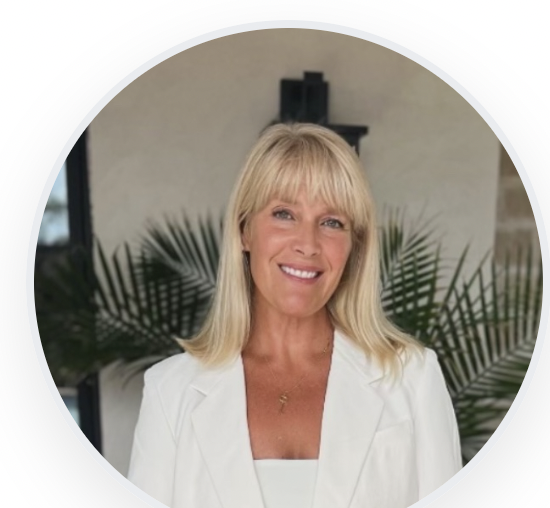
Kimberley Verbeke, a Naturopathic Practitioner specializing in peptide bio-regulators, IV therapy, and personalized health optimization shares insights on how to slow aging, boost vitality, and maximize longevity through treatments and holistic health strategies.
We discuss:
✅ How peptides support cellular repair and anti-aging
✅ The benefits of IV therapy for energy, immunity, and recovery
✅ How diet, exercise, sleep, and stress management impact longevity
✅ Common health mistakes that accelerate aging
✅ Simple strategies for optimizing your health and fitness



Show Notes
Avita Wellness & Aesthetics
https://www.avitabydrv.com
Transcript
My guest today is Kimberley Verbeke.
Kimberly is a naturopathic practitioner who helps clients optimize their health and fitness.
She creates individualized health plans that cover diet, exercise, sleep, and stress management.
She has a particular passion for treatments that she believes helps slow the aging process and focuses on treatments such as peptide, bioregulators, and IV therapy.
She's going to share her insights on what you can do to live a healthier, longer, and more vibrant life.
Welcome to my show, Kimberly.
Thanks for having me.
I'm excited to talk with you.
So your bio says that you had a personal health journey that led you on this path to become a natural path.
Tell me about your own health challenges and how you got to be healthy, and in particular, also to focus on the IV treatments and such.
Yeah, I was raised in a very, very healthy, holistic home.
When I was a teenager, I really wanted to be a doctor and started out working in a nursing home, giving medication and shots.
So I learned a lot about drug interactions and was just almost immediately like super disheartened.
I was like, Whoa, this isn't what I thought it thought it was going to be.
And so decided that that just wasn't what I wanted to do, but learned a ton in the process.
You know, kind of fast forward, I got really into endurance sports.
I had been lifting since I was about 15, but really got into endurance sports for a while.
And during that period of my life, I went through a really stressful time and quit sleeping well, kept training, and ended up just a mess like hormonally a hot mess.
And when I started looking for someone to help me figure it out, I just I really struggled to find somebody that that seemed well versed in functional medicine.
And I kind of came to the conclusion that I was going to have to figure it out myself.
And in functional medicine for some I just became aware of what that meant.
Oh, yeah.
What was the difference between functional medicine and your experience before with a regular doctor?
Okay, so I had just moved to Texas when all of this was going down and said to a friend, hey, like, do you have a good PCP?
I can't find any naturopaths or anybody that's kind of more my normal avenue.
I need to see someone I need to get some blood work done.
And she's like, oh, yeah, I've got this great PCP.
What's a PCP?
Like a primary cure.
Okay, okay.
Or GP, general practitioner, right?
Just a regular family medical doctor.
So I make an appointment, go in, sitting in the little room, and he walks in.
And this guy literally looked like he was about to give birth to, like, quadruplets.
He wasn't very healthy looking, huh?
And all I could think was, he can't even help himself.
How is he going to help me, right?
Like through a critical thinking lens.
Like, you look like you're about to have a stroke or a heart attack.
How are you going to fix me?
Right?
So I told him kind of what was going on, how I was feeling.
I'm like, I have no energy.
I'm exhausted.
I ran a marathon five months ago and I can barely drag myself out of bed.
Oh, and I'm also not sleeping, which is really rare for me.
And this was the extent of our conversation.
He goes, Oh, I'm going to write you a couple of prescriptions.
And he writes them out, hands them to me.
And I knew immediately what they were.
He wrote me a prescription for phenibut, which is essentially prescription speed and Ambien.
I'm going to go to sleep.
I'm going to pass on both of those.
So he was giving me an upper and a downer.
OK, that's not going to fix what's wrong with me.
And I just looked at him and I said, can I ask how old you are?
And he's like, yeah, I'm 42.
And I was like, I don't feel like this is...
He didn't look like he was going to make it to 62 or 72, huh?
I was like, I just I don't feel like this is, you know, the solution to my problem.
And he's like, well, I think you should just accept that you're getting older and you don't have as much energy.
And I'm like, I'm in my early 30s.
This is not normal.
And you know, he's just kind of like...
And I was like, I don't think you can help me.
And I just walked out and laid the prescriptions there on the little bed and got up and walked out.
And I was like, this is not what I need.
And so that whole experience really propelled me to figure out for myself what was going on and how I could fix it.
Oh, and then functional medicine, for those who don't know, that's what that's that's what you found eventually.
Do you discovered what functional medicine?
Well, I was familiar with functional medicine.
There just weren't a lot of doctors in my area that were practicing that way.
And I did eventually find a really fantastic medical doctor that was just really digging into functional medicine.
And so she was very open.
You know, I'd be like, look, I've done a bunch of research.
I read this book written by a doctor.
I think this might be helpful to me.
And she was just she was amazing.
She really, really worked with me and helped me.
What do they call functional medicine?
How is it defined?
What do they call it?
Then is is really kind of like, first of all, looking at the person as a whole human being, not these individual sections, right?
Like endocrinology and cardiology and right.
It becomes very messy when we separate a person out into these sections.
Like I think of our body like an orchestra.
If everybody is not playing on the same sheet of music, it's a disaster.
It's like you could give somebody oxygen for in their lungs, but if the heart's not pumping it through the body, it doesn't do any good for the function of the body in the end.
Bam.
You got it.
You got it.
So it's finding someone that, first of all, looks at the body as a whole unit and then goes, what's the root cause, right?
I can band-aid someone's symptoms, but if I don't figure out their root cause, they're not going to get better in long term.
They're going to have to stay on some medication or whatever, some sort of therapy to keep those symptoms suppressed.
Which has side effects too.
Absolutely, so most functional medicine MDs are very willing to look at more holistic treatments or alternative treatments and pair them with allopathic medicine because they often work really lovely together.
It's kind of the best of both worlds, but we're not abandoning one for the other.
We're going, where can I create the best possible scenario for this person to heal and their body to repair?
And so then you found a functional, how did you get into IV treatments in particular in these biopeptide, these specialties?
So I was interested in IV therapy from, gosh, probably 10 years prior, I was, you know, doing triathlons and marathons and had gotten Epstein-Barr.
Sometimes people will refer to it as chronic fatigue syndrome or think like mono, right?
That same family of viruses.
I was like, oh my god, this must feel like be what it feels like to have narcolepsy.
It was wild.
And I went to a functional medicine doctor and he gave me one IV of NAD.
What's in it?
NAD plus is nicotinamide adenide dinucleotide.
It is part of the niacin family of B vitamins.
We can't create ATP without NAD.
We, it's the redox signaling process, part of the electron transport chain.
It's phenomenal for healing damaged neurological connections in the body.
It does some really, really wonderful things for us.
And it, it can really help when someone has something viral that's suppressing ATP production.
And anyway, he gave me oral things to take, but he gave me one IV of NAD and it was just like somebody...
Explain the IV to people who have never heard this.
I've had it done myself when I, I was, I was in a different town from where I lived.
And there was a doctor that I knew through the other work that I do.
I had a nasal infection, really bad.
It got to the point, I've been waiting till a month where I've got to get a prescription for this.
Yeah.
And it was hard to get a prescription because I'm out of town.
So he's like, oh yeah, stop my office and we'll take care of you.
Well, he wasn't there, his staff was, and he does IV treatments so that we're going to take care of you.
And I didn't know what they meant.
Next thing you know, there's an IV hanging from my arm.
I'm sitting in a chair and they took my blood out, ozonated it, did the vitamin C thing to it, put it back in.
I've had it done, but explain it to people who haven't.
What you're really going through with this is what the picture looks like when you have an IV.
With NAD, NAD, excuse me, it's really interesting.
It can make you feel a little funky when you're getting an IV of it, if you're given too high of a dose too quickly.
I always call it low and slow.
You want to take time, make sure you're giving.
So with that IV, these guys took my blood out.
So you're probably thinking about an ozone treatment, some type of ozone.
It must have been.
Yeah, the ozone, I'm catching on now.
For your IV treatments, it goes in, nothing comes out.
Yeah.
So we do ozone treatments in our office as well, which is absolutely phenomenal.
I'm the biggest proponent of ozone.
I've seen it do really amazing things for people.
But yeah, that would be a process where the blood comes out, it's ozonated, put back in.
Depending on what type you had done, you can do multiple passes of it.
You can do e-booters, we go into a full world of ozone.
For the NAD, it's just a needle and like an IV stuff goes into your blood and that's it.
Where does it go?
Because there's a bag of stuff.
How do you not overfill your blood or how does the body work when you're putting stuff in, not taking stuff out?
You know, kind of the magic of IV therapy is that most people, particularly people that are very sick, have a compromised digestive tract, right?
Whether it's inflamed or, you know, their digestion super poor, maybe they have pathogens in the gut, maybe the liver is sluggish, so it has a hard time converting things.
There's a whole slew of issues you can encounter.
But when you put something in the vein, it's 100% bioavailable to your body right now.
And so you can get these, you can get a much, much bigger impact much quicker with IV therapy than with taking things orally.
The idea is if I needed my vitamin B by eating fruits and vegetables, I might never get it in the daily allowance or a monthly allowance.
But this is in liquid form, probably in nano size particles or something comes down to it.
Yeah.
And we're refilling a cup you're always pouring out of, right?
So that's hard to do orally through digestion, much, much easier to do through IV therapy.
Except it wouldn't get to your digest, it bypasses the digestive system, though.
Correct.
Right into the blood.
And besides the needles, and I don't like the idea of, it's not the pain that bothers me, it's having track marks or holes or however in Maya.
What are the other potential side effects for people that have negative, does anyone have a negative reaction to having an IV?
But they, yes, it's certainly possible.
When you're giving someone nutrients, it's much less likely there are certain levels of things you might give or do that you would want to check, for example, and make sure someone doesn't have a G6PD deficiency, which is an enzyme deficiency, where if this deficiency is in a person, things like high dose vitamin C, methylene blue, ozone, could potentially destroy the red blood cells.
So there are situations where you certainly, I mean, you want to.
So, yes, so the ozone treatment, that's what you're speaking about, destroying the red blood cells.
Someone has a G6PD deficiency, otherwise, phenomenal.
What is a G6 deficiency?
Yeah, so it's an enzyme in the body.
And if you're deficient in it, you will have this process that happens in the body where the oxidation from ozone or methylene blue or high dose vitamin C can destroy the red blood cells.
Very, very rare, particularly rare in Caucasian people.
But occasionally, it's something that can be there.
And so if you're doing high doses of some of these things, you want to check for that prior to giving.
So I didn't have a negative effect to where they ozonated my blood that I'm aware of.
But I never, I had not heard of this enzyme.
They didn't tell me about that.
And I was a little skeptical because ozone is an oxidizer, it just burns, it goes out and burns stuff, right?
So besides burning the pathogens into the garbage in my blood, it does seem like it could burn the blood cells.
I kind of assumed it wouldn't be high enough energy to burn the blood cells, but...
And probably what they gave you wasn't high enough, right?
They probably gave you one pass low dose, which is very safe.
There's caveats to everything you do.
So yes, I mean, is there oxidation that happens?
Yes.
But that oxygen is also healing.
It's not just going in there and killing bad things.
It also is repairing and healing things in your body as well.
So oxidative stress, think of it in a person that can handle specific levels.
Think of it as hormesis.
What's that?
Hormesis is we need stress to become stronger.
Think going to the gym, rock climbing, going for a run, that's hormetic stress.
It's stress that makes us stronger.
The kind of stress you don't want is stress that just completely overwhelms the body and you never have time to repair.
That's the kind that's degenerative.
But hormetic stress is actually very, very good for us.
How does the enzyme neutralize the effect of the ozone?
In terms of the science on it?
It would kind of, I mean, not real deep science, but basic, because I understand the ozone is too, it's an oxidizer.
It's kind of like firewood.
The boil burns with combustion.
It burns corrosive.
How's the enzyme stop it or help keep the red?
That enzyme is protective of those red blood cells.
Oh, the enzyme is protecting.
So if you don't have enough of that enzyme, you have a way to protect.
Okay.
Well, it's kind of like a way to see how strong, it sounds like a test, a surrogate test to see how stronger red blood cells are or how proper they are, how normal they are, or something like that.
I mean, that's one way you could look at it, and there are ways to build that up in a person if they are deficient.
Could it be why they're sick in the first place?
I mean, could it be a piece of the puzzle?
Yeah.
Yeah.
EY?
No.
But I mean, everything works together, right?
Like I said, going back to an orchestra, if one thing's out of tune, is it going to cause problems other places?
Certainly.
So, I only had one treatment done.
I got my prescription, which is all I went in for, to put my blood back in, made me happy.
How?
I'm going to guess one of these isn't not enough to make you see how I feel better.
You would typically need multiple treatments.
How many by multiple?
It really depends on what you're working on, right?
So, ideally, in my training, my certification I've done on ozone, for example, if you're working on someone with some cardiovascular, issues and trying to clean some things up, if you're doing single pass, so standard major auto-hume therapy, typically you would do about 20 treatments in a fairly compacted amount of time.
Like one a day or every other day or something?
Yeah, or two or three a week until you get through that process.
So, yeah, it's not really a once and done.
Now, could you potentially, if someone has an infection or a SIG, do one treatment to help bring them back towards homeostasis?
Sure, it's beneficial.
And what is the ozone going out and killing or destroying or cleaning up in the blood?
So ozone, in terms of, it will help kill pathogens, cancers, whatever you have in your body that should not be there, right?
But it doesn't destroy healthy cells, it helps heal them.
So it can help remove excess, like if you have excess hormones floating around in the body, like you're not moving your estrogen out of your body the way you should, it can help move that out.
It can help with environmental toxins, molds, Lyme disease, plastics, things like that, it can help move.
I am trying to do the chemistry in my thought process here.
So I had thought of it in terms of the burning, but maybe it's not the burning because then it would destroy the red blood cells.
But if it's not the burning, I wouldn't describe it as burning.
Think of this unhealthy cells, toxins, pathogens, those things, they don't thrive in an oxygen rich environment.
And that's what ozone is doing.
It's creating this, it's a third molecule of oxygen, and it's creating this rich environment that that will not thrive in.
Many of those, many of the negative things in our body are thriving because there's maybe some oxygen deprivation, or not levels that are as high as we want them to be.
The ozone is O3.
I'm glad you mentioned the third one.
Now I'm on track.
Oxygen is O2, meaning two oxygen molecules that are bonded together.
You got it.
O3, which is ozone, means we have an extra oxygen molecule that doesn't want to stay there.
Correct.
That's correct.
That third wheel wants to go to somebody else's bike, or...
That's right.
It wants to go to a one-wheel bike and make it a two-wheel bike.
It doesn't want to stay three.
Which is what I say, oxidation or combustion, it's that oxygen, that I call burning a fire.
You need oxygen.
I'm trying to walk myself through the chemistry of these other pathogens.
If it's burning them, where does that oxygen molecule go?
Because normally, ozone want that it's kind of volatile.
It wants to...
And it's very quickly just absorbed by the body.
It's not like it just hangs out floating around there.
You can't really get absorbed.
It's going to want to attach to something else.
It does, right?
So it's going to, it is going to attach.
It's going to find places that it can attach, where there's maybe a deficiency or, you know, it's going to try to think of a simple way to explain it.
The reason I keep thinking of this, the process is, in my mind, I'm painting a picture of, we said you got it, you need 20 treatments, say, or 10.
On a single pass, MAH.
Maybe I'm going to clinic every other day.
I'm basically trying to keep my, I'm either trying to knock something down and keep it down for a bit, so that my body can come back up.
Yeah, kind of that's I'm giving my that's or or I'm doing something different, help building something.
I don't think I'm building something.
I'm trying to kill someone, neutralize it, right?
You are, but that that oxygen molecule is also healing for healthy cells, right?
For things, for pathogens, it's going to kill them for things that are healthy, it's going to support them.
Oh, the two oxygens that are left.
Correct.
But first, so back to our three-wheel, this is true.
I'd forgotten about the two-wheel that's left over when your third wheel goes to try to find another bike.
I'm focusing on the third wheel trying to go find another bike and trying to figure out whose bike is it going to get on.
Where's the one wheel?
I've forgotten about you also going to have some extra oxygen.
Why don't you just infuse just oxygen into the blood then, instead of, instead of the third wheel ozone if it's just oxygen that you want?
I would say because that, that.
I think the simplest way to describe it would be that third molecule makes it more powerful.
And then you talk to an engineer and it says that I'm like, why, what, what, by more powerful?
You can't make the O2, you can't make the O2 more powerful.
The ozone interacts with antioxidants in our plasma.
But with an antioxidant again, that's helpful because that's true.
I think it would, an antioxidant means that it is actually waiting.
It's like the one wheel bike.
Waiting for a second wheel and that ozone is giving it the second wheel.
And then it's not an antioxidant anymore.
I think I'm not clear.
I'm not certain of this, but antioxidant sounds a bit unstable.
So, for example, things like uric acid, vitamin C, it creates, it leads to their oxidation, right?
And that helps modulate the body's sedative balance.
Does that make sense?
No, but it's starting to.
With the vitamin C and the oxidant, the way you described it, people take vitamins after running a marathon or something, they're antioxidants and trying to neutralize them.
Right.
Maybe that's what your third wheel is doing.
And then you get the extra oxygen as a bonus or something like that.
Sounds kind of complex.
It is.
I mean, from a biochemistry standpoint, it's certainly there is complexity there.
So by doing it over a course of 10 or 15, 20 treatments or till you feel better, is the mechanism by which you get healthier is, it's just taking a burden off you for a while.
Because what's to keep them coming back if your body is deficient or something's wrong with you, it's no different than a, then it wouldn't be any different than taking a pill.
Sure.
So you're going to look at those things, right?
Like you're going to look at someone's blood and go, is there a parathyroid issue?
Is calcium very elevated in the person?
Is the vitamin D low?
Is there, I mean, there's a whole bunch of things that you would look at to find out, is the liver so sluggish that it's not cleaning up excess cholesterol?
Let's go on to your next, I don't know, I'll say your favorite one.
I see it on your bio a little bit.
Bio-peptides, I've never heard of the bio-peptides.
I know, most people haven't and they're so cool.
Peptide bioregulators, right?
So we have proteins, which are very long strings of amino acids.
Regular peptides that people are more familiar with.
Think collagen, think BPC-1, Hispeptin, there's...
So things that are good for you, healthy for...
Yes...
.
for aging, like they're age-related?
Yes, they're healing, right?
Things that our own body makes but we can supplement.
Those are shorter chains of amino acids.
Peptide bioregulators are either two, three, or four amino acids strung together.
So very, very short strings of amino acids.
Why is that important?
They are so small, they're able to cross that cellular and nuclear membrane and connect right to the DNA and repair it.
This is an IV treatment also?
No, these are typically given in a capsule.
There are injectable sources but typically they're used with just a neural product.
They were discovered by a physician in Russia and studied clinically for over 40 years, so a lot of clinical data to back up what they do.
Dr.
Cabinson who discovered them, I heard him in a lecture describe them as retreading our tires.
There's another PhD doc here in the United States who has studied with him and has done clinical is still currently doing clinical trials on these here in the US.
He described them as repairing our repair systems.
So like I always explain to people, when we're young, our metabolic rate is here and disease is here.
And as we age, we slow down metabolically.
I'm not talking about how fast we digest our food or burn calories, just everything slows down, our mitochondria slow down, our cell turnover slows down.
These help repair those systems to keep us healthy.
And some of the clinical data on these are just absolutely mind blowing.
So if someone comes into your clinic after reviewing their health and what their objective is, then you have a variety of these different types of peptides that you could prescribe, kind of.
When I say prescribed, I mean recommender.
Absolutely.
There's like 20, 23 or 24 peptide bioregulators.
They're all for specific systems of the body.
So, you know, I've seen, I'll give you an example.
One of the first times before I went deep, deep down the rabbit hole on peptide bioregulators, I had discovered just a few of them.
And I had a lady I was working with that had chronic lymphatic lymphoma.
And about six months before she came to see me, she had been hospitalized.
And one of the medications she was given damaged her kidneys.
So she was now also seeing a nephrologist every six months.
And he had said, look, there's nothing you can do to make any of this better.
Just you're going to see me every six months to make sure your disease doesn't progress.
And she said, is there anything we can do to support my kidneys healing?
And I said, yeah, absolutely.
I can't tell you exactly what, can't give you a number, but we can definitely support your kidney function.
So we had labs on her that we had just run and ordered the bioregulators.
She had been taking them for 15 days when she had to go for new labs for her nephrologist.
In 15 days on these peptide bioregulators, every single one of her kidney markers had improved.
And when she went to see her nephrologist, she's like, I thought you said this couldn't get better.
And he just said, I don't have anything that can do this.
I don't know what this is.
And she now has kidney function.
So I'm a big, big believer that our bodies, they're wildly capable of healing given the right tool.
And then did you take her off or stop recommending that particular biotech peptide eventually?
Yes, I did.
But she certainly knows if she ever had anything happen again that she could utilize those.
So is that tied into you also seems like you're big on longevity or we'd all like to live longer, healthier.
Is that part of the plan?
It is.
So part of Dr.
Cavinson's research on these was he would put people on them.
He would pulse the different the different bioregulators for a year.
Pulse?
You mean like get him hard with a dosage, high dosage?
Yep.
So he would do like 10 days on that specific bioregulator and then off for a period of time and then pulse them for 10 days and then off for a period of time.
He was studying people that were like in Siberia working on oil rigs.
These were not ideal, you know, patients getting in front of their red light, getting IV therapy every day.
No work from home software engineer types.
People really can abuse their bodies are getting abused hard.
Correct.
Bad air quality probably, hopefully, I don't know what the food would be like.
The water might not be good.
Yeah.
So I mean, certainly people that were living, you know, rougher circumstances, you know, just less ideal in terms of longevity.
And what he found was when he put people on these bioregulators for a year, they typically lived an additional seven years longer than their peers with a higher quality of life.
When he How did he, they all had, they all just, they were all, they all died before this guy studying it did.
I mean, this is a long term study.
Absolutely.
It was a very long, he studied them for over 40 years.
So a significantly long study.
He found that when he put people on them, and a lot of these people were already aged, right?
Right.
So he was a young doctor studying old older people sounds like he founded the Institute for Gerontology and Peptide Bioregulators in St.
Petersburg.
So a lot of study of older people.
When people took the bioregulators for two to three years and then went off of them, many of those people lived an additional 15 years past their peers.
They never.
Well, the chemistry of not chemically molecule wise on the process.
What is that?
How does it work?
Though, I mean, they're just they're simply amino acids, but very, very short chains of amino acids that, like I said, can get in there on a very cellular level and repair things.
You know, and this goes back to I'm always like, how does the body know where to send them?
Like how how do you swallow a pill?
Right.
And the body goes, oh, that's for the liver.
Those three amino acids, that's the liver.
These three amino acids, that's the retina.
I mean, our bodies are just wildly intelligent.
So me, so he anyway, he has, you know, lots and lots of clinical medical research on these.
Dr.
Lauren, go ahead.
So when someone comes to see what's your typical process, like you have the biopeptides, you got the IV and you got some other things.
How do you break it down?
Where to start first?
Or this is what everybody gets.
And then I'm gonna look at your panel, your profile, and then maybe give you a little biopeptides.
What's the overall?
Someone walks in your door.
How does it work?
It depends on what they come to see me for.
I do a longevity protocol, a year long longevity protocol with the bioregulators.
Some people simply come to me just for that.
They're interested in being healthy and living longer.
And they do that over the phone?
Because one thing I wanted to, when we close, and I'm going to put in the show notes where your office is.
Clearly, you have to come to Kimberley if you want an IV treatment.
Do you do stuff over the phone with the biopeptides and other things?
I do.
The longevity protocol is perfect for working with people remotely.
Okay.
Yeah.
So I have a lot of people that will reach out to me from other parts of the country and do that program with me.
Obviously, IV, you gotta be here in person.
You don't want to do that at home?
For anyone that comes to see me and they're sick, they're ill, you know, they're not feeling well.
I take a really individual approach.
Like, okay, let's sit and go through your health history.
When did you get sick?
What are your exposures?
What are your symptoms?
What have you tried?
What's your lifestyle look like?
What's your stress level?
Do you have strong social connections?
Do you prioritize your sleep and nutrition and movement?
Right?
All these things matter in our ability to heal.
Functional medicine too.
That's the difference between functional medicine and ECP.
Right.
So then I'll take that in conjunction with labs, and they typically correspond well, and then create a plan for that person based on them.
And every one is individual, you know.
I may have a 75-year-old that's incredibly sensitive, and we have to be super, super cautious with what we use with that person, where I may have a guy that's 40, way more robust, but doesn't feel well, and you have the ability to be more aggressive with that person in terms of what you're using on them.
If someone came to your office the first time while they were there, well, it wouldn't do too much good just to get one IV, come to think of it.
But I was thinking of, if I came to your office to get the IV, and then went home, and then from that point on did the telecommunication for the biopeptides and other stuff.
But it sounds like that wouldn't be ideal because you want to keep coming back for the IV.
It depends.
Are there things like, do we get people that are like, oh my gosh, I came down with a flu, I need some, you know, something nutritional to support my body healing?
Absolutely, that's beneficial.
But many IV therapies are used, you know, think of it like almost in place of medicine, like to help repair and rebuild and support the body in the healing process.
But yeah, just speaking of the IVs again, we covered the vitamin B one.
What are some of the other like popular ones in the cookbook, so to speak, that are maybe less common, but there's different recipes for the IV treatment?
Absolutely, and it really depends on what the person has going on, right?
What you will use.
Something very common is higher doses of magnesium and vitamin C that can work really beautifully for a lot of different things.
I am such a huge fan of Dr.
Thomas Levy's book Curing the Incurable, which is on vitamin C.
And I have trained with him on, you know, on vitamin C, IV therapy, methylene blue, magnesium.
The blue stuff sounds scary to me because it sounds like a artificial coloring or something.
Is it blue literally?
It is blue, bright, bright blue.
If you would mix ascorbic acid into it, it neutralizes that blue color.
It does.
It's no longer blue.
Interesting.
Yeah.
You know, I can't remember why.
I can't remember what part of it does that.
But yeah, it will neutralize that blue.
Well, as a hiker and climber, if you're one of those that treats your water with iodine tablets, which I mean, it's not as common as it used to be, but it's easier than carrying a filter, iodine tablets.
The way I know this is I was going to make it taste better by putting Gatorade in with it.
And then I discovered that Gatorade has vitamin C.
Yeah, the vitamin C will neutralize the iodine treatment if you're treating your water.
Yeah.
Same, same.
Vitamin C is good stuff.
There's a lot of, yeah, there's a lot of things though that just like people don't know, because they're just no training in those spaces.
But yeah, yeah.
Well, like you say, they're going to the doctor, the doctor was going to give you an ambient and some speed.
So which is what a lot of people want.
And they also don't know.
I'd never heard of functional medicine until a year or two ago.
Yeah, I was doing environmental testing for a long time and with working with doctors.
And I never heard of that.
So yeah, yeah.
I mean, I'm, you know, I'm not at all against allopathic medicine.
I'm against not treating the person as a whole being.
And I'm against not treating the root cause.
I still go back to my experience.
I still really did need the antibody.
I had waited way too long.
And that absolutely against antibiotics.
You know, this comes back to, I think sometimes people think if you're holistic that you're against that stuff.
Not at all.
We have it.
We have it for a reason and it's powerful and useful.
My goal is to keep people from getting to the point where they need it.
Yeah.
And with this clinic, their goal getting, getting so I didn't come back another infection next month in my nose.
And ask for another prescription for an antibiotic, you know, for the third time.
Yeah.
Yeah.
So is there, is there, is there anything that I haven't talked to, that I haven't mentioned that you do in your clinic that you want to mention?
So from a longevity piece, you know, I really try hard to educate people on the value of maintaining lean body mass as you age.
The body mass, which means you get in front of the mirror and you don't, or you can't pinch an inch even better than that.
No, I don't.
I think like we focus on the wrong thing, right?
Everybody's worried about body fat, but they're not thinking about muscle.
If you have enough muscle, it's highly unlikely that you're going to have too much fat, right?
Yeah.
I mean, think about it from a fitness level.
Muscles more metabolically active, burns more calories.
It's almost, it's also a hormone signaling organ.
So this is the part of your earlier, when I was giving your introduction, you have exercise as part of your suggestions to people.
Because we're so under exercised as a society here in the US.
Everybody hops in their car and drives where they're going.
Like if you've ever spent time in other countries, most other countries, people walk and get their food fresh every day.
They walk to their job.
They or maybe they have to take the train, but they walk to the train or movement is such an interval part of their life.
And it keeps healthy.
Oh, so speaking of which, what do you recommend in terms of exercise?
I was thinking the gym, but would you just recommend a walk in the morning and a walk in the evening for 10 minutes or something like that?
I'm about doing anything you can be consistent with because that's where the win is, right?
I mean, you can tell people, I love lifting weights.
I've got women that come see me, they're like, I'm never going to go in the gym.
I'm super uncomfortable there.
I'm like, no problem.
Are you walking now?
No?
Okay.
Let's get you walking consistently.
Once you're walking consistently, maybe we put a weighted vest on you for a little extra impact to keep your bones healthy and to help build some muscle.
Exercise doesn't have to be complicated.
We overcomplicate it.
You just need to move.
And that's really how you're going to maintain lean body mass.
And it keeps your brain sharp.
It keeps you stable.
You know, having the experience of my first job being working in a nursing home, I was blown away as a young person to see someone would be brought in with a broken hip and their kids would come in and go, Oh gosh, my dad's, he's great.
He takes care of himself.
He just broke his hip.
He's here to rehab and then go home in three months.
And after a while, I knew statistically their dad was probably going to be dead in 10 to 12 months.
So why is that?
So you take a person that's already frail and you make them sedentary for another six months, become even more frail and they die of sarcopenia.
They die of frailty.
And what was the solution in this?
How would we have done better with this guy?
Well, I mean, you got to eat protein, adequate amounts of protein to maintain muscle and you have to move to maintain.
On his walker, like get out on the walker and move.
Yeah, just move, just bear weight, right?
At that level, I mean, look at people now when they get things like hip replacements, they have them walking the same day.
Yeah, I actually broke my hip in half rock climbing and unfortunately, they decided to screw back together, broke the femur in half, the largest bone in your body in half.
They screwed it together with two lag screws like huge screws in a plate.
Because if I was to climb again, what I'm going with this is you're one day in, one day out.
Oh, I wish.
They didn't do that because they're afraid the hip would pop out.
If I was doing something rock climbing in some extremely tenuous move, trying to not fall, fall, so I, you know, trying to save my life, putting too much pressure on it.
I was on a walker for six months.
It's awful.
But I went to the grocery store.
I had a backpack.
I would use crutches to get myself between some points.
Well, I strung the walker on my back or something.
I don't know.
But I kept moving.
Yeah.
And that helps you heal faster, you know?
Like when you make someone really sanitary, their circulation increases.
I mean, everything just, you know, it's this, blah, blah, blah.
Well, I go to the grocery store.
And when I come in after a while, people go, there's that Daniel, he's a miracle.
Look at him.
I'm like, what are you talking about?
I'm just, I'm a walker.
What's so impressive about this?
And then, you know, I threw the crutches away and the walker.
Like, would you keep that just in case?
I'm like, no.
In case what?
In case what?
You know, I think I felt I had to get out of the house.
I was going stir crazy.
Yeah.
So, I mean, what you did was, you know, I believe it made you heal faster.
You have to move.
You want to move out that chronic inflammation and get blood flow with healthy nutrients and oxygen and, you know, all the goodies so your body will heal faster.
It was a very, very enlightening experience to see that decline of people and the weakness and like literally people dying from frailty when it's so avoidable, right?
Like one of the things I do, I typically when people are over 40, I'm like most people should be taking an essential amino acid supplement because very few people eat enough protein to...
How is that different from a multivitamin?
I take a multivitamin.
I don't know that I'm taking an amino acid supplement.
Yeah, I mean, you would know if you were, I'm sure.
It literally an essential amino acid supplement are the aminos that make up protein.
So it's kind of supplementing protein intake, right?
Because you don't just need enough protein to maintain your lean body mass.
You need an amino acid reserve to heal, repair.
And if you don't have that and something happens, your body is going to go and use your own muscle to break down for the amino acids it needs.
This is not a bio peptide.
This is like kind of like a multivitamin amino acid supplement.
But it's literally just the essential aminos that make up protein.
That's it.
I mean, if I was to go to, do I come to you to get one or do I go to the pharmacy or the health food store where the vitamins are to get one?
So I would say a lot of health food stores would have them.
Not all.
I've been in plenty of health food stores that don't.
My favorite one is by a company called Body Health.
It's called Perfect Amino.
You can get it in a tablet or a powder.
But really, really valuable to help us age well.
And I'll tell you the other reason why I'm a big fan of aminos.
When we're young, it takes about 20 grams of protein to create protein synthesis in the muscle.
By the time we're 40, it takes 40 to 45 grams to create that same reaction.
So by protein synthesis, you mean just to get it going or to...
Because I mean, most meals are 20 grams of protein or less per meal.
Unless someone's actively working towards that protein goal, a hundred percent that's part of the problem of us losing so much muscle as we age.
Yeah.
And you can't eat more protein than that per sit down meal.
That would be a lot of whatever you're eating.
So the amino acid, the amino acid is kind of what...
I try hard to make sure when I'm getting protein in a meal, I'm getting 30 plus grams per sit down.
My dinner is usually a heftier portion, upwards of 50, 60 grams of protein.
But I have seen firsthand the value of it.
I look at people that don't get enough protein and you can tell that their muscle is wasting.
It's easy to spot in people.
And for people that are vegetarian and vegan, getting that amino acid supplement there can really be life-changing.
That's what's just coming to my mind, the vegans.
But some of them seem to be really healthy, but then that gets down to the rabbit hole of what's your blood type and what other metabolism things you had gone on.
For sure.
And again, that process of aging and needing more protein as you age.
So it can be a really, really useful tool.
I'm a huge fan.
And you've come full circle, it seems like, from way back when you were not, when you had the fatigue, Epstein virus, how do you say Epstein virus?
You appear to have recovered quite well.
Oh my gosh.
Yes.
Very much.
I'm super thankful.
I'm very healthy and have lots of energy.
But I also take my health seriously.
I always tell people it's not by accident.
You know, I'm 48 and I go in the gym and sometimes see people that are my age and they don't look healthy.
They look either ill or just, you know, standard American diet.
And you know, the thing is, it's, it's, it's like they're in there.
They're trying.
Yeah.
Maybe they're just missing some like this information or whatever.
There's, there's some other missing good.
And at least they're in there trying.
You know, a lot of people, two percent can walk in out the door.
Yeah.
I think people don't know what they don't know.
Right.
I love when I have the opportunity to speak and educate because I think, I think there's it's so noisy out there.
People get confused.
Oh, yeah.
And the AI is not really helping because there are twice in the last 24 hours, there's stuff on AI.
I'm like, 80 percent of it right on the other 10, 20.
Where did what?
How?
No.
Wrong.
Wrong answer.
Yes, totally.
I mean, people, people will come in and they're so confused about how to eat and I'm like, listen to me, your diet doesn't have to be a religion.
What makes your body thrive?
What makes you feel good?
Because it may be different than what makes me feel good, right?
We have different genetic backgrounds.
We come from different parts of the world.
Like there, there are differences and I don't think diets are one size fit all.
I think you want to tune in to what makes you feel really well and run with it.
If it is the ultimate test, is it make me feel better?
Give it some time.
You got to give it enough time.
If it's not, try something different.
If that works and you stay with it, right?
So, your clinic is in the name of Kimberley's Practices.
It will be in the show notes.
It is AVIDA Wellness and Aesthetics Functional Medicine Practice.
And is it Boehrn?
Bernie.
Bernie.
Texas.
But you can also contact her by website and telephone.
It sounds like the website is evidabydoctorv.com.
Yes.
So that will be in the show notes.
Thanks so much for being on my show, Kimberley.
It was really fun and interesting.
I appreciate it.
Thanks for having me.
I enjoyed chatting with you.
Have a great day.
You too.