
eIn this episode, we sit down with Barry LaBov, the award-winning founder of LA-BOV Marketing, Communications, and Training, who has been instrumental in helping legendary brands like Harley-Davidson and Audi carve out their unique identities in competitive markets.
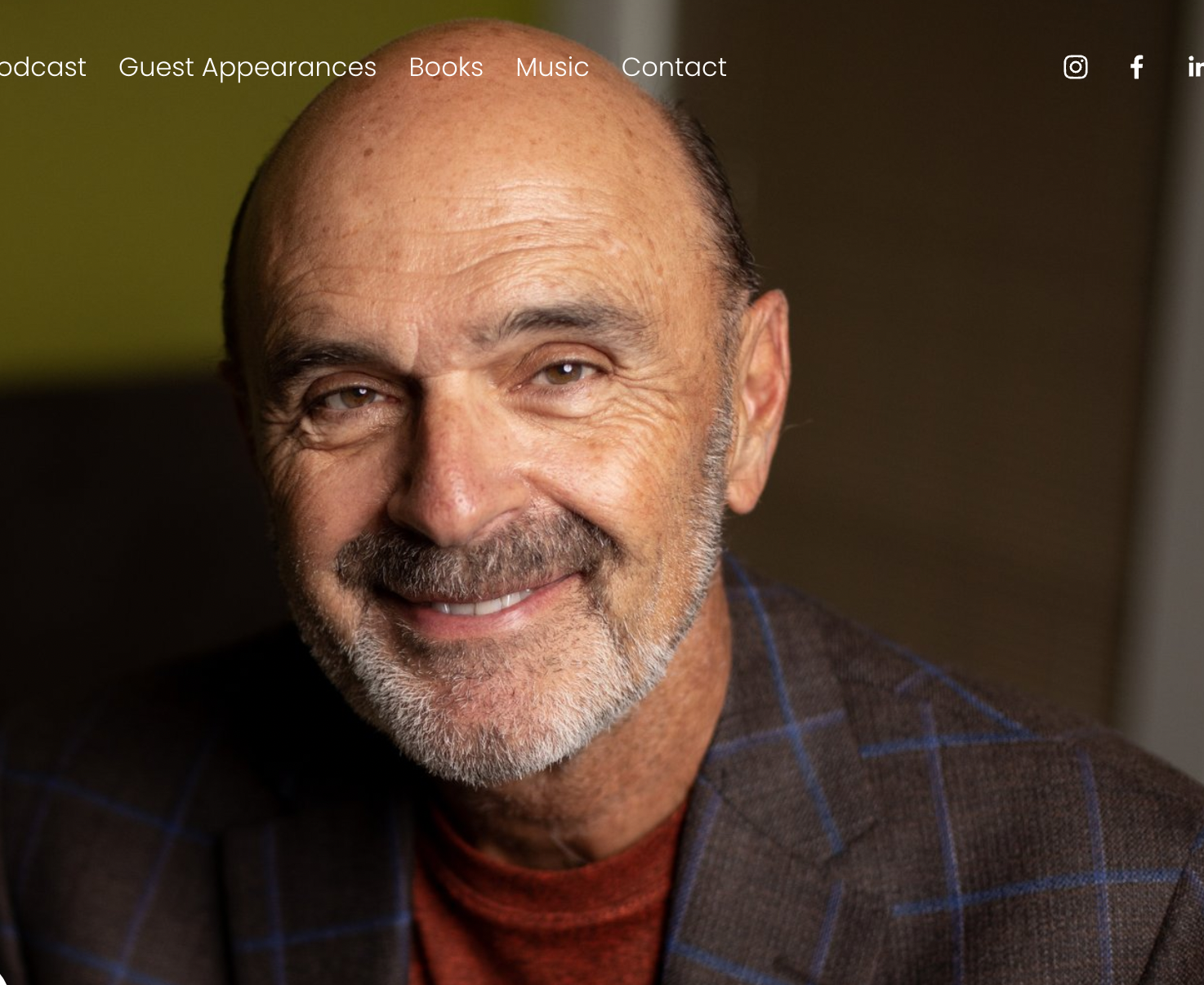
Barry reveals the secrets behind brand differentiation—how companies can uncover and celebrate what makes them unique to foster loyalty and drive success. We explore the role of authenticity, emotional storytelling, and employee engagement in a branding strategy that wins hearts, minds, and market share. Barry also shares insights into the future of branding with the rise of digital marketing and AI, plus his unique journey as a musician and creator of unforgettable brand experiences.



About the Host
Daniel Stih (danielstih.com) is an aerospace engineer, software engineer, indoor environmental consultant, and author of 12 books. For more than 30 years, he has investigated complex problems spanning engineering, technology, the built environment, and human decision-making. His work explores how evidence, assumptions, and systems shape the conclusions we draw—and whether we're solving the right problem. Learn more about his approach in Why I Think This Way.
Show Notes
Connect with Barry LaBov
LinkedIn: Barry LaBov
Website: https://www.barrylabov.com/
The book The Power of Differentiation
On Amazon: https://www.amazon.com/Power-Differentiation-Barry-Labov/dp/1954676867
Transcript
My guest today is Barry LaBov.
Barry is a brand strategist and founder at LA-BOV Marketing, Communications, and Training.
His agency specializes in helping clients identify what makes their brand, product, and services unique, and then how to celebrate and promote what differentiates them from their competitors.
This enables these brands to win as competitors try to compete by lowering prices and homogenizing their products.
His clients include global iconic brands such as Harley-Davidson and Audi.
He says it's not about being perfect, it's learning how to build your brand and promote what makes it different and unique.
He's a two-time winner of the Entrepreneur of the Year Award, and author of the book, Differentiation, Win Hearts, Minds, and Market Share.
A book celebrated as the top new marketing book on Amazon.
He's also a musician who's written over 200 songs and music pieces, including jingles, the soundtrack for Dick Clark's New Year's Rockin Eve, and music for a dozen movies.
Some of his songs have been published by companies representing artists such as Billy Joel, Barry Manilow, and Natalie Cole.
Welcome to my show, Barry.
Hey, thank you.
I'm excited to be here.
We were talking prior to the show starting.
We both have Neumann microphones, which are really phenomenal vintage microphones in the industry.
So it's great being with somebody who really gets it, and loves sound, and loves music.
So I think it's tremendous.
So speaking of which, without tangiting too much in the music and microphones, on your website, there's resources, and there's pull down with e-books.
Now typically these e-books are, give me your e-mail, these are free.
Typically they're more just modern.
Yours are illustrated storybooks, and these are stories about how to get your brand to be unique, and to become like Harley-Davidson or Audi.
Then also important, it sounds like equally important, the leaders of the company have to get the employees to understand and be passionate about their product.
So these are great stories, and then I'm like, he wrote these stories, he writes music, how do you get to where you are today?
Doing what you are today?
That's a great question.
When I was 12, 13, 14 years old, I was in a rock band with my brother, and I played drums, and then with my right hand, I played keyboards, which you can only imagine how bad that must have sounded, and I sang, and I wrote these songs, and recorded them with my brother, and all that, and I fell in love with creativity, creating something that had not been in existence before, you know, songs as an example.
And as I went through this and started to get into rock bands, that love grew deeper, and I thought it was only for music.
But the truth is, I love to create.
So, whether it's the books you mentioned, which are illustrated books, they're business parables and they're on my site for free.
It's called The Umbrella Story, and they're really interesting, simple, 30, 40-page books that cover a lot of interesting insights, I believe.
And then my book, which is a couple hundred pages, and it's a little more of a conventional book called The Power of Differentiation, and it's filled with stories from clients we know, as well as some great iconic businesses that I know of, as they really have struggled at times to stand out or differentiate, and then how they conquered that problem by rallying their people.
Before maybe we go into an example in your book, because that would be great, a real example, how can if someone's listening or watching, how do you help a brand discover, what do you do to pull it out of them, discover what makes them unique so they can compete on being authentic and not trying to follow somebody else's footsteps?
Right, because what we want to do is avoid being a commodity.
Being a commodity, being a me too, looking like the guy down the street or the company down the street is useless, you lower your price.
What we do is we have five steps.
We share them in the book.
I'll share them right now, but the first step is we have a brand assessment, which is we talk to people, human beings, about what makes this brand unique.
What do they do that you do not want them to change, which is a really important question.
What are they doing that they shouldn't change, just to make sure they don't change?
We then move to what we call a technical immersion.
We get into what they're doing.
We go to their factory, their location, and their technology center, and we dig in to every single minute detail of what they do to learn, to find out do they do something that's a little different, a little distinct.
After we go through that, we then present our findings, and we have what's known as a jam session with the client.
So we test, is this a good idea?
Do you agree with us?
After that is when we then say, let's start creating something that can then help you communicate it so that could be naming these differentiators, it could be a brand new website, it could be a slogan, it could be a logo, et cetera.
And then before we launch it to the world, the fifth and final step is very exciting.
We launch it to the employees first so that everybody involved is celebrating, they understand, they can speak about what you're doing, they feel like what they're doing is significant, they become your army as you're out there to conquer the market.
Then you launch it to the world.
So those are my five steps.
Nice.
Give me two examples, one for the small guy and then one for the big guy, because a lot of people are entrepreneurs these days, consultants, digital people, everyone wants to work for whom, to which the brand is actually the person, right?
Right.
Well, we work with some very small companies.
One of them is a company called Strataflow, and when we started to work with them, they have a small group and they're creating unique components.
Let's just call them components to make it easy.
They're doing these, but here's what's interesting.
When we started talking to them, their website looked like everybody else.
There were no human beings shown.
It was just componentry that we were showing at the time.
Electrical components?
Yeah, things like that, valves, things like valves.
And what we said is, do you do anything unique?
And all of a sudden, the leader of the company, who's phenomenal, started getting so excited.
And he said, yeah, we do these valves, and nobody does them like us, and we make them customize, and we can solve problems nobody else can do.
And we said, okay, where is that on your website?
And he said, you know what, it's not there.
And we go, that's right.
So, if it's not there, nobody thinks it exists.
So, let's start telling the story.
An engineer probably created the website for him, too.
Exactly right.
And so, what's interesting was that helped set them apart because they're a small player against the big guys, and they do great.
So, that's an example there.
We've worked with very large companies, like McCallan Scotch, which is the world's greatest Scotch whiskey manufacturer.
And we've helped them, and they're phenomenal, they don't need our help, but we've been privileged to help them, identify some very unique aspects of how they produce that Scotch.
You know, certain water that they use that is from a stream that is the only stream that they manufacture the whiskey from.
Certain types of trees that they build the whiskey barrels from that are in Spain, of all places.
You start to identify the uniqueness and the lengths that they go to to produce this perfect, perfect whiskey, and you go, we have to share that.
So we have helped them, worldwide, in 80 different countries, 14 different languages, share that, and even train that into everybody who represents them.
So those are two examples.
Small and large.
So, then do you run into this?
And I would imagine the solution is to hit it hard with the marketing campaign when you come up with this idea.
Because what if then the competitor starts advertising like spring water?
Ours comes from even a colder, higher up, 10,000 instead of 8,000.
Yours is at 8,000.
We went to 10,000 feet to get spring water.
How do you stay on top of that when people try to follow you and steal your idea?
Well, if they're stealing it and it's not legitimate, they're going to lose anyway because they're trying to be something they're not.
If they say, wait a minute, we're going to go try to outdo them.
One of the good things we tell our clients is, hey, somebody is trying to imitate you, which is really cool.
It means you evidently hit a nerve.
I love that.
I love when the competition goes, now hold on a minute, that's not fair.
We go, well, it is fair because it's the truth.
So we don't worry about if somebody's, you mentioned 10,000 feet up spring water, great, let them talk about it.
But we're the people who focus on the spring water, on the certain kind of wood, this is what we're doing, etc.
That gets me back to what was going to be one of my questions that I thought we already answered, but it's circling back.
Why it's so important to be authentic?
Because if you're authentic from the start, you're not making stuff up just to get market share, then nobody can, I mean, not you.
You'd be authentic, right?
Right.
You answered it because it's really difficult if you're pressured to be something else, you're trying to be like the competition, and you're trying to price it lower, and you're trying to get rid of all the extra things you do so you can be cheaper, and you're trying to promise everything everybody else does.
It's really hard to wake up in the morning and go, wow, I'm excited.
You actually feel burdened.
But if you say, look, here are the two or three things we do, we're not perfect, but we are unique, we have a great value, then you can wake up every morning whether you're a solopreneur or whether you're running a 30,000-person enterprise, and say, you know what, I know what we do, I know why we do it, and I have people who believe.
That's pretty good.
That's a good morning.
That's a good day to start off.
Which is a reminder not to wake up and start your day by, how can I follow in someone else's footsteps?
Look, they're promoting that they use a certain kind of wood in the barrel of their whiskey.
I'm going to promote what kind of wood we use.
Not to go that path.
So Barry, for someone listening, before they reach out to you to hire you to help them, what can they do today?
They go to work, they're a manager, a CEO, their company.
What are the first steps they can do to start?
The first steps to take to do a process like this.
I'll give you a couple steps.
One is talk to the people who know what you do best, whether it's customers, employees, suppliers, et cetera, and ask them, what should we not change?
What are we doing that you do not want me to change?
And you're going to start finding out things.
And listen.
Don't talk over them.
Don't give them a question on a scale of one to four.
No, no, no.
Let them talk and listen to the words they use.
Number one.
Number two, look at what you're doing, or bring in somebody from the outside who can look at what you're producing, manufacturing, et cetera, whatever it is you're doing.
And have them or yourself look at it from fresh eyes and go, okay, does everybody do this?
Does everybody do that?
Why do we do this?
And I'll throw one third one in.
Is there anything that you are doing that takes an extra step that other people are not taking?
Or is there anything you're doing that you're paying a little bit more to get either an ingredient or get a part, a certain kind of part in your product or a certain kind of machine?
You're spending more than you would need to.
Then if there is something like that, it is probably a differentiator.
It's something that's unique and look for those things.
So to me, I would do those two things.
Talk to humans and then look at the stuff you're producing for uniqueness.
It even reminds me of a mountain bike that I recently bought or an e-bike.
An e-bike, and I was wondering how come it's getting cheaper?
Then I read that the earlier editions had better parts in them, and because of the pandemic, they couldn't get as good of parts anymore.
Then I'm wondering, like Barry, for example, why didn't they pitch, because they never said from the beginning that we're using great parts, and now they're using cheaper ones, and they don't want anybody to find out, and they're going to lose, possibly on that, when they should have been pitching the, we used the best parts to begin with.
And, Mariah, and think about that.
You said they lowered their price, right?
You said it was cheaper.
Okay, well, think about that.
They're making less money, or at least selling it for less money.
They're not maximizing the quality that they used to have, and say, hey, in the past, we had this and this and this and that.
You can buy this bike for this price.
However, you can buy our original vintage model for this price.
It is more, but it has these different quality parts.
They're just missing out.
They've lowered, they've commoditized.
And somebody in their company probably said, hey, the competition is cheaper.
It's harder to get these really good parts.
Let's just dumb it down and maybe nobody's going to notice.
And we'll cheapen our price.
And it's not going to work.
What about storytelling?
We've spoken about what do I do that makes my product better when I make it.
What if, is there sometimes a way you use stories to promote yourself?
Like, it's a family business, we've been around forever or something like that.
Is that sometimes the angle?
Tell the story of the company?
Yeah, but let's think about this.
If you don't know your differentiation, your story is going to be pretty boring.
We're a family company, we've been around, we've got about 20 people walking around the facility, that's us.
If you know your differentiation and you say, hey, we're a family business, we started out as engineers, we've engineered over 20 different products that have 30 different patents, and our focus is on aerodynamics with our bikes, let's say, and we have the best aerodynamics of any bike out there, which means this, this, and that.
Now you're going, oh, I should do both.
You need to do both.
Story is kind of icing on the cake, but not-
Well, the story is going to share your differentiation, but if you don't know your differentiation, your story is boring.
It's just a bunch of stuff nobody cares about.
If you think about it, we have an ambulance client.
If they said, hey, we've been in business 30 years and the family started it, and we make 300 ambulances a year, you go, okay, great.
If you say, hey, 30 years ago, our family started this and they were all volunteer firefighters and early responders, and they created a product they thought would be perfect for early responders, and through the years, we've had 16 innovations that are now patented.
We focus on safety for that firefighter, that ambulance driver, that technician.
We focus on safety.
Then all of a sudden, you're going, okay, I know your history, but I know not just how old you are, but the type of people and the inspiration behind those people when they founded this company.
There's expertise.
Yeah.
Now, if your story was, hey, we were founded years ago, et cetera, and we decided to produce, and this is not saying it's negative, it's just a different story.
We decided to produce the best value product, the best value, the lowest price product for a good product that met spec, and that's what we produce.
We don't have anything flashy, we're pretty Spartan inside.
That's what we do.
My point is, that's okay, too, if that's who you genuinely are, at least the customer who buys your product is not expecting luxury or advanced technology or advanced safety.
You're being honest, you're being authentic.
But you can live up to it.
That's easy to live up to.
Somebody says, hey man, you don't have advanced blah blah blah.
Say, that's right, we are the value leader.
We don't have that, but boy, nobody can deliver a good product for the price we have.
So, how do you sometimes, if it's not striped for, say the morale of the employees is just really low.
A lot of people just want a job.
They're just working in the factory.
No matter what they're making.
What do you do to help get the employees to be a little more passionate about what they're doing, what they're making, what they do?
That's a great question and it is every bit as important as how do you promote your product.
Because your employees are your army, as I said, who goes out and represents you.
And if you have an army that's tired, that's disillusioned, and does not believe, you're going to lose the battle.
So what you do with employees is this.
You share with them first.
You know, I'm going to talk to a group of employees next week on a differentiation program we're doing, and they will hear first, before anybody, any of their customers, any of their potential perspective customers hear what makes them unique.
They're going to be thanked for their input, because they played a big role.
And we're going to celebrate what makes them unique, so that they actually go, okay, now wait a minute.
We are actually doing something important.
Our leadership actually cares about us and listens to us.
And you know what?
There is a reason I should try to do a really good job.
I should focus on quality.
There's a reason I should probably stay here, because I think what we're doing is unique.
We're helping people in the world.
And to me, you have to let people know.
Now, not just tell them.
You have to celebrate.
And if there's a leader out there that goes, look, we don't have time for that.
We're paying people.
You're paying people to perform a function.
If you celebrate sincerely and you share what they do, you're giving them a sense of significance.
And that is so powerful.
I think even before the party, I'm putting myself, I'm paying the picture, Barry, because I used to work at a Fortune 50 company, Motorola.
And we go in the big room, the auditorium, because they have them, these big companies for good media spaces.
I've never seen the management bring us what you're saying before it's released to the public, why you're making what you make, why it's so important.
It's always been the opposite.
On the screen, they put the sales, the throughput figures on, we're not making enough and our cost per unit is too high.
We need to make them cheaper, faster.
It's always a beat up or a neutral like you just, you fall asleep.
Right.
Even no matter who I was, I'm putting myself in the shoes again because I was an engineer, I've talked a lot of people there.
I could put myself in any of these jobs.
If I'd been brought in and shown what I do and why it's special and different, then it would have to motivate me.
It would and it will when you do that.
What's interesting is a customer, as an example, said to me, he said, hey, I'm going to have a meeting at the factory.
He said, I'm so excited.
I think I'm going to get everybody all excited about this.
It's going to be just incredible.
I said, okay, what are you going to share?
He said, our profit is way up.
Our stock has skyrocketed.
I can't wait to share the news.
I said, okay, don't share that news.
He said, what do you mean?
I said, all you're saying is that you and the other leaders are going to get rich.
That's what they did, too.
That's exactly what they did.
It was called profit sharing.
Right, right.
And here's what I said to him.
I said, here's what you can focus on.
Because I said, you're doing good things.
You're just not realizing it.
I said, did you improve the equipment and machinery to make sure it was safer in the factory?
He says, absolutely.
He said that was the first thing I did.
I said, okay, did you improve the engineering and machinery to make it easier for the people to do their jobs, so they weren't as fatigued?
He said, absolutely, I did it.
I said, that's your story.
You, yes, your stock is up.
It's great.
But you know what?
And because it was the truth now, by the way, if that wasn't the truth, yeah, but they're putting money into it.
And I'm trying to say, please share the good news with your people.
If you aren't looking out for my safety, why am I looking out to go produce a good product for you?
I mean, it's a deal we make every day.
If you don't care about my safety, I don't care about your product, right?
I could see it done both ways.
Like you said, you start the meeting with our profits, blah, blah, blah, and really quickly start individually just the moment on each group, engineering group or special groups that did a special project to improve safety, make the machine faster, whatever, because in those 10 seconds, you give someone recognition.
Oh, I got recognized.
Right.
I love my job all of a sudden.
Right.
Well, think about it.
If you work at, let's say it's a car dealership, and they talk about, well, we sold a bunch of cars and blah, blah, blah, blah, blah.
Okay.
You're really telling the salespeople that they're the heroes.
But hold on a minute.
Who's servicing those cars?
Who's making sure the cars run when they come in with a problem or they have an annual checkup?
Okay, but let's go deeper.
Who is vacuuming the inside of the cars before the customer takes them home with them?
Well, that person who's cleaning the cars, washing the cars, is incredibly important because if he or she leaves the car looking like a mess, that is going to hurt the customer's opinion of the dealership.
Everybody plays a role.
And that's what we have to realize.
We do play a role.
It's not a bunch of fluffy stuff.
It is the truth.
Now, by the way, if you don't care about the interior of your car and the customer picks up the car and it's filled with dirt and grime and stuff, then okay, don't pretend you do.
But I think most leaders, at least the leaders we work with, they actually do care.
They just forget to show it and they don't stop for a minute and say, no, wait a minute, we are putting a lot of effort into these things to help our employees.
We should at least share that.
And I think it's important.
We have to, as leaders, what I try to do, I do this with my company, but I recommend with our clients exactly the same thing, and that is share what the employees get to participate in and what they get to influence.
So, if I was running a public company, yeah, I might say our stock is up or our stock is down, but that's going to be a minor point.
I'm going to talk about what the people here are doing to help us.
What are we doing today to make sure we're protecting our employees and we're being flexible with them and we're honoring them?
Those are the things that are important.
Again, they have to be sincere.
So, if you're not doing it, don't listen to a thing I'm saying about communicating things, but if you are doing it, stop for a minute and say, wait a minute, do my employees totally understand this?
And if the answer is, I don't think so, it's time to tell them.
So, what about the future of marketing and advertising and stuff like AI, which I tell people to be careful with, like use AI for proofreading a paragraph and maybe changing some words, but not crafting who you are, your authenticity.
How do you say, yeah.
What's your thought about that AI in the future of the topic we're speaking of?
AI is fantastic to generate quick potential ideas or concepts, that it can go out into the world of the Internet and other places and grab, and then say, okay, here it is.
And it's great, within seconds, you might have 50 ideas that you can look at.
And I think that's great, and we utilize that.
AI should never be used in its entirety in messaging, because if you, and I know companies that do this, if you take verbatim what AI spits out, number one, it's not original, so there could be plagiarism that you have no idea about.
Number two, it cannot be you because it just stole it from thousands of sources.
So, what I do is I use it for what it does best, and it generates all these potential ideas.
We then look at it and then we say, okay, it's time for humans to get back involved, and we make it genuine and sincere.
And then you can, what I like about AI is, you can, after you get the humans involved, you take those additional ideas, put them back into the same AI and regenerate to refine your ideas.
So, it's useful for that, but not for just writing the whole thing.
Right.
We can't be lazy and put it to work.
And I mean, I'm not worried about AI taking over my role unless I drop the quality of what I'm doing and start to do generic garbage.
And then if that's what I did, I would be very worried about AI because it can spit out garbage quickly.
You know Barry, when you mentioned that brought back to mind the music, we were speaking about earlier, or maybe it was before we started recording, and I was talking to Barry that he's also a musician with all these songs and he's been in the band.
Nashville and the recording studios I go into, because I'm also a musician under another name, they were panicky.
I wrote this app called Song Chef, which is on the app store, how to help people write a song.
We don't know anything about music or songwriting.
I'm just trying to be helpful.
I thought it'd be cool.
Not to make money, just to be cool if someone could write a song, don't know how.
All of a sudden, they're arms crossed angry at me.
The AI is the end of the world.
I've seen these apps.
Get out of here.
I'm like, guys, they're not going to take your creative jobs away from you.
No one's going to come up with a song.
I mean, they will, but they're not good.
It's the same thing with advertising and branding, I would imagine.
Nobody really knows you, and there's still a creative spark that comes from a mysterious place that this computer, this AI is not really artificially creative.
It's just, I think the word intelligence makes it seem more than it is.
It's just like a word processing tool or something else.
It is.
A friend of mine sent me a song and I thought, oh, it sounds pretty good.
And he told me it was AI generated.
He threw in words or whatever.
It wrote the melody and sang it.
Okay.
And I listened to it and I thought, oh, that's, I'm shocked.
It was really good.
But here's the danger.
Where did the melody come from?
So for instance, if my friend then said, okay, I'm going to record this.
I'm going to send it out to the world.
It's highly probable it stole a melody from one song, stole a chorus from another.
It's, it's-
Yeah.
And the interesting thing about that, when I was in Nashville, I attended the conference on the industry that's trying to oppose AI and the problem they run into with proving that it was stolen from you is the AI, the engineers, the program, the AI program.
To sue someone, you have to prove where they got it.
AI actually doesn't keep track of where it got it.
That's, that's convenient, isn't it?
It is.
So, unlike Napster, where when, for Napster, when they were illegally sharing MP3s on the Internet, they could just subpoena the servers and go see somebody uploaded an MP3 and see somebody downloaded illegally.
Right.
That was the evidence.
You could subpoena the servers that were you're storing the files.
You can't do that with AI, because it goes out real time or maybe they built their model around it, but they didn't really save all the data.
All the data is the Internet, so you can't really prove where you got it.
But nonetheless, it still comes back to what you said though, Barry.
Somebody could still sue you.
You won't just see it coming.
Right.
It's taking information, melodies, verses, introductions, whatever.
It's taking it from somewhere.
It's not creating it.
Yeah.
It's amalgamating them all into one piece of music, let's say.
It could create some very interesting things.
There's no doubt about it.
But where did it come from and are you braced to get a letter or a phone call from somebody who said, now you know that is a complete ripoff of the song I wrote 15 years ago called Such and Such.
I just think, let's not go down that path, let's do something original.
Yeah.
Also, I personally don't think the songs are, they're not bad songs, even good, they're not great songs.
No.
Though let me ask you, Barry, are you aware of any song that's out there right now on the radio, that's AI generated, that's a great song, a great one?
No.
I've heard a handful of them and no.
But there are parts of songs, I'm sure the AI generated that we don't know and whatever.
It's to me, in the world I live in, which is trying to create ideas and concepts to help clients, I focus on authenticity.
And if the AI app that I'm using can generate random ideas that can help me then utilize that to then create and do jam sessions to do something that's authentic, I take it.
That's great, because it is authentic.
Just be yourself, be authentic is to summarize.
Is there anything else we haven't spoken about?
Barry, would you like to add something about your company book, something to help people with their branding?
I think when anybody comes to my site, it would be good for them to know that at www.barrylabov.com, I have a button you can click and you can get a free digital version of my book if you'd like to download that.
Oh, I didn't know that.
I would have read it beforehand.
Yeah.
It was too short notice to buy it.
Yeah.
We also, if somebody wants a free copy of it, right now, what we're doing is for shipping and handling, we'll send it to their address.
We'll need their address, of course, but we'll send it.
Our goal is to inspire a million people with our message.
What's the message?
The message is what we talked about today.
Win the hearts and minds of your people by differentiating what you do so that ultimately, you'll gain market share, but you're going to gain those hearts and minds.
And that's what it's all about.
And we're working with companies that have 30, 40,000 employees.
We're working with solopreneurs.
We're working with a AAA minor league baseball team that is trying to inspire the 600,000 people that come to their stadium every year.
So we're doing a lot of work, and I just want to see that message spread.
Nice.
And this has been really helpful.
It's been great having you on my show.
I really appreciate it.
Hey, thank you.
It's been a pleasure.
Have a great day.