
What if the simple act of walking could transform your life? In this episode, I’m joined by Frank Ring, the founder of Walking for Health and Fitness. After facing debilitating back pain and being told to stop all activity, Frank discovered the incredible physical, psychological, and spiritual benefits of walking.
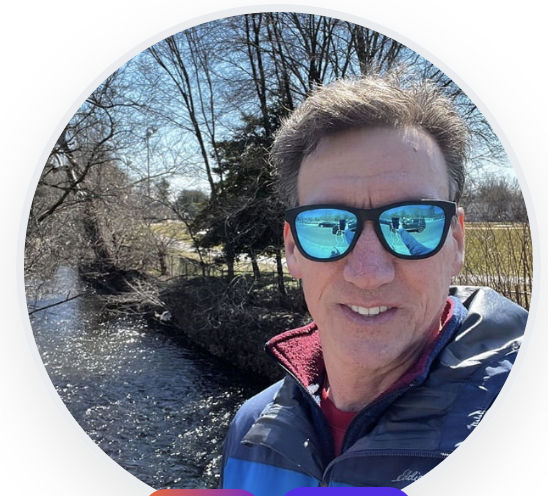
Frank shares his inspiring journey from chronic pain to health and happiness, including how walking helped him lose weight, clear his mind, and regain his vitality. Now, as the creator of an online program, books, and resources on walking, Frank is dedicated to helping others experience the life-changing power of putting one foot in front of the other.
Tune in as we discuss:
✔️ How walking can improve physical health and alleviate pain.
✔️ The mental clarity and emotional well-being walking brings.
✔️ Practical tips for incorporating walking into your daily routine.
✔️ The spiritual benefits of walking and connecting with nature.
This conversation will inspire you to lace up your shoes, take that first step, and unlock the countless benefits of walking.



About the Host
Daniel Stih (danielstih.com) is an aerospace engineer, software engineer, indoor environmental consultant, and author of 12 books. For more than 30 years, he has investigated complex problems spanning engineering, technology, the built environment, and human decision-making. His work explores how evidence, assumptions, and systems shape the conclusions we draw—and whether we're solving the right problem. Learn more about his approach in Why I Think This Way.
Show Notes
Walking for Health and Fitness
https://www.walkingforhealthandfitness.com
Fitness Begins with Your Mindset
https://tinyurl.com/walkawaydstih
From Why to Walking Visualization Video and Bridge the Gap Guide:
https://www.walkingforhealthandfitness.com/key-motivation
Free Chapters to Walk Away from Health and Fitness:
https://www.walkingforhealthandfitness.com/download-walking-health-fitness-chapters
Facebook
https://www.facebook.com/walkingforhealthandfitnessprogram
Transcript
My guest today is Frank Ring.
Frank's the owner of Walking for Health and Fitness, a program that helps those who want to walk understand the physical, psychological, and spiritual benefits of walking, both for pleasure and for working out and getting in shape.
About seven years ago, he started to experience back pain.
His orthopedic doctor told him he had a herniated disc to stop all activity, rest, and see a pain management doctor.
During his recovery, he began to walk, and he really enjoyed it.
He says once he began to walk full time, two things happened.
First, he began to lose weight.
But more importantly, or as important in my opinion, his thinking became clearer.
He's currently healthy, happy, and enjoys sharing the benefits of walking with others through his website, books, and online programs on walking for pleasure and fitness.
Welcome to my show, Frank.
Thank you so much, Daniel.
It's really nice to be here.
Appreciate that introduction too.
Very nice.
So tell me your story.
A lot of people give up on the back pain, especially, I know a lot of people would just go to the doctor, take more medication.
You know, doc, I heard.
Tell me your story and how it transformed your health into what you're doing now.
Well, sure, sure.
I had always been an athlete since high school and graduated in 1981.
And, you know, through the years, after high school, I was a baseball player, basketball player, I played sports even after finishing high school.
And then I kept in shape by running.
I ran cross country one year in high school, kind of like that.
Never was really a big fan of running, though, but I did it to stay in shape.
And the running, just that pounding on my body, really, it contributed, wasn't the only thing that contributed to the herniated disc.
I was lifting weights also.
And then bad posture, sitting a lot at my desk.
School teacher, I'd spend a lot of time at the desk doing videos and lessons for my students.
So the sitting really between the sitting, the running, the weightlifting.
And then in 2015, I don't know if you're a baseball fan, but the Mets were in the World Series.
So I blame the Mets for my back injury.
Yeah, I don't get that joke.
Okay, so here we go.
So I was a cross-country coach at that time.
So we finished practice.
I'd run a little bit with the kids.
I'd get home, get my work done for school the next day.
And then I'd watch the Mets.
And all of those games are late.
All those World Series playoff games, World Series games.
And I'd sit on my couch in a very couch that wasn't very comfortable and bad posture.
I'd fall asleep on my side.
And that was the start of the back pain.
I felt it.
I felt this tingle down my leg.
But it kept running because I needed to stay in shape.
And the pain just never went away.
It started and it just got worse.
So I did all the right things.
I went to a physical therapist.
They gave me every test under the sun except for an MRI.
So eventually, I did like three months of physical therapy, three days a week.
And I would tell them, you know, when I leave here, I feel okay, then I'm hurting.
Keep coming back, keep coming back.
I didn't go to a very good therapist.
Eventually, I'm just like, I spent the weekend on the floor because I couldn't find any other position, like laying on my stomach on the floor.
I went to an orthopedic and in two minutes, he asked me a few questions.
He moved my shoulders in a way that just triggered the pain and said, you have a disc problem, go get an MRI.
And I fought him.
I said, I don't have a disc problem.
I've been in physical therapy all these years, for months.
They never mentioned disc.
He says, I'm doing this for 40 years.
He said, go get the MRI.
You'll see that you have a disc problem.
So now we get the MRI and I get back to him and he's like, looks at the x-ray he had.
He's like, ooh, he's moaning and groaning.
Going, your patient doesn't want to hear that.
He says, it's just really bad.
I hope I don't have to operate on you.
So part of the skeptic in me and the engineer, two things, one, one, I wonder, if you look at the picture right, if everybody's disc might be a little herniated, not perfect, especially as you get older.
And he's a doctor, he wants to operate.
And you're in pain, you need a solution.
That's why I was there to see him.
I'm glad you're well again.
Thank you.
And I didn't have an operation, but he sent me to pain management, which I think that, thank God, pain finally gets some relief here because I was having a hard time sleeping.
Now, I was in so much pain, I couldn't even like sitting, I'm sitting now.
Sitting was just a nightmare and I was teaching all day.
I couldn't sit because it just hurt.
So you didn't get the surgery then?
No, no, I didn't get the surgery.
His owing and owing was I don't want to have to operate on you.
So he stopped everything.
Okay.
So I had to just stand all day.
It's either lay down, I could only find one position that was comfortable or stand.
And by the end of the day, teaching my everything, my body just ate.
So I said, look, you're telling me I have to just rest.
You got to put me out of work.
I cannot eat this up.
So I was out of work for four months, went to pain management, which was, they just give you an epidural, they stick a needle in your back and first epidural did nothing.
The second epidural dulled the pain, and the third epidural just knocked it out entirely.
Then are you addicted to going back for an epidural every week or something?
Here's what, it was like three-week intervals.
And at that time, they said to me, this is what now, seven years ago.
They said, hey, you know, this should last two years.
I remember hearing that number and I'm like, I'm not doing this every two years.
This is crazy.
So at the same time, all of this is happening.
My mom had pancreatic cancer.
She was slowly dying and had passed away that summer.
So I had the stress of the back pain.
I had the stress of losing my mom.
So the mind-body connection was a huge part of it also, I believe, which I didn't recognize at that point until I started doing research for my book.
And put that together of how much it affects our body.
Like Louise Hayes, You Can Heal Your Life, those kind of books?
Yeah.
So I've never read her.
I know some of her work, but that was a big connection that I made, the mind-body connection.
What is real quick the underlying root emotional thing that's associated with back pain?
The mental thing that's...
Yeah, that part, I really, I don't know what that association is, but there's a Dr.
Sarlo, John Sarlo, I believe his name is.
And he wrote a whole book on that mind-body connection with back pain.
I know years ago, the DJ, Howard Cern had suffered a lot of back pain, and I think he had read this book and made that connection.
I think it's support.
Like, it makes sense, like you don't feel supported when you have back problems.
That could be.
I don't know the exact reason, but I did not want to go through that again.
So, I got back to teaching in there with September of 2000, coaching, and really like the doctors, you know, comment was in the back of my mind.
Stop everything.
Don't do anything.
I was afraid to really do anything strenuous, which is not good.
Well, I would definitely early.
I was in my early 50s.
I would definitely quit lifting the weights.
Yeah, that was the first thing.
I absolutely stopped that.
So, cross-country season ended and now I had put some weight on because I was no longer in pain but I wasn't moving.
So, I said, you know what?
I need to do something.
Let me get out and walk.
And here's my thinking.
I'll get my legs stronger.
My back will start to get stronger.
And then I'll start running again.
That was the plan.
And I started walking.
And my goal was, first goal was to get to, there's a big hill.
Yeah, I got it.
Tom, I quit running because I broke my hip and didn't seem good.
And I quit skiing and snowboarding as well.
I love to walk, though.
I really love to walk.
But my question for you is, do you don't think the running all time had an effect to hurt you?
You must really love to run.
No, no, no, no, the opposite.
I'll tell you that now.
So, the running definitely was a big effect on the back, and I'll tell you why in a second.
So I start walking, and my goal was, there's this hill that was a mile from my house, pretty steep hill.
And I'm like, that's my goal.
When I can make that hill, just a mile one way, a mile back, I'll be a happy guy.
I'll start to get back into running.
And so let me finish this story, I'll go to another one.
So this is not walking up the hill, running up the hill.
My goal was to walk up the hill.
Oh, you're still in that much pain.
No, I was in no pain.
I needed to get back in shape.
Okay.
Okay, so now I'm going to walk up the hill.
Once I get to that, I had to work my way to get to that point.
I realized, I'm like, well, I get out every night to walk because I need to get back into physical shape.
But I was looking forward to it.
I would drive home from school, and I think, I can't wait to get out on that walk.
And I'd get out and walk, put headphones in, hooking up to the phone, listen to a podcast, listen to music, listen to an audio book.
And I said, wow, I really like this.
I never looked forward to running.
So you asked, you had just said, you said you must love running a lot.
I never loved running.
I tolerated it because I needed to stay in shape.
That's how I looked at it.
So once I started, I made the hill.
And I'm like, yeah, I made my goal.
But I am not running because that's the thing that got me hurt.
And I'm enjoying this so much.
So my walks got longer and longer.
I listening to so much just information or just music enjoyment.
I was really, I gotta say, enjoying my walking time.
It was my time, my long time.
I had a, my son was at that time middle school.
So he kind of kept himself busy, but still needs, obviously need to be around.
So it gave me that nice break between school and life, where I just focused on myself.
It has ended.
But it, and it's enough to keep you in shape.
You found you could get in the same shape as you did running.
I found I could get in the same shape.
Because when I look back on all my running logs, I was hurt so often.
Knee just always sore knee.
I had a shin soreness that, I mean, I looked at my nuts.
It lasted for so long.
I actually had, there was a tumor period.
I stopped running because of it.
And this is a few years before the back injury.
So when I looked at my logs, I'm like, I was always hurt.
So it's like a slow burn, slow burn instead of crash and burn.
And yeah, it really was a slow burn.
Now I was doing so much running because I was doing a virtual run around the United States.
And so I think it was starting in 2001, I read this article about these guys who ran a cross country.
And I was a runner, I was coaching cross country, funny enough.
And I said, when I do that, if I had the time, when I run cross country, and the answer was no.
But I was running every week and I'm like, all right, I know if I run 20 miles a week, that gets me from my house to where I was working, my teaching job.
But what's the next 20 miles?
Well, okay, that's the town of Elizabeth.
I live in New Jersey, North Jersey.
What's the next 20 miles?
So I don't know.
So what if I start tracking this?
So I started tracking my running and I said, well, my original goal was from Palisades Park, New Jersey, where I grew up and where I teach, down to Key West, Florida.
Because Route 1 runs from the George Washington Bridge, actually runs from Maine all the way down to Key West, and it runs through Palisades Park.
And my grandfather told me when he was younger, he took a road trip to Florida via Route 1.
The New Jersey Turnpike wasn't built yet back in whenever he took this trip in the 50s.
So that became my goal to run virtually to Key West, Florida.
By virtually, you mean just by miles, or do you have pictures or something?
Okay, so that's the next step of this.
So I'm a school teacher, I teach Photoshop.
So I said, all right, I'm gonna track the miles on a map, but what if I Photoshop myself along the route and I'll just goof on my students, telling them that I'm running to Florida?
That's how this whole thing is.
No class tomorrow because you're in the key west.
So I put a map up of New Jersey, and there's a picture of me in front of the school.
You know, good luck, Mr.
Ring, Key West or bust.
That's what I wrote, but I photoshopped it in.
And then the next picture, the next week was me on the one which goes over this Pulaski Turnpike in Jersey City.
Now you're running.
You're not in school.
You haven't seen the kids in a week or two or how?
No, no, this is virtually.
So I'm running at night and I'm just tracking it, putting it in my logbook, and then I'm on the map.
I'm 20 miles down.
The next week, another 20 miles.
So on the map, I was progressing.
Oh, is this during the pandemic?
During the pandemic or something when I'm still getting trying to picture how your students in school saw your picture?
No, this is 2001, not 21.
So this started way back when, this is 20 years before the pandemic.
And the kids would come in and they'd see the map and they'd see my picture be running.
I had a student take pictures of me in all different running positions.
So I photoshopped myself out of those pictures into the pictures that people posted online.
Even early, even in the early 2000s, people driving down the road taking pictures of roadside signs.
So I'd take one of those pictures and photoshop myself into it.
So basically, I was virtually running to Key West, Florida.
So that started, that's why I'd get out every day, well not every day, often to run.
And I'd keep detailed mileage notes because I wanted to then put it on my maps and be accurate that.
It's still inspiring.
If I was your students watching, I would be looking forward to the next poster.
And if I was you, I'd be worried if I don't run my 20 miles.
Yeah, so it was interesting.
So one, it was goofing on them because they would look, they'd feel like, you can't run to Florida.
I'm like, is that me in that picture right there?
That's me running to Florida.
So it became a joke, but it also kept me motivated to get out and do the work.
So that was my reason to keep in shape.
So you're losing weight during this journey on the spoofing.
You are losing weight getting back in shape?
More maintaining the weight because I, luckily enough, I just always had a body type or just eating habits or physical.
My weight has always just slowly crept up.
During the back injury, it came up a little quicker because I wasn't doing it.
So when I hurt my back in 16 and when I was out, I could no longer add to the maps.
I could no longer run.
I think at that point in time, I got to Key West and then I continued up the west coast of Florida and then along the southern United States and just kept detailed maps and pictures of me on these maps.
So to get back into that thing, I started the walking.
I said, well, I'm not running anymore because I was hurt all the time.
Let me start walking.
And so from 16 on, that's all I've done to stay in shape.
Walking and body weight exercises.
No more lifting, nothing crazy like that.
And what about your mental health?
You got in shape, but what also, what about the mind, body, or your mental health?
The mental health, I just really took off in such a positive way.
So during the back injury, so again, it was a lot of pain.
I was in my early threes and I'm thinking, is this the rest of my life being this pain?
Because this is awful.
And then on top of that, my mom slowly dying.
So once I started walking, that lifted.
I mean, like I said, I looked forward to every day getting out and walking.
Winter time, I bundled up.
I think the coldest I'd walked in North Jersey, I think one night it was like 17 degrees.
Cold enough.
But I looked forward to it.
I would never have run in 17 degree weather.
I was waiting for you to name the temperature, because right now where I'm at in the mountains in Utah, if it gets 20, I'm like, it's too cold to go for a walk.
And there's other people out there.
I'm just, so we're on the same page there.
It still needs to be enjoyable.
Yeah, yeah.
It bundled up.
So that was for me.
And like I said, I enjoyed that.
So in these walks, getting back in shape, enjoying it, listening to audio books, personal development stuff, I said, I said, you know, I'm a school teacher, a coach, I'm always doing another job.
Maybe I could do something with this walking thing.
And you know, you see these people who talk about starting online businesses.
And first thing I say is do something you like to do, right?
If you're going to be doing it.
So I said, well, what do I know how to do?
Other than I could teach Photoshop.
But you know, there's so many great Photoshop books.
I'm not going to write a Photoshop book.
But I said, you know, I like this walking thing.
And the idea of writing a book, I thought was, I can't write a book.
I've never done anything like that or any type of writing.
And you can't make money off your book either.
So I started a website, Walking for Health and Fitness, and I would do some blog posts.
I'm like, oh, this is great.
And the idea was to create a walking program to help other people.
And that's what I did.
So I said, okay, what would I want in this walking book?
I did PowerPoint presentations, right, outlines.
And then the idea of this program was for me to then narrate the PowerPoint slides to teach people the benefits of walking.
I had 28 chapters, so 28 PowerPoint presentations, right?
That was going to be the program.
And I recorded the first one, and I said, oh my god, I wouldn't sit through this, because it's a presentation.
I'm like, I'm teaching something, but I don't know about.
Like, it's walking, you want to be out there doing it, right?
So it's fitness.
So I said, well, if I write a book, because every, you know, you're marking people, oh, you need a book to be legitimate.
So I said, well, I'm not going to write a book, but I have these 28 PowerPoint presentations, really in outline form.
There's my book.
Let me just add sentences to the outlines.
So that became my first book.
I never thought I'd write a book.
So writing the book to educate people was the main goal.
But the sub-goal was the fact that can I actually do this for myself?
And that whole process was really so much fun and interesting and nerve-racking and scary putting my ideas out there.
But it's been on Amazon for a number of years now.
And Walking for Health and Fitness, it's hit number one on their walking book list.
Oh, nice.
For times.
So it's been nice.
And I recorded the audio book version and I give that away free with the book.
So that instead of like my point of not continuing that walk, that first walking program was that I didn't want people sitting at a desk when they should be walking.
So same idea with the book.
I'll have people listen to the book while they walk, because I had been listening to so many audio books.
And you spend, then you have your programs or online courses, right?
Right.
So then I developed, I then developed a program that I actually would suggest to people.
And it's a walk, it's Walking for Health and Fitness, it's a complete program.
And it really, it covers walking, of course, and the benefits of the physical benefits of walking.
When I interviewed people in preparing to create this program, I interviewed a number of people, some people I knew, some people I didn't know.
They all told me the same thing.
It came down to one thing, and that was they knew what to do to get in shape.
Okay?
Many of them were a little bit overweight, some of them very much overweight.
They knew the thing to do.
They just didn't do it.
Well, stop eating comes to mind as well.
That comes to mind, but what I didn't realize, and like I said, the walking helped me lose weight for that period of time when I was hurt.
But I've never really been very much out of shape, out of overweight.
Overweight for me is like five pounds, a little bit like, ooh, I'm a little bit overweight.
The holiday's just ended, let me drop some weight.
But some people were seriously overweight.
And it's in talking to them, yes, to say, well, eat less.
But boy, the battle that they all had within themselves about the weight loss was, and knowing, I know I need to exercise, but I would do it for a week or two.
I feel good and then something would trip me up.
And then-
And what kind of exercises were they doing?
Some people were going to the gym.
Some people were trying to run.
Some people were doing Pilates and yoga and stuff like that.
Painstess stuff.
Yeah, and it wasn't-
What happened was, they would start to feel good, but then that thing would trip them up.
So I said, I need to put a component in my program that kind of addresses that thing.
Addresses what?
The mindset, the mindset thing to say, okay, from someone who walks, hey, get out and walk, and you're going to have all these great benefits, the cardiovascular benefits, the weight loss benefits, if you combine that with sensible eating, it enhances your mental health.
That's, I could preach that till I'm blowing the head, but someone needs to then take action on that.
And I needed to come up with something that preach that taught that stuff, but also to taking the action of, okay, I spent the day on the couch because whatever, I was tired from work, but what stops it from going to be two days, and three days, and four days of sitting on the couch?
So Steve, what do you suppose, is it's so easy to walk?
Me, I like being outside, I even run into my neighbors and say hello.
It's like Albert Einstein and a lot of people who are smart, they go for walks to, like you get an idea in a shower, all that.
Why do you think more people don't walk?
I wish I knew that because, we'll talk about the same things, I get the same benefits you did.
The ideas that come to me during a walk, and I've written about this where I can have a problem, go out on a walk, and a walk for me, like five miles was like a good walk for me.
That's a long ways.
People don't need a five-mile walk.
I enjoyed a five-mile walk.
I really like that's a nice, that was the sweet spot for me.
Well, I mean, I literally just walk out the door, and I walk as far as until I feel like, it's time to turn around, or it's too cold.
I stop and talk to my neighbor, but what I found was, if I make it mandatory like very first thing, and then very last thing before I check out for the night, somehow that keeps my metabolism going, and I think helps with the program.
The mindset part of it, I always found a solution to my problem, or an idea came to me, and it was usually like right at the end of the walk.
My house, I could see my house, and I'd be like, oh, wait a minute, where did that idea just come from?
I'm walking for an hour, why did this come to me right now?
Something with any kind of problem hanging over their head right now, just go out the door and walk because of what happens to the brain when we exercise and when we walk, especially something like because walking is so gentle on the body, it's nothing like running.
Maybe it's because when you're running and lifting weights or something so intense, your snaps are being overwhelmed by the pain or that you can't just relax.
And that's why the mindset, the mindfulness, this concept of the meditation you're walking, that's why walking allows for that maybe because I'm just thinking out loud, Steve.
Yeah.
Because when you're running, even if it's better for your body or burning more calories, the pain is you're listening to the pain, not the mindfulness.
You're listening to the huffing and puffing because you're breathing heavier when you run, but that also detracts from what you're trying to do with your mind.
I never had any ideas when I ran.
Usually, it's just, when's this going to be over?
No, but the walking is so gentle.
And as far as the weight aspect or losing weight by either running or walking, it can walk so much further or for a longer period of time than running, I found.
So if I ran, let's say five miles when I was a runner, maybe it took me nine-minute miles.
That's not even fast-paced running.
That's 45 minutes.
But five miles of walking is well over an hour.
More than that.
Probably like an hour and a half.
A nice gentle walk.
You get to where the calories are kind of the same.
Long, slow burn or fast rocket.
Right.
So there's that slow burn.
It's much more enjoyable.
So if you enjoy it more, you'll get out and do it more.
That's what I found.
I found, like I said, looking forward to that walk every day.
I never looked forward to running every day.
I never looked forward to the weight lifting training of doing that.
But I did look forward and I still look forward every morning before school.
I'm out on my track and I'm doing my walking.
I'm doing my bodyweight push ups and squats every half a lap.
And I got a great workout before I start class at 8 o'clock.
So for people who don't have this regime of walking every morning or evening, and maybe it's because they have some preconceived idea, what are possibly the preconceived or it's more...
What could they be thinking?
What could be stopping them?
Because this is what you do, Steve.
This is all you do.
So you know these people.
What are people...
It's not an excuse.
It's like their mindset.
Like all you have to do is put on your shoes and walk out the door.
What stops people from starting to walk?
Walking, people don't think, many people don't think that they could lose weight just by walking or feel in shape just by...
It's too easy.
I mean, right as I get out of my car, I walk into a building.
I'm walking, I'm not losing.
That's crazy.
I can't lose weight just doing that, but you can, and you absolutely can, not only lose weight and just get stronger physically because you're doing it for a longer period of time.
So I think they think it's not...
Because they're not sweating and huffing and puffing, well, this can't be.
I will admit that even this week, as long as I've been walking and mountain climbing, and I go for...
I was comparing a 10-mile hike I went on to running like you said, running.
And then like you said, I noticed, well, yeah, running is burning twice as much calories, but it's only for 7 or 10 or 12 minutes.
I can't even run a 10-minute mile, by the way.
So yes, and I'm hiking for all day.
I mean, that's an extreme case, but the calories definitely are more balanced than you would think.
Yeah.
And because you're doing it so much longer, that calorie burn lasts even through the, you take a nice walk after dinner, that calorie burn goes on through the evening.
So I wrote an article for my blog post.
It's the benefits of a 15-minute walk are just, they're enormous.
And what I find is if you can get out for 15 minutes, you'll find a way to get out 15 minutes at lunchtime, and another 15 after work or after dinner.
It's what you need.
You don't need to string that.
I talked about going out for five mile walk.
You don't need that.
But 15 here, 15 there, 15 in the morning, park your car further away from work and walk in, whatever the case may be.
But if you did 15 minutes three times a day, one, it doesn't feel like a big stress or strain, but it'll make a huge difference in how you feel.
Do it before you, in the evening, like sit after dinner.
It's not just to walk off a big meal.
I find that keeps my metabolism, like my fat burning, going all night long.
Yeah, exactly.
Exactly.
So there are just so many enormous benefits.
So getting back to the people I had interviewed, they needed a way, I felt, to, all right, here's something that you could do.
And one, you got to find that big purpose, and whether it's fitness or anything, I think we do in life, we need some kind of overriding purpose of why we're doing it.
Otherwise, it'll be very easy to get distracted.
So the program works on that, the mindset, like what's your why for doing this?
What's your why for working out for doing this walking program?
Okay.
And then start to build just small little habits that get you out the door.
Well, do you find people, what I thought you were going to say is once you do it, you like it so much, you'll want more of it.
But are you finding people still think it's a chore to where they need a purpose?
I don't know.
I've not followed up on the people I'd interviewed for the program.
But I don't know if they see it as a chore.
They didn't find that overriding reason.
I found my overriding reason.
I did not want to be laying on the floor in pain my 50s and the rest of my life.
For me, it was easy, but everybody has that reason.
They just or if they uncovered it enough, they would find it.
And that would lead to and I think the easiest way then to go forward is through walking because it's such a gentle way to be fit.
Since I've been walking, since all these years, since 2016, I've been hurt once and I did a stupid thing.
I was walking on the street after a storm and I stepped through a pile of leaves and I turned my ankle.
So it wasn't actually the walking that did it.
It was my stupidity of stepping into a place where I didn't see.
Well, good thing you went right.
Oh, wow, forget it.
I broke my ankle.
But so I'll give you an interesting running walking story.
So dating my girlfriend now, volunteers at her local Lions Club, they put on a race at the end of the summer Labor Day.
And two years ago, she said, hey, you know, I'm a volunteer at this race.
Why don't you come?
You could walk it.
And I'm like, okay, great.
So I get to the start line, I was going to walk it.
And all these little kids are running.
So I'm like, well, let me jog a little bit.
It was a 5K.
So I probably jogged for half of it.
I couldn't stand the running part that even that half jogging.
And I walked the other half.
My legs were sore for four days after that.
So I can't walk from the running part of it because I ran half that race.
So I ran 2.5 kilometers or whatever that works out to be.
You know, when I was a kid, literally like 10, I think my younger brother was nine or eight.
I decided to sign up for a marathon.
This is long before so many people do marathons.
And we did what you're talking about.
We jogged a little, but we pretty much walked the whole thing.
They were taking down the tables the last of, yeah, as we came through, they didn't even care that we came through.
We're here, we're here, like totally shut down, but we walked it.
But you walked it, that's really cool.
You walked a marathon.
So all the way over my running time, I tried to work my way up to run a marathon.
Every time I increased my miles, once I got over like a 10, 12 mile run on a training run, I got hurt.
I was sore, I was hurt.
It just never failed that I broke down.
I like your logic that the way you described it.
Running technically maybe burns more calories and sounds cooler, but you break down and then what's the point?
Because then you're going to get bad again as you sit on the couch trying to heal you.
Exactly.
You hit the nail on the head, that's exactly it.
So by walking, I was just more consistent with them.
And I actually, about 3, 4 years ago, I did walk a marathon distance.
So I'd always, I always broke down when I tried to run a marathon.
So one, it was a summertime school teacher, went to a local park that had a bike path that is 12.5 miles loop, really nice.
And said, I'm going to do two loops, that's 25 miles and then a little bit extra.
And I wanted to get to the marathon distance, that was 26.2, and then go even further.
So I actually wound up walking 30 miles that day.
Wow.
It was a long day, had the headphones in, enjoyed every second of it, stopped halfway for a cup of coffee.
I'm a big coffee drinker, you know, found a Starbucks, I went out of the park, to Starbucks, came back, finished the walk.
The next day, I was tired, but I was not anywhere near, sort of, had I tried to run 30 miles.
So I did a marathon distance plus, and it was such a great experience.
Back to, you don't need to be, you don't need to walk that much though to get in shape.
Well, it's a cool idea.
It's actually, yeah, walking more marathons.
Maybe I could do that more.
Yeah.
But back to the people who just can't get to open the door, put their shoes on, walk out.
What's stopping them and what do you do in your program to help them along and encourage them?
Well, the encouragement is it's this.
And one, they've got to find that overriding reason.
They've got to find their why.
That's what I call it, right?
And then do things that support that.
So one, and major one is I believe allowing the mindset, visualizing.
You've got to visualize themselves, not as they are right now, if they're overweight or out of shape, whatever they are.
Where are they going to be six months from now?
A year from now?
And just visualize that.
Because if you could see yourself more fit and feeling good about yourself and happier, you could work, that gives you that reason to get out the door.
So visualize.
The next thing, have some kind of goal, whether it's to lose weight or to hit a distance goal, anything that just gives you a little bit of a push to get out the door and start exercising, and in my case, start walking, which I suggest they do, and then building little habits along the way.
One of the biggest habits I tell people is start, just set your clothes out.
I call it getting a win.
We all need to win every day.
So instead of, let's say, these people beating up on themselves for not exercising.
Well, hey, I put my clothes out today.
I did one thing that gets me closer to getting out the door.
Does not having the right shoes or do people worry, I don't have the right shoes or I don't have a water bottle or don't have a gore-tex.
Are there any of those excuses?
You could walk in anything.
Is something comfortable for your shoes?
I think you're on your feet all the time.
I recommend shoes.
And if you start walking, I really recommend a good pair of walking specific walking shoes or walking sneakers.
They call them walking shoes.
When I was researching for my book, I had been using my running shoes, which are always lightweight.
They feel lightweight.
And then I went and got a pair of walking shoes and they felt like a pair of slippers.
I didn't know there was a difference.
You know, I didn't think it was going to be a big difference.
It felt amazing.
So I put the walking shoes on.
I walked on them.
I used them for a week.
I'm like, let me put my running shoes back on, my running sneakers, New Balance.
And I bought New Balance walking shoes.
And I felt like the old character, the Herman Munster character from The Munsters, right?
With those big shoes he had.
That's what it felt like I was walking in when I went back to the running shoes, because the walking sneakers were so light and because they don't take the pounding.
When we run, if we run at a high enough rate, we're actually bounding.
We're actually in the air for part of the time.
You know, and so the sneak, your body, that's why your body takes such a beating.
So the sneakers, so the walking shoe can be lightweight.
It doesn't have to withhold, stand up to as much stress as the running sneaker because the walking motion is so gentle.
And what about the sneakers?
It's easier on your body.
What about stretching and warm up?
Which I never do go for a walk.
I just grab my coffee and start walking.
You know, I do, I have a program with stretching for health and fitness, but recently I don't stretch before.
You shouldn't stretch cold muscles.
You know, a little bit of warm up, you know, little, you know, little squats, you know, ankle circles, just roll your ankles a little bit left, left and right.
There's a few little things you could do to warm your body up.
You're making me feel good now because, or validating, because when I get up, I used to just go, I'm like, don't even make coffee, go for the walk because else you're going to get stuck and not do it.
Now I'm kind of like, you know, it seems to me, like you say, just going cold, tricky.
I just got out of bed.
My muscles are tight.
I should walk around the house a little bit, have my coffee, and then I go for my walk.
Exactly.
Your body needs to, the muscles need to warm up a little bit and not stretch.
Just get moved, just the movement to warm them up.
I go up and down the stairs, just going up, I get up by the bed, go up and down the stairs, get my clothes.
That's the warm up.
And then you stretch afterwards if you feel tight.
That's all I've been doing for the last 12, since 2016.
I come home and do my big stretches and sit ups then for 20 minutes.
Yeah.
I'm big proponent bodyweight exercises.
You combine those with push ups and walking.
Oh my God.
You've got everything covered.
A few squats in between and, you know.
So what's your program?
Do you have any people, clients that stand out, like ones that we're speaking of who before?
I was like, I can't do it.
And now they're like, this is great, Steve, why didn't I start?
Yes.
So my big guy by the name of Robert Boggs, he's out in California.
He's I think he just turned 84 years old.
He's been doing my program of a kind of a program called Fitness Walking Bodyweight Exercises.
And it's set to a soundtrack.
It's 32 minutes long.
And every four minutes, you do a different bodyweight exercise, but and repeat them.
So there's squats, lunges, pushups, and planks, just holding a plank.
So you get out and walk, stop someplace when the, when I guide you through it, right?
There's my voice.
It's okay, get ready.
And so are you walking?
Are you listening?
Are you walking?
Are you walking as you're listening?
And then every four minutes, it's okay, do a minute of bodyweight exercises.
So you're carrying a-
And you work your way up to the, if you can't do a minute, because I'm into the pushups, there's a lot of pushups, you know?
So Robert's been doing this exercise faithfully for the last few years.
And I got an email from him that, you know, people can't believe how old he is doing it.
And he's modified some of the exercises as he's gotten older.
But he is an absolute success story.
And he has a quote, Your body is the machine.
Your body is the way the body is the fitness machine, I think.
And it's that's all you need to just bodyweight exercises.
And so by bodyweight exercises, I imagined he would carrying some like five pound weight, but it's totally just the body, like just body, just just your body.
That's it.
And pushups, really pushups are a whole body exercise.
I mean, you know, it's that up and down motion.
Great for the upper body, but you have to keep the rest of your body tight in order to make...
I quit doing pushups when I hurt my shoulder.
And yeah, no matter how much I, it's yeah, it's not worth hurting.
It's yeah.
Well, you could modify, you could be up a little bit, you know, I don't know.
Oh, on the knees.
So many different ways to...
This is true, Steve, I forget.
People told me you can be on your knees and do the push.
I forget that.
There's the modified, there's always ways to modify the exercises.
So, but you know, you ask for a success story, boy, that's someone who in his 80s and is in phenomenal shape.
And you know, it looks forward to doing the workouts.
You know, it's nice about that as so many people around 80, 85, come to think of it, they're dead, that I've known, versus those ones who kind of could live to be 100, and they're going to die in their sleep at 100 in perfect health.
And he's probably going to be one of those now.
Probably.
Yeah.
Yeah.
Well, I, it's funny.
So growing up, my mother's would be my mother's brother-in-law, my aunt's husband, Mr.
Ostuni.
He walked everywhere.
Now, this is back.
He's a kid in the 70s.
We never saw anybody walking anybody's, or even running was such a novel idea really back then.
But there were no running shoes.
There was like rebalance or re, there were no running shoes practically, maybe one.
Yeah.
I think Nike came about in this mid 70s or so.
I ran cross country in what year?
79, 79.
And you know, the people these days, they have to have everything, the best shoes and the water bottle and the gore-tex and this and that and little, everything like, you know, we didn't have shoes.
I mean, whatever shoes you're wearing.
That was it.
So he walked everywhere.
And he lived to be, I think he lived to be 96 or 97.
I don't ever remember him being heavy.
He was always very thin, but strong.
He liked the box.
He had a speed bag in his basement and walked everywhere.
He owned a building.
He's a landlord.
So he walked five miles each way.
Three times a week, you go down to the building, clean up around it, see if the tennis needed anything and walk back home.
Now I'm a kid, as I got my license in 1980, and I'd see him.
I'm like, Oh, Mr.
Huston, you need a ride?
Nope.
And he always said, Okay, I gotta get my walk in.
Walked everywhere, perfect health into his late 90s.
So that's my inspiration.
So what about, tell me some common mistakes people make when they start walking that they do get hurt.
Maybe it's because they're trying to do some with fitness that they should slow down and just walk before they start doing the body lifting or whatever.
What is some common, what's like a common, like don't do this if it's your first day walking.
Well, okay, yeah, if you're just starting, someone who is just, you know what, I'm listening to Frank and let me get started here.
One, walk until you walk a pace that's comfortable.
You don't need to walk fast, just as comfortable.
Number one.
Number two, don't overdo it.
Because even something, if you're not used to walking and you try to go too far, you're going to feel it the next day.
I would say just take a short walk, enjoy the scenery, do some breathing as you're walking, and then the next day, and this is the important.
It's always the second day that's the toughest.
It's easy that first day to be all motivated.
I would say to which, what do you think about this idea?
Because it occurred to me, if I was like, oh yeah, I'm going to do Frank's program, or I listen to Dan's podcast and I'm on it, that the first thing I might do is set a goal, like I'm going to walk a mile or a half mile, when instead, shouldn't I just walk out the door and see how far I feel comfortable going before I turn around?
Yeah, just get out the door.
Because you'll start to, when it feels good, it feels good physically, you're moving, the movement.
And then think about the walking motion, right?
The arm swing, the leg swing, it's really rhythmic, it's relaxing.
You talked about being in a meditative state in a sense of just, you know, just...
The other thing that comes to mind is by just, this is from rock mountain climbing.
Until I start get on the mountain, I don't know what I forgot or could have, like maybe better footwear.
Like, yeah, I'm going to get blisters.
I need a new pair of shoes.
I'm going to try that out.
And you don't know those, that stuff until you actually get out the door and start walking.
Yeah, you have to get out and do it.
And then really just enjoy the process, enjoy the walk, you know, and then go a little bit, set a goal, go a little bit further.
So speaking of which, I personally don't like any electronics.
I don't listen to music.
I want to hear the birds or talk to my neighbor.
But that being said, what is your opinion and advice about is it sounds like you are big on metrics.
Like when you do, when you do get down into it and you've been walking a little bit, then having a goal, walk a mile, what do you recommend in terms of fitness, trackers, and apps and such like that?
If they motivate you, use them.
If they distract you, don't use them.
Getting back when I was running, I was always looking at the watch.
Like, okay, if I had the same training, well, I know last time I got down to that point in 25 minutes.
That always was like, because you're running, you're always running a race.
Once I started walking, I really just keep track of the walking miles, going back to the virtual walk around.
Well, that's a cool point.
That's a cool point.
I actually made it around the United States.
And here's the crazy thing, you know when it ended?
It ended during COVID.
So my goal, Just when everyone else is just getting outside at that point.
Yeah.
So I'm doing this virtual room for years.
It took me like 16 years to do it, right?
But I was really in a flow.
But once I started walking in, I wasn't hurt anymore.
So I'm a school teacher.
This is why I started this whole thing to goof up my kids.
And I had a student named Dominic, and that September he's a senior.
He comes in my room, he looks at the maps I have up on the wall, all the pictures, and he says, are you going to finish this by the time I graduate?
In June, this is 2019 into 2020.
And like, you know, let me look at my, let me look at how many more miles I need, and maybe I could work this out.
And it turned out that if I had averaged, he was like, if I had averaged 100 miles a month, I could, I could, it was, I needed about 1,000 miles.
I could finish in June.
Now, like I said, route one runs from the George Washington Bridge through Palisades Park.
I was going to actually then walk from the George Washington Bridge to the high school.
Trying to do the math.
That's about three miles a day.
About three miles.
Yeah.
Yeah, about three miles a day.
So if I, so my goal was, I may have a whole bunch of people to finish this walk with me, any students who want to do it.
I thought that would be a cool idea.
So what happens in March?
COVID hits, everything is shut down.
We're no longer in school.
I actually, when I want to go out on my walks, I always track how many miles I did.
But I got so discouraged during that point in time.
I didn't even put it onto my maps.
I didn't know where I was in this walk.
And sure enough, had that happened, not happened, I would have finished around the time they graduated and I could have done something.
Hey, I'm finishing up this walk.
I could have done something with it.
You know, that brings a question to my mind is I always go outside.
I never even thought about walking inside or walking at the gym or walking at the mall.
Or maybe for those people that don't feel comfortable walking outside, in a good neighborhood.
I don't think walking in your house would do it because it's like, how far?
Do you have any suggestions for walking inside?
Yes, you could do more walking.
There are some malls that encourage people to come and walk.
Some malls have walking clubs.
On my website, Walking for Health and Fitness, I actually have a blog post about mall walking.
So it's cold here in North Jersey.
It was about 11 this morning.
So it's pretty cold.
Go to a local mall and there's one you've got here inside.
And stay away from the food court.
Don't go away from the food court.
I would want to go to a coffee and cinnabons, like some sugar things.
Just have the coffee.
Or if you do a lot of walking, then you have the cinnabon.
But it's inside.
It's a controlled atmosphere.
It's safe.
You're in a safe environment.
And it's interesting.
There's a lot of walking you can do in the mall.
So that's an absolutely great idea for someone who's in a cold climate or a really hot climate, you know, down south.
If it's in summertime, go to a nice, cold condition mall.
And would a place like meetup.com or those sites where you can meet people, is that helpful?
I've never used those.
I have a friend of mine who's a hiker and he's used them to meet up with people.
I would imagine there's something on wall walking on Meetup.
That would be a cool idea.
Just for those people like I'm one who I like to walk in, meet people and say hello or just hi as I go by.
Then I know there are people, again, it's not my mindset, Steve, but some who they feel uncomfortable doing anything by themselves.
Yeah, I think that could be a drawback too to people walking because I don't think anything twice of getting outside, but there are people I've seen.
Well, the other thing, it's a great social activity to do.
Grab a friend, grab a relative, go out and walk together.
My girlfriend and I have some of our best conversations when we've been out on our walks or we like to hike also.
So we'll be out in the woods and just, you're in that mindset.
You wave and there'll be people, neighbors, neighbors who know you and you don't know them or you can't tell because they're dressed for the warm down jacket.
You just wave and they go, Hey Daniel, who are you?
All right.
So I have a funny COVID story along those lines.
So I walked through the same neighborhood every day.
And there was a, so now COVID hits, and I start to see more people that had never seen walking before.
So there was this guy walking, he always had the headphones in, as did I, and head down and big guy, he needed to walk and I'd wave to him.
And he didn't know, he would never, like the first few tons, he wouldn't, I don't think, I think he purposely didn't look at me because he didn't want to wave back to me.
It was really odd.
But I kept, every day I kept waving.
And finally I got the little bitty, he like kind of put his hand up a little bit, like I didn't know he was uncomfortable waving to me.
I don't know, it was really.
So eventually every day, the wave got a little bit bigger.
And about a week after his first wave, we were about a block apart and he had to hand up and he's giving me the big wave.
So we stopped and we talked, we introduced ourselves to each other.
But the first few times he did not lift his head up to look at me at all.
So there's also some people, I guess, feel self-conscious about that or don't.
Well, actually, you go on vacation.
I mean, any time you go to a vacation spot, everybody's your best friend.
Waving, how you doing?
Hello.
But in your own neighborhood, people are more closed off.
Well, one thing I noticed because I try to take things personally and some people just maybe aren't friendly.
The fact is, I think some people, you can't see their earbuds and they're listening to loud music and they can't hear you.
That could be.
And they're not paying attention is the disappointing thing.
I mean, they get out walking, so it's great, but they're kind of, I think, I like to listen to the birds in the wind.
You do that, yeah.
I don't know if they're getting the right mindset is what I'm saying, but at least they get out walking.
But you take it personally like, hey, and they don't even look at you, and they're not, oh, the weird earbuds, listening to music.
They don't even know I'm here.
So don't take it personally if people don't wave back to you is what I'm saying.
That's exactly it.
Yeah.
So overall, I mean, everything I've done since I've started walking as far as me personally, anytime I'm very rarely in a bad mood, but if I am, I could walk kind of, it just zaps that out of me, and any problem, just either I find a solution or I find a place to put it, that is, it no longer.
So that reminds me of a lot of personal or family or whatever dramas even were, when you get really heated like, I'm going for a walk.
Yeah.
Talk about this later.
Interesting.
I love rock music, and I love to hear almost more so than the music, the musician stories.
So there's a guy who interviews a lot of famous musicians, and he was interviewing Sting, the lead singer of the police and his own stuff.
And he asked Sting, he had his guitar play with him, and he said to the guitar player, so like, how do you guys write a song?
What comes up?
So Sting says, well, you know, Dominic, he comes up, he'll come up with a nice line on the guitar.
And he said, well, have the structure together.
He says, and then I take it and I put it on my device and I go out for a walk.
He says, and I find the lyrics, you find the lyrics under a rock.
But basically, it's that walk that opens up the creative flow for him.
He's got the music set, he's got the structure of what he wants to song.
And now it's like, all right, what's this song about?
And he said, I go out for a walk.
I've done that all the time.
Yeah.
So it works for a million selling recording artists, it could work for us.
There you go.
Or you might get an idea for an invention or just an idea for how to solve a problem that's going on in your life or what to say to your partner or spouse when you come back.
That's nice.
Yeah.
Absolutely.
Yeah.
It's really the mindset part of it is so beneficial.
And that's why I preach the walking.
So is there anything we haven't talked about, Steve, that you want to add?
We covered a lot.
I mean, I have right now four books about walking.
They're on Amazon.
You know, just you could search my name, Frank Ring.
My name should ring a bell, right?
We'll throw that line in there.
And Walking for Health and Fitness was my first book.
And I started writing books.
I just enjoyed the process of doing it.
And I have another.
Did you get ideas going for a walk?
I guess we'll write a chapter.
Yeah.
So the second book I wrote was about walking and body weight exercises.
I said, well, I've started doing body, the push-ups and squats to just get a different workout in.
And I'm like, well, let me write about this.
And then I had a book about, book about, well, quotes, walking quotes and fitness quotes.
What's up?
What's up?
You know, walking on the spot, I was the guy, the medical guy, Hippocrates.
Walking is, oh, it just-
Back when I was-
It just escaped.
Yeah, I'll just make-
here's my quote, walking for health and fitness, the easiest way to get in shape and stay in shape.
But Hippocrates, walking is man's best medicine, which is really-
which helped me.
That's what, you know, walking has kept me healthy.
Yeah.
Well, you wouldn't be doing this.
You might-
your back wouldn't be the same without, which you-
No.
Yeah.
Yeah.
So the back is healthy.
I can, you know, I can get out there anytime.
Bike, I play golf, do a lot of hiking.
No rock-
you do rock climbing.
I don't do anything like that.
Yeah.
I mean, I've done everything.
I was one of the first snowboarders in 1990.
You know, I skied, snowboard, mountain climbed, mountain bike.
I had a mountain bike really early on.
Okay.
All of these things, I've kind of given up as running is hard on my body, and snowboarding is hard on your head and your hip.
And I broke my hip rock climbing.
But you know, the one thing come to think of it, Steve, that I've never given up is walking.
I can always-
I'm not doing this to plug what you're doing.
And the truth is, I've never given up walking, even with the broken hip on my walker come to think of it.
You have to do something.
I mean, you have to do something, otherwise you're going to not die, but just get rigid.
Well that's it.
I mean, once-
well, think about, we have to walk.
Even if you don't walk for exercise, you have to get to the supermarket to buy food.
And these supermarkets are huge.
I mean, the ones in this area are enormous.
It's a great workout just going to the supermarket.
You have to be able to get out of your car, if you're a driver, and do anything, whether it's going to the mall to go shopping, whether it's going to the supermarket to go shopping.
You got to get up and just walk down the hall to go to the bathroom.
I mean, the difference I think is when you're doing all those things, your mindset is not in the mindset we're talking about.
The staying mindset, you're already focused on where you're going versus doing the casual walk.
What's the word for your walk program?
Like the mindset walk.
More mindset, yeah.
Where I don't have my purpose for this walk is not something I have to do.
It's something I'm choosing to do for myself, for my goal, or just because it's good for my brain, right?
Yeah, that's why I walk.
But just in general, for someone who doesn't use walking as a way to stay fit, they do have to walk to live their life.
And once we lose our mobility, if someone could find to a wheelchair boy, the life expectancy really drops because they lose so much bone mass and muscle mass and muscle tone.
We need to be upright.
We need to be moving.
I have a lot of respect for...
There are a few people in wheelchairs that are really respectful and they don't let it stop them.
Yeah, that would be tough though.
I'm glad I'm not one of them.
I don't know if I'd have the mindset for that myself.
Yeah, well, of course, right, there are the wheelchair racers and people from athletic but in general as people age and then are confined to a wheelchair, because they let their body break down, that the life expectancy really drops.
So it's so important just for quality of life, like I said, just to be able to, I need to go to the supermarket to pick up a gallon of milk.
You know, that alone.
Have you ever heard that theory, there's even machines like exercise machines that they sell, but they're high-end and you only find them at the most expensive functional medicine clinic that has toys.
There is something that the idea that compression is good for you.
Not like running compression, but slow compression for your bones.
What do you mean by compression?
The idea that a sleeve fills up with the air to compress the legs.
No, your bones.
Kind of like drink your milk, calcium is good for you.
This theory is that not impactful like running, not that, but just walking, the compression is good for your bones.
Like you were saying, if you're in a wheelchair or you're just in bed or whatever, if you're not using it, like use it or lose it?
Well, I had a friend, a guy I worked with, my friend Don, who had terrible knee injury.
And in his recovery, he had a device that just moved his leg back and forth, just to start to get this.
He would, every week or so, he would adjust it so the range of motion was a little bit more.
But that machine, he said, just constantly moved his leg, I guess to keep or to develop more mobility.
Like robotics or AI or something like that?
Yeah, it was less, less than more of a machine that just moved his leg back and forth so that the knee flexed a certain, at a certain angle.
The range of motion.
Yeah, that's it.
That's obviously.
So, yeah, but again, it's movement.
He had to, he needed to use it or lose it.
So what's next for you?
Any big, like another book on the brain or a walk?
The next for me is a book called Walking Works.
Because it, because it does.
And basically, I do a podcast.
I haven't done an episode in quite a while.
When I took all of the topics of the podcast episodes, there are 20 of them, and I put it into a book form.
So it kind of condensed the podcast into a book.
So I'm looking to release that in the springtime, early spring, whenever the first day of spring is.
21st.
It's always March 21st.
March 21st.
So that's the day that I plan to release that book.
I like the title.
Something to work on.
Yeah, walking works.
You're going to live and walk to be over a hundred.
That is my goal, to reach a hundred.
Daniel, thank you so much.
Details will be in the show notes for your books and programming website as walking for spelled out, for walking for health and fitness.com.
And it will be in the show notes.
Thanks, Frank.
Thanks so much for being on my show.
Daniel, thank you so much.
It was a pleasure to talk to you.
It was a nice conversation.
Really appreciate it.
Yeah, it's good work you're doing and I hope it helps a lot of people.
I'm sure it will help a lot of people who who listen.
Yes.
So far, I've gotten a nice feedback on on the book.
I've gotten some nice reviews and just people have reached out to me on my email list.
So walking walking works.
How can you go wrong with that?
Exactly.
Exactly.
So again, thank you so much.
Okay.
Take care.